
This tender beef roast is infused with a tangy balsamic and Dijon glaze, making it a perfect comfort meal. Designed as a freezer kit, this recipe allows you to prep the majority of the work in advance for an effortless dinner.

List of ingredients
- 1 medium yellow onion, diced – sautéed first for a deeper flavor base.
- Olive oil – used for sautéing the onion.
- Kosher salt – used to season the onions during sautéing.
- 1/4 cup dark brown sugar – provides a sweet contrast to the vinegar.
- 2 tablespoons Dijon Mustard – adds tanginess and helps thicken the sauce.
- 1 teaspoon kosher salt – for seasoning the marinade.
- 1/2 teaspoon freshly ground black pepper – provides basic spice.
- 1/4 teaspoon red pepper flakes – adds a subtle hint of heat.
- 1/4 cup balsamic vinegar – the primary acidic agent for meat tenderization.
- 1 tablespoon Worcestershire Sauce – adds a layer of savory umami.
- 1 bunch carrots – washed and trimmed.
- 4 cloves garlic, smashed and peeled – for aromatic depth.
- 4 pounds chuck roast – the best cut for slow braising.
- 2 cups beef stock or broth – the liquid base for cooking.
- 1.5 pounds baby potatoes – red, Yukon Gold, or a combination.
- 4 sprigs fresh rosemary – provides a woody, piney aroma.
- 4 sprigs fresh thyme – adds a subtle earthy note.
- 1.5 tablespoons cornstarch – used to thicken the final gravy.
- 1.5 tablespoons cold water – mixed with cornstarch for the slurry.
step-by-step instructions
- Sauté the Aromatics: Cook the diced onion in a small amount of olive oil and a pinch of salt until tender and slightly browned. Allow the onions to cool completely before adding them to the freezer bag to prevent condensation.
- Mix the Marinade: In a medium bowl, whisk together the dark brown sugar, Dijon mustard, 1 teaspoon kosher salt, black pepper, red pepper flakes, balsamic vinegar, and Worcestershire sauce. Stir until the sugar is well incorporated.
- Assemble the Freezer Kit: Place the cooled sautéed onions, trimmed carrots, smashed garlic cloves, and the balsamic Dijon mixture into a gallon-sized resealable freezer bag. Add the chuck roast to the bag, squeeze out as much air as possible, and seal tightly.
- Freeze and Store: Lay the bag flat in the freezer to maximize space and ensure even thawing. This kit can be stored in the freezer for 3 to 4 months.
- Thaw the Meal: Move the freezer kit from the freezer to the refrigerator 24 to 36 hours before you plan to cook. Ensure the roast is mostly thawed to maintain consistent cooking temperatures.
- Set Up the Slow Cooker: Empty the contents of the thawed bag into the slow cooker. Add the baby potatoes, fresh rosemary sprigs, and fresh thyme sprigs, then pour in the beef stock.
- Slow Cook: Push the potatoes down so they are submerged in the liquid. Cover and cook on the low setting for 8 hours, or until the internal temperature of the meat reaches 160°F.
- Rest the Meat: Remove and discard the herb sprigs. Transfer the pot roast to a carving board and the vegetables to a serving dish, covering both with aluminum foil to retain heat.
- Prepare the Gravy: Pour the cooking liquids into a fat separator to remove the oil. Pour the remaining juices into a saucepan and bring to a boil.
- Thicken the Sauce: Whisk together the cornstarch and cold water to create a slurry. Slowly whisk the slurry into the boiling liquid, stirring until the sauce becomes thick and glossy.
- Final Serve: Slice the pot roast against the grain and serve alongside the carrots and potatoes, drizzled with the warm balsamic gravy.
Choosing the Best Beef for Slow Cooking
Why Chuck Roast is Ideal
Chuck roast comes from the shoulder area of the cow and contains a high amount of connective tissue and collagen. During the slow cooking process, this collagen breaks down into gelatin, which results in a tender, succulent texture. Other lean cuts may become dry or tough when cooked for eight hours.
Using Bottom Round as an Alternative
If you cannot find a chuck roast, a bottom round can work, though it is leaner. Because it lacks the fat marbling of a chuck roast, you may want to slightly increase the amount of beef broth to keep the meat moist. Be careful not to overcook it, as lean cuts can toughen if exposed to heat for too long.
Freezer Kit Management and Storage
Preventing Freezer Burn in Meat Kits
Freezer burn occurs when air reaches the surface of the food and dehydrates it. To prevent this, squeeze every bit of air out of the resealable bag before sealing it. Using a vacuum sealer is an even more effective way to preserve the quality of the meat and vegetables for several months.
Proper Labeling for Freezer Meals
Always label your bags with the name of the dish and the date it was frozen. It is also helpful to write the ‘day-of’ ingredients, such as the beef stock and potatoes, directly on the bag. This ensures you don’t start the thawing process only to realize you are missing a key ingredient.
Safe Thawing Procedures
Thawing the roast in the refrigerator is the safest method because it keeps the meat at a consistent, cold temperature. Avoid thawing the kit on the counter, as the exterior of the meat can reach temperatures that encourage bacterial growth. If you are in a rush, you can partially thaw it in the fridge and then finish in cold water.
Customizing the Flavor Profile
Adding Extra Acidity with Apple Cider Vinegar
If you prefer a sharper tang than balsamic vinegar provides, you can substitute half of the balsamic with apple cider vinegar. This creates a brighter flavor profile that cuts through the richness of the beef. Keep the brown sugar levels the same to balance the increased acidity.
Increasing Heat with Cayenne Pepper
For those who enjoy a spicier roast, add a pinch of cayenne pepper to the marinade mixture. While the red pepper flakes provide a mild heat, cayenne adds a more consistent pungency. Start with 1/8 teaspoon and adjust according to your preference.
Substituting Brown Sugar with Honey
Honey can be used as a direct replacement for dark brown sugar to achieve a different kind of sweetness. Honey provides a floral note and a thicker consistency to the initial marinade. Use an equal volume of honey to keep the sugar-to-acid ratio balanced.
Vegetable Variations and Additions
Using Parsnips for an Earthy Taste
Parsnips are a wonderful addition to this recipe and can be added alongside the carrots. They have a naturally sweet and earthy flavor that complements the balsamic glaze perfectly. Cut them into chunks similar in size to the carrots for even cooking.
Incorporating Celery for a Classic Mirepoix
Adding diced celery to the sautéed onion creates a traditional mirepoix base, which adds complexity to the broth. Sauté the celery with the onions until softened before adding them to the freezer kit. This increases the aromatic depth of the final gravy.
Selecting the Right Potato Variety
Yukon Gold potatoes are highly recommended because they hold their shape well but have a creamy texture. Red potatoes are also a great choice for their waxy consistency, which prevents them from disintegrating during the 8-hour cook time. Avoid using russet potatoes, as they tend to break down and make the sauce cloudy.
Perfecting the Gravy
How to Use a Fat Separator
A fat separator allows the rendered beef fat to float to the top while the flavorful juices settle at the bottom. By pouring out the bottom layer first, you create a cleaner, lighter gravy. This prevents the sauce from feeling greasy on the palate.
Creating a Lump-Free Cornstarch Slurry
Always mix cornstarch with cold water before adding it to the boiling liquid. If you add cornstarch directly to hot liquid, it will clump instantly and be impossible to smooth out. Whisk the slurry vigorously until it is a smooth liquid before slowly pouring it into the saucepan.
Serving Au Jus Instead of Gravy
If you prefer a thinner, more traditional dip, skip the cornstarch slurry entirely. After separating the fat, simply pour the concentrated juices into a gravy boat. This ‘au jus’ style highlights the natural flavors of the beef and balsamic vinegar without the thickness of a roux.
Cooking and Temperature Guidance
Avoiding High Heat Settings
Cooking a pot roast on the ‘high’ setting can often lead to toughened meat fibers. The ‘low’ setting allows the connective tissues to melt slowly, ensuring the beef is fork-tender. If you must use high, reduce the cooking time to 4-5 hours, but be aware the texture may be less consistent.
Checking for Doneness with a Meat Thermometer
While time is a general guide, a meat thermometer is the only way to ensure the roast is perfectly cooked. Aim for an internal temperature of 160°F for a traditional roast, or up to 200°F if you prefer the meat to shred easily. Always insert the probe into the thickest part of the roast.
Storage and Reheating
Storing Leftover Pot Roast
Place leftover beef, vegetables, and gravy in airtight containers and refrigerate for up to 4 days. Keep the gravy in a separate container to prevent the potatoes from absorbing too much liquid and becoming mushy. The beef stays moist if stored submerged in a bit of the sauce.
Best Methods for Reheating Beef
To avoid drying out the meat, reheat it slowly in a covered pan over low heat with a splash of beef broth. Alternatively, you can use a microwave, but cover the dish with a damp paper towel to trap steam. Heat in short intervals to prevent the proteins from tightening and becoming tough.
Common Troubleshooting
What to Do if the Meat is Tough
If the roast is not tender after 8 hours, it likely needs more time to break down the collagen. Put the lid back on and continue cooking on low for another hour or two. Most ‘tough’ slow cooker beef is simply undercooked and has not yet reached the breakdown temperature.
Fixing a Thin Gravy
If your gravy is too thin after adding the slurry, simply simmer it for a few more minutes to reduce the liquid. If it still isn’t thick enough, mix another teaspoon of cornstarch with a teaspoon of cold water and whisk it in. Remember that the gravy will thicken further as it cools slightly.
Adjusting for Overly Salty Sauce
If the sauce tastes too salty, you can balance it by adding a small amount of unsalted beef broth or a teaspoon of sugar. A squeeze of fresh lemon juice can also help mask excessive saltiness by adding a bright acidic note. Always taste the sauce before adding the final seasoning.
Frequently Asked Questions
Can I use an Instant Pot?
Yes, this recipe can be adapted for a pressure cooker. Sauté the onions and combine the ingredients as directed, then cook on high pressure for about 60-90 minutes with a natural release. Note that the flavor may be slightly less developed than the 8-hour slow cook method.
Can I add the frozen kit directly to the cooker?
It is not recommended to add a completely frozen block of meat and vegetables to the slow cooker. This can keep the food in the ‘danger zone’ temperature for too long, increasing the risk of bacteria. Thawing in the refrigerator ensures the meat reaches a safe cooking temperature faster.
Which baby potatoes work best?
Yukon Gold and Red potatoes are the best choices because they are waxy. Waxy potatoes maintain their structural integrity during long cooking times. Starchy potatoes, like Russets, will likely dissolve into the sauce, which may thicken the gravy but will leave you without whole potato pieces.
Print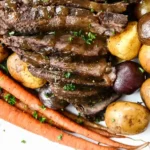
Slow Cooker Balsamic Dijon Pot Roast Freezer Meal
- Total Time: 8 hours 20 minutes
- Yield: 6 servings 1x
- Diet: General
Description
A beef chuck roast slowly simmers with potatoes and carrots with fresh rosemary and thyme in a balsamic, Dijon broth. This freezer-friendly recipe allows you to prepare most of the meal in advance, making it perfect for busy days.
Ingredients
- 1 medium yellow onion, diced
- olive oil
- kosher salt
- 1/4 cup dark brown sugar
- 2 tablespoons Dijon Mustard
- 1 teaspoon kosher salt
- 1/2 teaspoon freshly ground black pepper
- 1/4 teaspoon red pepper flakes
- 1/4 cup balsamic vinegar
- 1 tablespoon Worcestershire Sauce
- 1 bunch carrots
- 4 cloves garlic, smashed and peeled
- 4 pounds chuck roast
- 2 cups beef stock or broth
- 1.5 pounds baby potatoes
- 4 sprigs fresh rosemary
- 4 sprigs fresh thyme
- 1.5 tablespoons cornstarch
- 1.5 tablespoons cold water
Instructions
- Sauté: Sauté the diced onion with a pinch of salt in a little olive oil until tender and the edges start to brown. Remove from heat and cool.
- Mix Sauce: Whisk together the brown sugar, mustard, 1 teaspoon kosher salt, black pepper, red pepper flakes, balsamic vinegar, and Worcestershire sauce.
- Assemble Kit: Add the cooled onions, carrots, garlic cloves, and balsamic dijon mixture into a gallon resealable bag. Add the roast and squeeze out as much air as possible before sealing.
- Freeze: Lay the bag flat to freeze for up to 3-4 months.
- Thaw: Remove the kit from the freezer and place it in the fridge 24 to 36 hours before cooking to thaw.
- Slow Cook: Empty the thawed contents into the slow cooker. Add the potatoes, rosemary, thyme, and 2 cups of beef stock. Cover and cook on low for 8 hours.
- Rest: Remove and discard the herbs. Transfer the roast, carrots, and potatoes to serving dishes and cover with aluminum foil to keep warm.
- Thicken Gravy: Pour the slow cooker liquids into a fat separator. Pour the juices into a saucepan and bring to a boil. Whisk in a cornstarch slurry (1.5 tablespoons cornstarch mixed with 1.5 tablespoons cold water) and stir until the broth thickens into a glossy gravy.
- Serve: Slice the pot roast and serve with carrots and potatoes, drizzled with the hot gravy.
Notes
Avoid adding the kit to the slow cooker while completely frozen, as it may affect cooking times and food safety. Ensure it is partially thawed in the refrigerator first.
- Prep Time: 20 minutes
- Cook Time: 8 hours
- Category: Mains & Entrees
- Method: Slow Cooking
- Cuisine: American
Nutrition
- Serving Size: 1 serving
- Calories: 735 kcal
- Sugar: 16 g
- Sodium: 937 mg
- Fat: 35 g
- Saturated Fat: 15 g
- Unsaturated Fat: 21 g
- Trans Fat: 2 g
- Carbohydrates: 42 g
- Fiber: 5 g
- Protein: 63 g
- Cholesterol: 209 mg