
This hearty cabbage and ground beef skillet is a fast, one-pot meal perfect for busy weeknights. It combines lean protein and nutrient-dense vegetables for a satisfying low-carb dinner.

List of ingredients
- 1 small cabbage, chopped – provides the bulk and nutrients.
- 1 lb ground beef – the primary protein source.
- 1 can diced tomatoes (15oz) – adds moisture and acidity.
- 1 cup onions, chopped – for aromatic base flavor.
- 2 garlic cloves, minced – adds pungent depth.
- 1 tbsp bouillon powder – enhances the savory profile.
- 1/2 tsp cumin – adds an earthy, warm note.
- 1/4 tsp cayenne pepper – provides a subtle heat.
- 1/2 tsp smoked paprika – brings a woody, smoky flavor.
- Salt to taste – used for final seasoning.
step-by-step instructions
- Brown the meat: Place ground beef in a large pan or large cast-iron skillet on medium heat. Break up the meat with a wooden spoon and cook until it is fully browned.
- Sauté aromatics: Move the browned ground meat to one side of the pan and add the chopped onions and garlic to the empty space. Sauté until they are softened and fragrant.
- Simmer the base: Pour in the diced tomatoes and stir in the bouillon powder, cumin, cayenne pepper, and smoked paprika. Bring the mixture to a boil and let it simmer for 5 minutes on medium-high heat.
- Season: Taste the sauce for salt and adjust the amount according to your preference.
- Cook the cabbage: Add the chopped cabbage to the pan and stir to coat. Cover the pot with a lid and cook until the cabbage becomes soft and tender.
Practical Cooking Techniques
Achieving a Perfect Sear on Beef
Heat your skillet over medium heat before adding the ground beef. Avoid stirring too frequently at the start to allow the meat to develop a brown crust, which adds a deeper savory flavor to the final dish.
Uniform Cabbage Chopping
Cut the cabbage into consistent, bite-sized pieces to ensure even cooking. Removing the hard core before chopping prevents tough chunks from remaining in the skillet after the cooking process is complete.
Timing the Garlic Addition
Add the minced garlic after the onions have begun to soften. Garlic burns much faster than onions, so adding it later in the sauté process prevents a bitter taste from developing.
Managing Pan Liquids
If the beef releases an excessive amount of fat, you can spoon some out before adding the vegetables. However, keeping a small amount of fat helps the onions and garlic sauté more effectively.
Controlling Cabbage Texture
The amount of time you leave the lid on will determine the cabbage’s texture. For a slight crunch, reduce the covered cooking time; for a very soft, melt-in-your-mouth texture, leave it covered for several additional minutes.
Ingredient Substitutions
Alternative Lean Proteins
Substitute the ground beef with ground turkey or ground chicken for a leaner alternative. If using turkey, you may need to add a tablespoon of olive oil, as turkey is lower in natural fats than beef.
Tomato Product Swaps
If diced tomatoes are unavailable, use tomato sauce or crushed tomatoes. Using tomato sauce will result in a smoother, thicker consistency, while crushed tomatoes provide a middle ground between sauce and diced pieces.
Bouillon Powder Alternatives
Replace bouillon powder with a concentrated beef or vegetable broth. If you prefer a salt-free version, use a homemade stock and increase the amount of salt added at the end of the recipe.
Smoked Paprika Replacements
Use regular paprika if smoked paprika is not on hand. To mimic the smokiness, you can add a very small drop of liquid smoke or a pinch of chipotle powder for a similar depth of flavor.
Substituting Cabbage Types
While green cabbage is standard, you can use Savoy cabbage for a more tender leaf. Red cabbage can also be used, though it will change the color of the entire dish to a purple hue.
Flavor Variations
Integrating Fresh Bell Peppers
Add one chopped green or red bell pepper along with the onions and garlic. This adds a subtle sweetness and extra vitamin C to the meal without significantly altering the cooking time.
Adding Creamy Elements
Stir in a handful of shredded cheddar or mozzarella cheese during the final two minutes of cooking. Alternatively, top each serving with a dollop of sour cream or Greek yogurt for a tangy contrast.
Enhancing with Fresh Herbs
Garnish the finished dish with freshly chopped parsley or cilantro. Adding these herbs at the very end preserves their bright color and fresh flavor profile.
Increasing the Heat Level
If you prefer a spicier meal, increase the cayenne pepper to a half teaspoon. You can also add diced jalapeños or a pinch of red pepper flakes during the sautéing phase.
Adding Umami Depth
Stir in one tablespoon of soy sauce or coconut aminos before adding the cabbage. This adds a salty, savory dimension that complements the beef and smoked paprika.
Serving Suggestions
Low-Carb Base Options
Serve the mixture over cauliflower rice or shirataki noodles to keep the meal low-carb. These options absorb the tomato-based sauce well while maintaining a light calorie count.
Traditional Grain Pairings
Pair the dish with steamed brown rice or white basmati rice for a more filling meal. The grains provide a neutral base that balances the acidity of the diced tomatoes.
Complementary Side Dishes
Serve this skillet alongside a fresh garden salad with a lemon vinaigrette. A side of steamed broccoli or roasted carrots also pairs well with the savory beef and cabbage flavors.
Topping with Fresh Avocado
Slice a fresh avocado on top of each serving to add healthy fats and a creamy texture. The coolness of the avocado contrasts well with the warmth of the cumin and cayenne pepper.
Serving with Crusty Bread
Warm a piece of sourdough or whole-grain bread to serve on the side. The bread is useful for scooping up any remaining sauce and diced tomatoes from the plate.
Storage and Reheating
Refrigerator Storage Guidelines
Store leftovers in an airtight glass or plastic container in the refrigerator. The dish will remain fresh and safe to eat for up to five days when kept chilled.
Freezer Preservation Methods
Transfer the cooled mixture into freezer-safe bags or containers, removing as much air as possible. This method preserves the meal for two to three months without significant loss of flavor.
Proper Thawing Process
Thaw frozen portions by placing them in the refrigerator overnight. Avoid thawing at room temperature to ensure the meat and vegetables remain at a safe temperature.
Optimal Reheating Techniques
Reheat the dish in a skillet over medium heat, adding a splash of water or beef broth if the sauce has thickened too much. This method maintains the texture better than a microwave.
Troubleshooting Common Issues
Fixing a Dry Skillet
If the mixture appears too dry before the cabbage is soft, stir in a quarter cup of beef or vegetable broth. This provides the necessary steam to cook the cabbage without burning the meat.
Preventing Mushy Cabbage
Avoid overcooking the cabbage once the lid is placed on the pan. Check the texture every few minutes and remove the pan from the heat as soon as the cabbage reaches your desired tenderness.
Balancing Excessive Salt
If the bouillon powder makes the dish too salty, stir in some extra chopped cabbage or a splash of water. Adding a small amount of lemon juice can also help mask the saltiness.
Correcting Bland Flavors
If the dish lacks depth, add another pinch of cumin or a small amount of additional bouillon. A teaspoon of tomato paste can also intensify the savory nature of the sauce.
Frequently Asked Questions
What meat goes well with cabbage?
Cabbage is highly versatile and pairs well with beef, ground turkey, chicken, or lamb. Each meat provides a different flavor profile but all work well with the cabbage’s mild taste.
What can I add to ground beef for flavor?
Beyond the recipe’s spices, you can use onions, garlic, black pepper, and paprika. Avoid adding salt too early in the browning process to prevent the meat from releasing too much moisture.
What can I do with a bunch of cabbage?
Cabbage can be eaten raw in coleslaws, sautéed as a side, or riced as a low-carb grain substitute. It can also be used as a wrap for sandwiches or simmered in hearty soups.
Print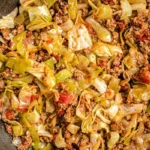
Cabbage and Ground Beef Skillet
- Total Time: 30 minutes
- Yield: 6 servings 1x
- Diet: Keto
Description
If you need an easy way to use a lot of cabbage, try this super tasty cabbage and ground beef recipe. This quick dinner will make an excellent addition to your weekly rotation!
Ingredients
- 1 small cabbage, chopped
- 1 lb ground beef
- 1 can (15oz) diced tomatoes
- 1 cup onions, chopped
- 2 garlic cloves, minced
- 1 tbsp bouillon powder
- 1/2 tsp cumin
- 1/4 tsp cayenne pepper
- 1/2 tsp smoked paprika
- salt to taste
Instructions
- Step 1: Place ground beef in a large pan or large cast-iron skillet on medium heat.
- Step 2: Break up the ground beef with a wooden spoon, and cook till the meat is browned.
- Step 3: Move the ground meat to one side and add the chopped onions and garlic.
- Step 4: When it’s done, pour in the diced tomatoes and the rest of the spices.
- Step 5: Bring to a boil and simmer for 5 minutes on medium-high heat.
- Step 6: Taste for salt and adjust.
- Step 7: Add the chopped cabbage, stir, and cook with the pot covered till the cabbage becomes soft.
Notes
This recipe serves 6 and contains 8 net carbs per serving. You can add a little olive oil if you don’t have enough from the ground beef to saute the onions and garlic. If the stir fry is getting a little dry, add about a quarter cup of beef or chicken broth. For more complex flavor, add some soy sauce or coconut aminos.
- Prep Time: 5 minutes
- Cook Time: 25 minutes
- Category: Main Course
- Method: Stir Fry
- Cuisine: American
Nutrition
- Serving Size: 1 serving
- Calories: 248 kcal
- Sugar: 6 g
- Sodium: 289 mg
- Fat: 15 g
- Saturated Fat: 6 g
- Unsaturated Fat: 9 g
- Trans Fat: 1 g
- Carbohydrates: 12 g
- Fiber: 4 g
- Protein: 15 g
- Cholesterol: 54 mg