
This Garlic Sesame Beef Udon Stir-Fry is a fast, savory meal that brings bold flavors to your dinner table. It combines tender beef and chewy noodles in a rich, garlicky glaze for a satisfying experience.

List of ingredients
- 3 tbsp soy sauce – provides the salty umami base.
- 2 tbsp oyster sauce – adds thickness and a deep savory flavor.
- 1 tbsp sesame oil – contributes a toasted, nutty aroma.
- 1 tbsp honey or brown sugar – balances the salt with a touch of sweetness.
- 1 tsp rice vinegar – adds a slight acidity to brighten the sauce.
- 1 clove garlic, minced – essential for the aromatic base of the sauce.
- 1/2 tsp grated ginger – provides a fresh, spicy undertone.
- 8 oz beef (flank steak, sirloin, or ribeye), thinly sliced against the grain – the main protein source.
- 2 packs (14-16 oz) fresh or frozen udon noodles – thick, chewy Japanese wheat noodles.
- 2 tbsp vegetable oil, divided – used for searing beef and sautéing vegetables.
- 1 small onion, thinly sliced – adds sweetness and texture.
- 1 medium red bell pepper, julienned – adds color and a crisp bite.
- 1 cup broccoli florets – provides a healthy, earthy element.
- 2 cloves garlic, minced – added during sautéing for extra fragrance.
- 2 tbsp sesame seeds – used as a crunchy garnish.
- 2 green onions, sliced – used for a fresh, colorful finish.
step-by-step instructions
- Prep the Sauce: In a small bowl, whisk together the soy sauce, oyster sauce, sesame oil, honey, rice vinegar, minced garlic, and grated ginger. Ensure the honey is fully dissolved before setting the mixture aside.
- Cook the Udon Noodles: If you are using frozen udon noodles, boil them according to the package directions. Drain them and rinse under cold water to prevent the noodles from sticking together. If using fresh noodles, they are ready for the pan immediately.
- Cook the Beef: Heat 1 tablespoon of vegetable oil in a large skillet or wok over medium-high heat. Add the thinly sliced beef and cook for 1-2 minutes per side until browned. Remove the beef from the pan and set it aside to prevent overcooking.
- Sauté the Veggies: Add the remaining tablespoon of oil to the same pan. Toss in the sliced onion, julienned bell pepper, and broccoli florets, stir-frying for 3-4 minutes until tender-crisp. Stir in the minced garlic and cook for another 30 seconds until fragrant.
- Combine and Stir-Fry: Return the cooked beef to the skillet along with the prepared udon noodles. Pour the sauce over the mixture and use tongs to toss everything together. Cook for 2-3 minutes until the sauce thickens and coats every ingredient evenly.
- Garnish and Serve: Transfer the completed stir-fry to bowls. Sprinkle with sesame seeds and sliced green onions. Serve immediately while the dish is hot.
Optimizing Your Beef Choice
Flank Steak for a Leaner Option
Flank steak is an excellent choice if you prefer a leaner cut of meat. It has a strong flavor and a slightly firmer texture. Because it is leaner, it is crucial to slice it very thinly to keep it tender.
Sirloin for Balanced Texture
Sirloin offers a great middle ground between lean and fatty. It provides a rich beefy taste and holds up well under the high heat of a stir-fry. It is generally more tender than flank steak but less fatty than ribeye.
Ribeye for Maximum Tenderness
Ribeye is the most luxurious option for this recipe due to its high marbling. The fat renders during the cooking process, making the meat incredibly juicy. Use a smaller amount of oil when searing ribeye as the meat will release its own fat.
Slicing Against the Grain for Texture
Always identify the muscle fibers running along the length of the beef. Cut perpendicular to these fibers to create short strands. This technique breaks up the connective tissue, ensuring the beef is tender rather than chewy.
Achieving Consistent Thickness
Aim for slices that are approximately 1/8 inch thick. Consistent thickness ensures that all pieces of beef cook at the same rate. If the slices are too thick, the outside may overcook before the center is seared.
Mastering Udon Noodle Preparation
Handling Frozen Udon Noodles
Frozen udon often has a better texture than shelf-stable varieties. To prepare them, briefly boil or soak them in warm water until they loosen. Do not overcook them at this stage, as they will cook further in the skillet.
Preparing Fresh Udon Noodles
Fresh noodles usually come vacuum-sealed and are pre-cooked. Gently rinse them under lukewarm water to separate the strands. This prevents them from clumping when you add them to the stir-fry.
Preventing Noodle Clumping
Rinsing noodles under cold water after boiling removes excess surface starch. This step is vital for keeping the noodles individual and slippery. If you skip this, the noodles may stick together and form clumps in the pan.
Managing Noodle Texture
Udon is prized for its chewy, bouncy texture. To maintain this, avoid boiling the noodles for too long before they hit the pan. The final 2-3 minutes of stir-frying with the sauce provides the perfect finish.
Customizing Your Vegetable Mix
Adding Crunch with Snap Peas
Sugar snap peas are a fantastic addition that provides a bright green color and a sweet crunch. Add them at the same time as the broccoli. They only need a few minutes of cooking to remain crisp.
Incorporating Shredded Carrots
Julienned carrots add a natural sweetness and a vibrant orange hue to the dish. Sauté them along with the onions to ensure they soften slightly. They pair perfectly with the savory sesame sauce.
Using Baby Corn for Texture
Baby corn provides a unique, mild flavor and a satisfying snap. Cut the baby corn into thirds before adding them to the pan. This ensures they integrate well with the other vegetables.
Adding Zucchini for Volume
Zucchini is a great way to increase the volume of the meal without adding many calories. Slice it into half-moons and sauté quickly over high heat. Avoid overcooking it to prevent the zucchini from becoming mushy.
Tips for Broccoli Florets
Cut your broccoli into small, bite-sized florets to ensure they cook evenly. If the florets are too large, they may remain raw in the center while the edges brown. You can add a tablespoon of water to the pan to help steam them slightly.
Adjusting the Sauce Flavor Profile
Reducing Sodium Levels
To lower the salt content, replace regular soy sauce with a low-sodium version. You can also increase the amount of rice vinegar or grated ginger to maintain the flavor intensity. Avoid adding extra salt, as the oyster sauce is already salty.
Balancing the Sweetness
If you prefer a less sweet glaze, reduce the honey or brown sugar to a teaspoon. Conversely, if the sauce feels too salty, add an extra drizzle of honey. The sweetness helps cut through the richness of the beef.
Enhancing the Ginger Flavor
For a more pungent and zesty taste, increase the amount of grated ginger. Fresh ginger is always superior to powdered ginger in stir-fries. Grate it finely to ensure it distributes evenly throughout the sauce.
Using Mushroom-Based Oyster Sauce
For those who prefer a different savory profile, mushroom stir-fry sauce is a great alternative to oyster sauce. It provides a similar thickness and umami depth. The taste difference is minimal in a complex stir-fry like this one.
Pro Tips for High-Heat Cooking
Maintaining High Pan Temperature
Stir-frying requires high heat to sear the meat and vegetables quickly. Ensure your skillet or wok is smoking slightly before adding the oil. This prevents the beef from steaming in its own juices and helps it brown.
Preventing Overcrowding the Pan
Cook the beef in batches if your pan is small. Overcrowding lowers the temperature of the pan, which leads to gray, boiled meat instead of seared beef. Give the ingredients plenty of room to move.
The Importance of Constant Movement
Keep the ingredients moving constantly using tongs or a spatula. This ensures that everything is cooked evenly and prevents the garlic from burning. High heat can burn the sauce quickly, so stay vigilant.
Timing the Garlic Addition
Garlic burns much faster than onions or peppers. Always add the minced garlic during the last 30 seconds of sautéing the vegetables. This preserves its aromatic qualities without introducing a bitter burnt taste.
Storing Your Leftovers Safely
Refrigeration Guidelines
Store any remaining stir-fry in an airtight container in the refrigerator. It will stay fresh for up to three to four days. Keep the container tightly sealed to prevent the noodles from drying out.
Using Airtight Containers
Glass containers are generally better for stir-fries as they do not absorb smells. Ensure the lid creates a vacuum seal to keep the moisture inside. This helps the noodles retain their chewy texture during storage.
Freezing the Stir-Fry
While you can freeze this dish, the texture of the udon noodles may change. If you plan to freeze it, undercook the noodles slightly. Thaw the meal in the refrigerator overnight before reheating.
Effective Reheating Methods
Microwave Reheating Tips
Place the stir-fry in a microwave-safe bowl and sprinkle a teaspoon of water over the top. Cover the bowl with a damp paper towel to trap steam. Heat in short intervals, stirring in between to ensure even warming.
Stovetop Reheating Method
For the best texture, reheat the stir-fry in a skillet over medium heat. Add a splash of water or a teaspoon of soy sauce to loosen the noodles. Toss gently until the beef and noodles are heated through.
Restoring Sauce Consistency
Noodles tend to absorb the sauce as they sit in the fridge. To restore the glossy glaze, add a small amount of sesame oil or a bit of the original sauce components. This brings back the rich mouthfeel of the original dish.
Suggested Side Dishes and Pairings
Pairing with a Crisp Cucumber Salad
A chilled cucumber salad with rice vinegar and sesame oil balances the heat of the stir-fry. The acidity cleanses the palate between bites of the rich beef. Slice cucumbers thinly for the best result.
Serving with Steamed Dumplings
Steamed vegetable or shrimp dumplings make a great accompaniment. They add another layer of texture and complement the Japanese-inspired flavors. Serve them with a side of soy-ginger dipping sauce.
Recommended Non-Alcoholic Beverages
A cold glass of sparkling water with a squeeze of fresh lime is a refreshing choice. Alternatively, a chilled unsweetened green tea pairs well with the umami notes of the sesame and soy. These drinks help cut through the richness of the oil.
Solving Common Cooking Problems
Fixing Overcooked Noodles
If your udon noodles become too soft, avoid adding more liquid. Instead, stir-fry them on the highest heat setting for a minute to sear the edges. This can add a bit of desired texture back to the dish.
Dealing with Tough Beef
If the beef feels tough, you may have sliced it with the grain or overcooked it. To fix this in the future, ensure you slice against the grain. For current leftovers, reheating slowly with a bit of liquid can help soften the fibers.
Correcting a Too-Salty Sauce
If the final dish is too salty, add a squeeze of fresh lime juice or a teaspoon of honey. The acidity and sweetness neutralize the excess sodium. You can also add more steamed broccoli to dilute the saltiness.
Common Recipe Questions
Can I use lo mein noodles instead?
Yes, lo mein noodles work well as a substitute. However, they are thinner than udon, so they may cook faster. Be careful not to overcook them, as they lack the thickness of udon.
How do I make this dish spicy?
Add a tablespoon of Sriracha or chili garlic sauce to the sauce mixture. You can also add sliced fresh jalapeños or red chili flakes during the vegetable sauté. This adds a bold heat that complements the sesame oil.
Can I prepare the sauce in advance?
Absolutely. You can whisk the sauce together and store it in a jar in the refrigerator for up to a week. Simply shake the jar well before adding it to the pan to redistribute the honey and oil.
What is the best oil for high-heat stir-frying?
Vegetable oil, canola oil, or peanut oil are the best choices because they have high smoke points. Avoid using extra-virgin olive oil for the searing process, as it can burn and create a bitter taste at high temperatures.
Print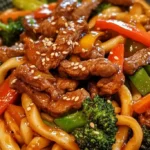
Garlic Sesame Beef Udon Stir-Fry
- Total Time: 25 minutes
- Yield: 2 servings 1x
- Diet: General
Description
Chewy udon noodles coated in a garlicky sesame-soy sauce meet tender beef and a medley of stir-fried veggies for a meal that’s bursting with flavor and ready in under 30 minutes.
Ingredients
- 3 tbsp soy sauce
- 2 tbsp oyster sauce
- 1 tbsp sesame oil
- 1 tbsp honey or brown sugar
- 1 tsp rice vinegar
- 1 clove garlic, minced
- 1/2 tsp grated ginger
- 8 oz beef (flank steak, sirloin, or ribeye, thinly sliced against the grain)
- 2 packs (14-16 oz) fresh or frozen udon noodles
- 2 tbsp vegetable oil, divided
- 1 small onion, thinly sliced
- 1 medium red bell pepper, julienned
- 1 cup broccoli florets
- 2 cloves garlic, minced
- 2 tbsp sesame seeds, for garnish
- 2 green onions, sliced, for garnish
Instructions
- Prep the Sauce: In a small bowl, whisk together soy sauce, oyster sauce, sesame oil, honey, rice vinegar, minced garlic, and grated ginger. Set aside.
- Cook the Udon Noodles: If using frozen udon noodles, cook them according to the package instructions. Drain and rinse under cold water to prevent sticking. If using fresh noodles, they are ready to use.
- Cook the Beef: Heat 1 tablespoon of vegetable oil in a large skillet or wok over medium-high heat. Add the beef slices and cook for 1-2 minutes per side until browned. Remove from the skillet and set aside.
- Sauté the Veggies: Add the remaining tablespoon of oil to the same skillet. Toss in the onion, bell pepper, and broccoli. Stir-fry for 3-4 minutes until the vegetables are tender-crisp. Add the minced garlic and stir-fry for 30 seconds until fragrant.
- Combine and Stir-Fry: Return the cooked beef to the skillet. Add the udon noodles and pour in the sauce. Use tongs to toss everything together, ensuring the noodles and ingredients are evenly coated with the sauce. Cook for 2-3 minutes until heated through.
- Garnish and Serve: Transfer the stir-fry to plates or bowls. Sprinkle with sesame seeds and green onions.
Notes
Pair with steamed dumplings or a crisp cucumber salad to balance the rich flavors.
- Prep Time: 10 minutes
- Cook Time: 15 minutes
- Category: Main Course
- Method: Stir-Fry
- Cuisine: Japanese
Nutrition
- Serving Size: 1 serving
- Calories: 680 kcal
- Sugar: 14 g
- Sodium: 1850 mg
- Fat: 24 g
- Saturated Fat: 8 g
- Unsaturated Fat: 16 g
- Trans Fat: 0 g
- Carbohydrates: 62 g
- Fiber: 6 g
- Protein: 38 g
- Cholesterol: 85 mg