
Preserving fresh peaches in jam is an efficient way to enjoy summer flavors throughout the year. This recipe provides a shelf-stable preserve using a standard water bath canning method for home cooks.

List of ingredients
- 4 cups finely chopped pitted peeled peaches – use ripe yellow peaches for proper acidity.
- 2 tablespoons lemon juice – helps the jam set and ensures food safety.
- 1.75 ounces regular powdered fruit pectin (1 package) – provides the necessary thickening agent.
- 5 cups granulated sugar – essential for preservation and the chemical reaction with pectin.
step-by-step instructions
- Prepare Equipment: Sterilize your canner, jars, and lids to prevent contamination.
- Combine Fruit: In a large, deep stainless steel saucepan, mix the chopped peaches and lemon juice. Use a potato masher to break down the fruit pieces.
- Add Pectin: Whisk in the powdered fruit pectin until it is completely dissolved into the peach mixture.
- Initial Boil: Bring the mixture to a boil over high heat, stirring frequently to prevent sticking.
- Sweeten and Set: Stir in all the granulated sugar. Return the mixture to a boil while stirring constantly, then maintain a hard boil for exactly 1 minute.
- Refine: Remove the pan from the heat and skim off any foam from the surface with a spoon.
- Fill Jars: Ladle the hot jam into sterilized jars, leaving 1/4 inch of headspace. Remove air bubbles with a clean tool and wipe the rim.
- Seal Jars: Center the lid on the jar and screw the band until it is fingertip-tight.
- Process: Place jars in the canner with 1 inch of water covering the tops. Boil for 10 minutes.
- Cool: Remove the lid, wait 5 minutes, then remove the jars to cool undisturbed.
Selecting the Best Fruit
Prioritize Yellow Peaches for Safety
When canning with a water bath, acidity is critical for preventing the growth of harmful bacteria. Yellow peaches contain the necessary acid levels for this process. Avoid using white-fleshed peaches, as they often have a higher pH and are not safe for water bath canning.
Identifying Peak Ripeness
The best peaches for jam are those that are tender, juicy, and fragrant. Choose fruit that yields slightly to gentle pressure. Overripe fruit may be too mushy, while underripe fruit lacks the sweetness and flavor depth needed for a high-quality preserve.
Using Frozen Peaches
Frozen peaches are an excellent substitute if fresh fruit is unavailable. Thaw the frozen peaches completely before measuring them for the recipe. Ensure you drain any excess liquid that may have accumulated during the thawing process to maintain the correct consistency.
Efficient Peeling Techniques
The Blanching Method
To remove skins easily, cut a small X into the bottom of each peach. Plunge the fruit into boiling water for 20 to 30 seconds, then immediately move them into a bowl of ice water. This thermal shock loosens the skin from the flesh.
Identifying Properly Blanched Fruit
If the skin does not slip off easily after the ice bath, the peaches may not have been submerged in boiling water long enough. Ensure the water is at a full boil before adding the fruit. Ripe peaches will typically release their skins with very little effort after this process.
Manual Peel Removal
Once the peaches have been chilled in the ice bath, use your fingers to gently pull the skin away from the fruit. The skin should slide off in large pieces. This method is more effective than using a vegetable peeler, which often removes too much of the edible flesh.
Essential Canning Equipment
Selecting Glass Jars
Half-pint (8-ounce) jars are ideal for peach jam because they are easy to store and use. Ensure the jars are specifically rated for canning to withstand high temperatures. Inspect each jar for nicks or cracks before filling.
Alternative Canner Options
You do not need a specialized canning pot if you have a large stock pot with a lid. The pot must be deep enough to cover the jars with at least one inch of water. Use a canning rack or a metal trivet at the bottom to prevent the jars from touching the heat source directly.
Importance of Lid Integrity
Always use new canning lids to ensure a proper vacuum seal. The sealing compound on the rim of the lid is a single-use material. If a lid is dented or rusted, discard it immediately to avoid spoilage.
Understanding Pectin and Sugar
The Role of Powdered Fruit Pectin
Pectin is a naturally occurring starch found in fruits that acts as a thickening agent. Regular powdered pectin requires a specific concentration of sugar and acid to create a gel. This is what gives the jam its characteristic spreadable texture.
Why Granulated Sugar is Necessary
Sugar does more than sweeten the jam; it binds with the pectin and water to create the gel structure. It also acts as a preservative by drawing moisture away from microorganisms. Reducing the sugar in this specific recipe may result in a runny jam that does not set.
Managing the Hard Boil
A hard boil is one that cannot be stirred down. This temperature is necessary to activate the pectin and ensure the jam reaches the correct consistency. Stirring constantly during this one-minute window prevents the sugar from scorching on the bottom of the pan.
Preservation and Storage Guidelines
Optimal Storage Environments
Store your processed jars in a cool, dark, and dry location such as a pantry or cellar. Exposure to direct sunlight or extreme temperature fluctuations can degrade the quality of the jam. Keeping the jars away from heat sources helps maintain the color and flavor.
Monitoring Vacuum Seals
After the jars have cooled for 24 hours, check the seals by pressing the center of the lid. The lid should be concave and should not pop up or down. If a lid fails to seal, move the jam to the refrigerator and consume it within a few weeks.
Estimated Shelf Life
Properly canned peach jam can remain shelf-stable for 12 to 18 months. While it stays safe to eat longer, the flavor and brightness of the fruit are most prominent in the first year. Label each jar with the date of production for easy tracking.
Serving and Usage Ideas
Classic Breakfast Pairings
This jam is a traditional topping for buttered toast, English muffins, and warm biscuits. It also pairs well with Greek yogurt or cottage cheese for a fruit-forward breakfast. Stir it into oatmeal for a natural sweetener.
Dessert and Baking Applications
Use the jam as a filling for thumbprint cookies or as a layer in a cake. It can also be warmed and drizzled over vanilla ice cream for a simple dessert. The concentrated flavor makes it an excellent glaze for fruit tarts.
Savory Cheese Accompaniments
Peach jam complements a variety of cheeses on a charcuterie board. It pairs particularly well with creamy brie, sharp cheddar, or tangy goat cheese. The sweetness of the jam balances the saltiness of the cheese.
Post-Processing Care
Cooling Period Requirements
Allow the jars to sit undisturbed for at least 12 to 24 hours after removing them from the canner. Moving the jars too soon can disrupt the sealing process. This resting period allows the jam to fully set and the vacuum seal to finalize.
Handling Opened Jars
Once a jar is opened, the vacuum seal is broken and the jam is no longer shelf-stable. Transfer the jar to the refrigerator immediately. Use a clean spoon every time you scoop jam to prevent the introduction of bacteria.
Troubleshooting Common Jam Issues
Removing Surface Foam
Foam often forms on the surface of the jam during the boiling process. Use a metal spoon to skim this foam off just before ladling the jam into jars. This results in a clearer, more professional-looking preserve.
Addressing Soft Sets
If the jam is too runny after cooling, it may be due to under-ripe fruit or insufficient boiling time. You can re-boil the jam with a small amount of additional pectin, though this is often unnecessary if the recipe was followed exactly. Otherwise, use it as a fruit syrup.
Dealing with Seal Failure
If a jar does not seal during the processing phase, do not attempt to re-process it repeatedly. Instead, store it in the refrigerator. This ensures the fruit quality is not destroyed by excessive heat while keeping the food safe.
Frequently Asked Questions
Can I use honey instead of sugar?
No, honey cannot be substituted for granulated sugar in this canning recipe. Honey changes the chemistry of the set and the acidity levels, which can make the jam unsafe for shelf-stable water bath canning.
Do I have to peel the peaches?
While not a safety requirement, peeling is highly recommended. Peach skins can become tough or slimy during the canning process, which negatively affects the texture of the finished jam.
Is white peach flesh safe for this method?
White peaches are generally too low in acid for standard water bath canning. To avoid the risk of foodborne illness, only use yellow peaches for this specific preserving method.
Can I make this without a canner?
Yes, as long as you have a deep stock pot and a rack to keep the jars off the bottom. The critical requirement is that the jars are completely submerged under one inch of boiling water for the specified time.
Print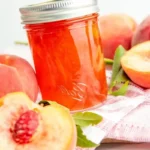
Easy Peach Jam for Canning
- Total Time: 75 minutes
- Yield: 6 half pint (8-ounce) jars 1x
- Diet: General
Description
When peaches are in season, make this easy peach jam. This canning recipe is a great way to preserve the flavors of fresh peaches.
Ingredients
- 4 cups finely chopped pitted peeled peaches
- 2 tablespoons lemon juice
- 1.75 ounces regular powdered fruit pectin (1 package)
- 5 cups granulated sugar
Instructions
- Step: Prepare canner, jars, and lids.
- Step: In a large, deep stainless steel saucepan, combine peaches and lemon juice. Break up peaches with a potato masher. Whisk in pectin until dissolved.
- Step: Bring to a boil over high heat, stirring frequently.
- Step: Add all of the sugar and return the peaches to a boil while stirring constantly. Boil hard, stirring the whole time, for 1 minute. Remove from the heat and skim off foam.
- Step: Ladle jam into hot jars, leaving ¼” headspace. Remove air bubbles and adjust headspace as needed. Wipe rim, center lid on jar, and screw down the band until it is fingertip-tight.
- Step: Place jars in canner, making sure they are completely covered with 1” of water. Bring to a boil and process for 10 minutes. Remove canner lid, wait 5 minutes, and remove jars. Cool and store.
Notes
CAUTION: Do not use this process to can white-flesh peaches. Some varieties of white-flesh peaches are higher in pH (i.e. lower in acid) making them a low-acid food for canning purposes.
- Prep Time: 45 minutes
- Cook Time: 30 minutes
- Category: Canning Recipes
- Method: Canning
- Cuisine: General
Nutrition
- Serving Size: 1 half-pint jar
- Calories: 713 kcal
- Sugar: 175 g
- Sodium: 32 mg
- Fat: 1 g
- Saturated Fat: 0.02 g
- Unsaturated Fat: 0.2 g
- Trans Fat: 0 g
- Carbohydrates: 184 g
- Fiber: 2 g
- Protein: 1 g
- Cholesterol: 0 mg