
This one-pot meal combines savory ground beef with a traditional blend of aromatic vegetables and bold Cajun spices. It is a hearty, filling dinner that comes together in about 40 minutes. This dish is ideal for busy weeknights when you need a satisfying meal with minimal cleanup.

List of ingredients
- 1 lb ground beef – use lean or regular depending on your preference for richness.
- 1 medium onion, diced – a core component of the Cajun holy trinity.
- 1 green bell pepper, diced – provides a distinct earthy and slightly sweet flavor.
- 1 cup celery, diced – adds texture and a traditional aromatic base.
- 3 garlic cloves, minced – provides depth and a pungent aroma.
- 2 tsp Cajun seasoning – the primary source of zesty heat and bold flavor.
- 1/2 tsp kosher salt – used to enhance all the individual savory elements.
- 1 1/2 cups long-grain white rice, uncooked – ensures a fluffy texture that absorbs the broth.
- 3 1/2 cups beef broth – creates a rich, savory cooking liquid for the rice.
- Chopped green onions or parsley (optional) – provides a fresh, colorful garnish.
step-by-step instructions
- Brown the meat: Cook the ground beef in a large Dutch oven over medium heat for 4–5 minutes until fully browned. Drain excess grease if necessary, but leave a small amount to sauté the vegetables.
- Sauté the aromatics: Add the diced onion, green bell pepper, celery, and minced garlic to the pot. Stir in the Cajun seasoning and salt, then cook for about 5 minutes until the vegetables soften.
- Combine rice and liquid: Stir in the uncooked long-grain white rice and pour in the beef broth. Increase the heat slightly and bring the mixture to a boil.
- Simmer the rice: Reduce the heat to low and cover the pot with a tight-fitting lid. Simmer for 20–23 minutes until the rice is tender and all liquid is absorbed.
- Rest and fluff: Remove the pot from the heat and let it sit, covered, for 5–10 minutes. This allows the moisture to redistribute, making the rice fluffier when you stir it with a fork.
- Garnish and serve: Sprinkle the top with chopped green onions or fresh parsley if desired before serving.
Ingredient Optimization Tips
Choosing the Right Ground Beef Fat Content
Using an 80/20 blend provides more richness and flavor, but you may need to drain more fat after browning. A 90/10 lean beef reduces the need for draining and makes the dish slightly lighter. Choose the option that best fits your dietary preference for fat content.
The Importance of Long-Grain White Rice
Long-grain white rice is preferred because it remains separate and fluffy after cooking. Medium or short-grain rice contains more starch and can lead to a sticky or mushy consistency. This ensures every grain is coated in flavor without clumping together.
Selecting Fresh Holy Trinity Vegetables
The combination of onion, celery, and green bell pepper is essential for authentic Cajun flavor. Using fresh vegetables ensures a bright, crisp taste and the correct moisture balance during the sauté process. If using pre-chopped frozen mixes, ensure they are fully thawed and drained first.
Managing Cajun Seasoning Salt Levels
Many store-bought Cajun seasoning blends contain significant amounts of salt. Taste your seasoning before adding the extra kosher salt to avoid over-salting the dish. You can always add more salt at the end, but you cannot remove it once added.
Selecting a Rich Beef Broth
A high-quality, low-sodium beef broth allows you to control the salt levels while providing a deep base. Avoid using water as it lacks the savory depth required for this style of rice. For a more intense flavor, consider using a beef bone broth.
Advanced Cooking Techniques
Rinsing Rice to Remove Excess Starch
Rinsing the rice in a fine-mesh sieve under cold water removes surface starch. This step prevents the rice from becoming gummy and helps the grains stay distinct. Rinse until the water runs clear before adding the rice to the pot.
Achieving a Proper Sear on the Beef
Avoid overcrowding the pot or stirring the beef too frequently during the first two minutes of browning. Allowing the meat to sit undisturbed creates a brown crust, known as the Maillard reaction, which adds deeper savory notes. Break the meat apart only after the initial sear has formed.
Maintaining Steam with a Tight Lid
Keep the lid tightly closed during the 20-23 minute simmering period to trap the steam. Lifting the lid releases heat and moisture, which can lead to undercooked rice or uneven texture. If your lid is loose, place a piece of parchment paper or foil under it to create a better seal.
The Role of the Resting Period
Allowing the rice to sit off the heat for 10 minutes is a critical step for texture. This resting time allows the remaining steam to finish cooking the center of the grains. It prevents the rice from breaking when you fluff it with a fork.
Controlling Heat During Sautéing
Keep the vegetables at a medium heat to ensure they soften without burning. If the heat is too high, the garlic will burn and become bitter before the onions are translucent. Stir frequently to ensure even cooking and flavor integration.
Custom Variations and Substitutions
Using Ground Turkey or Chicken
For a leaner protein, replace ground beef with ground turkey or chicken. Since these meats have less fat, you may need to add a tablespoon of olive oil to the pot before browning. The flavors remain similar, though the result is slightly milder than beef.
Incorporating Chicken Livers for Authenticity
Traditional dirty rice often includes finely chopped chicken livers for a deeper, earthier flavor. Sauté the livers along with the ground beef until browned. This adds a rich, metallic depth and gives the rice its classic dark color.
Adapting for Cauliflower Rice
To create a low-carb version, substitute white rice with cauliflower rice. Reduce the beef broth significantly to avoid a soupy consistency, as cauliflower does not absorb liquid like grain rice. Sauté the cauliflower rice for only 5-7 minutes instead of simmering for 20.
Increasing the Heat Level
If you prefer a spicier meal, add a pinch of cayenne pepper or a few dashes of hot sauce. You can also swap the green bell pepper for a jalapeño for a fresher, sharper heat. Always taste the dish before adding high-heat spices.
Adding Colorful Bell Peppers
While green bell pepper is traditional, using red or yellow peppers adds a subtle sweetness. A mix of three colors makes the dish more visually appealing. The cooking time remains the same regardless of the pepper color chosen.
Serving and Pairing Ideas
Recommended Side Dishes
Pair this hearty rice with a crisp side like a vinegar-based coleslaw or a garden salad. These acidic sides cut through the richness of the beef and spices. Steamed corn on the cob or sautéed collard greens are also classic accompaniments.
Best Fresh Garnish Options
Freshly sliced scallions provide a sharp, fresh contrast to the cooked flavors. Finely chopped parsley adds an earthy brightness and a pop of color. These garnishes should be added immediately before serving to maintain their freshness.
Serving as a Main Course or Side
This dish is filling enough to be the star of the meal when served in large bowls. Alternatively, it can be served as a side dish for grilled chicken or blackened fish. Adjust your portion sizes based on whether it is the primary protein source.
Adding Acidic Elements for Balance
A squeeze of fresh lemon juice or a drizzle of Worcestershire sauce can brighten the heavy flavors. These acidic additions wake up the palate and enhance the Cajun spices. Add these just before serving to keep the flavor vibrant.
Storage and Reheating Guide
Refrigeration Best Practices
Store leftovers in an airtight container in the refrigerator for up to four days. Ensure the rice has cooled down slightly before sealing the container to prevent excessive condensation. This keeps the rice from becoming too mushy during storage.
Freezing and Thawing Instructions
Dirty rice freezes well for up to three months in freezer-safe bags. When ready to eat, thaw the rice in the refrigerator overnight to maintain the best texture. Avoid thawing in the microwave to prevent uneven heating.
Best Methods for Reheating Rice
Reheat the rice on the stovetop over low heat with a tablespoon of beef broth or water. This restores the moisture lost during refrigeration. If using a microwave, cover the dish and heat in short bursts, stirring in between.
Preventing Dryness During Reheating
Rice tends to absorb more liquid as it sits, which can make leftovers feel dry. Adding a small amount of fat, such as a pat of butter or a drizzle of oil, helps restore the mouthfeel. Stir the liquid in thoroughly before heating to ensure even distribution.
Troubleshooting Common Issues
What to Do if Rice is Undercooked
If the rice is still hard after the simmering time, add an extra 1/4 cup of beef broth. Cover the pot again and simmer on low for another 5 minutes. Ensure the lid is tight to create the necessary steam for cooking.
How to Fix Mushy Rice
Mushy rice usually happens due to too much liquid or over-stirring during the simmer. To improve the texture, let the rice sit uncovered for a few minutes to allow excess moisture to evaporate. Avoid stirring vigorously; instead, use a fork to gently fluff.
Correcting Overly Salty Results
If the dish is too salty, stir in a small amount of cooked, unsalted rice to dilute the flavor. Alternatively, adding more sautéed vegetables can help balance the sodium. A squeeze of lemon juice can also mask excessive saltiness.
Dealing with a Burnt Pot Bottom
If the rice sticks to the bottom, do not scrape the burnt layer into the dish. Gently scoop the cooked rice from the top and transfer it to a clean serving bowl. To prevent this in the future, use a heavy-bottomed Dutch oven for better heat distribution.
Frequently Asked Questions
Can I use a rice cooker for this recipe?
Yes, you can brown the beef and vegetables in a pan first, then transfer everything to the rice cooker. Use the standard white rice setting and the specified amount of broth. However, the stovetop method provides better control over the sautéing process.
Is this dish naturally spicy?
The spice level depends entirely on the brand of Cajun seasoning you use. Some blends are mild and aromatic, while others are quite hot. You can control the heat by adjusting the amount of seasoning added during the sauté step.
How long does dirty rice stay fresh?
When stored in an airtight container in the fridge, it remains high quality for up to four days. The flavors often meld together and improve after the first 24 hours. Always reheat it thoroughly before consuming.
Can I make this in a slow cooker?
It is possible, but the texture of the rice may be softer than the stovetop version. Brown the meat and vegetables first, then add the rice and broth to the slow cooker on low for 3-4 hours. Monitor the rice closely to prevent overcooking.
Why is it called dirty rice?
The name comes from the traditional use of chicken livers and giblets, which color the rice a dark brown. In this version, the browned beef and spices create a similar appearance. It is called dirty because of the speckled, dark look of the grains.
Print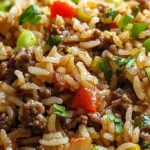
Dirty Rice with Ground Beef Recipe
- Total Time: 40 minutes
- Yield: 6 servings 1x
- Diet: Dairy-Free
Description
A flavorful and easy one-pot Cajun-style dish made with ground beef, vegetables, rice, and bold seasoning. Perfect for a hearty weeknight dinner.
Ingredients
- 1 lb ground beef
- 1 medium onion, diced
- 1 green bell pepper, diced
- 1 cup celery, diced
- 3 garlic cloves, minced
- 2 tsp Cajun seasoning
- 1/2 tsp kosher salt
- 1 1/2 cups long-grain white rice, uncooked
- 3 1/2 cups beef broth
- Chopped green onions or parsley for garnish (optional)
Instructions
- Step: In a large Dutch oven, cook the ground beef over medium heat until browned, about 4–5 minutes.
- Step: Add the onion, bell pepper, celery, garlic, Cajun seasoning, and salt. Sauté for about 5 minutes, until vegetables soften.
- Step: Stir in the uncooked rice and beef broth. Bring to a boil.
- Step: Reduce heat to low, cover, and simmer for 20–23 minutes until the rice is tender and the liquid is absorbed.
- Step: Remove from heat and let it sit, covered, for 5–10 minutes. Fluff with a fork before serving.
- Step: Garnish with green onions or parsley if desired.
Notes
For a more traditional flavor, add finely chopped chicken livers with the beef. Use chicken broth if beef broth is unavailable. Adjust Cajun seasoning to your preferred spice level. Great for meal prep—flavors develop even more after a day.
- Prep Time: 10 minutes
- Cook Time: 30 minutes
- Category: Dinner
- Method: One-Pot
- Cuisine: Cajun
Nutrition
- Serving Size: 1 cup
- Calories: 320 kcal
- Sugar: 2 g
- Sodium: 620 mg
- Fat: 12 g
- Saturated Fat: 4 g
- Unsaturated Fat: 6 g
- Trans Fat: 0 g
- Carbohydrates: 35 g
- Fiber: 2 g
- Protein: 18 g
- Cholesterol: 55 mg