
This Thai Basil Chicken is a fast and flavorful meal perfect for busy weeknights. It balances savory, sweet, and spicy notes and can be prepared in just 20 minutes.

List of ingredients
- 1 pound boneless and skinless chicken thigh, chopped into small pieces – provides juiciness and flavor.
- ½ tablespoon avocado oil or ghee – used for high-heat sautéing.
- ¼ cup shallots, finely chopped – adds a mild, sweet onion flavor.
- 1 tablespoon garlic, finely chopped – provides a pungent aromatic base.
- 1 Thai bird’s eye chili, deseeded and chopped (optional) – used to control the heat level.
- 1½ teaspoons brown sugar – balances the salty components with sweetness.
- 1½ teaspoons oyster sauce – adds a rich, savory umami depth.
- 1 teaspoon light soy sauce – used for primary seasoning and salt.
- 1 teaspoon dark soy sauce – provides a deep brown color and slight sweetness.
- ½ teaspoon fish sauce – contributes a distinct salty and pungent aroma.
- ¼ cup + 1 tablespoon water – helps emulsify the sauce and coat the meat.
- 35-45 Thai basil leaves, separated from stems – the key aromatic ingredient.
- Steamed jasmine rice – the traditional base for serving.
- Fried egg (optional) – recommended as a topping for added richness.
step-by-step instructions
- Marinate the chicken: In a medium mixing bowl, combine the chopped chicken with 1 teaspoon of light soy sauce and ½ teaspoon of fish sauce. Mix thoroughly and set aside for 15 minutes to allow the flavors to penetrate the meat.
- Prepare the sauce: In a small bowl, whisk together the brown sugar, oyster sauce, light soy sauce, dark soy sauce, fish sauce, and water. Continue whisking until the brown sugar has completely dissolved.
- Sauté the aromatics: Heat the avocado oil or ghee in a wok or skillet over medium-high heat. Add the chopped shallots and garlic, sautéing for 2 minutes until fragrant. Add the chopped chilis and stir for another minute.
- Cook the chicken: Add the marinated chicken pieces to the pan. Cook for approximately 6 minutes, stirring occasionally, until the chicken is fully cooked through.
- Simmer the sauce: Pour the sauce mixture into the pan and stir well to ensure all chicken pieces are evenly coated. Cook for 2 minutes or until the sauce has reduced slightly and thickened.
- Wilt the basil: Turn off the heat immediately. Stir in the Thai basil leaves until they are just wilted from the residual heat.
- Serve the dish: Spoon the chicken over a bed of steamed jasmine rice. Top with a fried egg if desired and serve immediately.
Ingredient Selection and Sourcing
Choosing Thai Basil over Sweet Basil
Thai basil is distinct from Genovese or sweet basil due to its purple stems and anise-like flavor. Using sweet basil will change the flavor profile significantly and will not produce the traditional Thai taste. If Thai basil is unavailable, Thai holy basil is the most accurate substitute.
The Importance of Dark Soy Sauce
Dark soy sauce is thicker and less salty than light soy sauce, acting primarily as a coloring agent. It gives the chicken its signature rich, mahogany brown appearance. Without it, the dish will look pale, although the flavor will remain largely similar.
Selecting the Best Chicken Cut
Boneless, skinless chicken thighs are recommended because they remain juicy under high heat. Chicken breast can be used, but it is more prone to drying out during the searing process. Ensure the chicken is chopped into small, uniform pieces for even cooking.
Managing Thai Bird’s Eye Chilis
Bird’s eye chilis are very potent and provide the primary heat in this dish. Deseeding the chilis reduces the intensity while keeping the flavor. To increase the spiciness, double the amount of chilis or leave the seeds intact.
Advanced Cooking Techniques
Freeze Chicken for Precise Slicing
Place chicken pieces in the freezer for 30 minutes before cutting. This firms up the meat, allowing you to cut clean, diagonal ¼ inch slices. This technique prevents the meat from sliding, ensuring uniform pieces that cook at the same rate.
Achieving Proper Wok Temperature
Heat your wok or skillet until the oil just begins to shimmer before adding aromatics. High heat is essential for searing the chicken quickly and creating a concentrated flavor. If the pan is too cool, the chicken will steam in its own juices rather than brown.
Preventing Basil from Burning
Always add the basil leaves after the heat has been turned off. Basil is delicate and loses its aromatic oils and bright color if cooked for too long. Stirring it into the hot sauce off-heat allows it to wilt perfectly without turning black.
Controlling the Reduction of the Sauce
Cook the sauce for only 2 minutes after adding it to the pan. Over-reducing the sauce can make the dish too salty as the water evaporates and the soy and fish sauces concentrate. The sauce should be glossy and coat the meat without becoming a thick paste.
Flavor Customization and Variations
Increasing the Sauce Volume
If you prefer a saucier dish for extra mixing with the rice, double the quantities of the sauce ingredients. Be mindful that this may increase the saltiness, so you may need to add an extra tablespoon of water to balance the concentration.
Using Ground Meat Alternatives
While sliced thighs are used here, ground chicken or ground turkey can be substituted. This version is common in street food and allows the sauce to cling more effectively to the meat. Simply brown the ground meat before adding the sauce mixture.
Adjusting the Sweetness Level
The brown sugar provides a counterpoint to the salty fish sauce. If you prefer a less sweet dish, reduce the sugar to 1 teaspoon. Conversely, a touch more sugar can help balance an extra-spicy batch of chilis.
Integrating Vegetable Add-ins
You can add sliced bell peppers or snap peas to the stir-fry for extra texture. Sauté these vegetables immediately after the garlic and shallots but before adding the chicken. This ensures they remain crisp and vibrant.
Serving and Pairing Suggestions
Preparing the Perfect Fried Egg
Fry an egg in hot oil until the edges are brown and crispy while the yolk remains runny. The richness of the yolk acts as a creamy sauce that complements the spicy and salty chicken. Place the egg directly on top of the rice and chicken.
Alternative Grain Bases
While jasmine rice is traditional, brown rice or quinoa can be used for a nuttier flavor. Cauliflower rice is a suitable low-carb alternative. Ensure the base is steamed and hot to contrast with the savory stir-fry.
Complementary Side Dishes
Pair this dish with a refreshing cucumber salad dressed in rice vinegar and sesame oil. The coolness of the cucumber helps temper the heat from the bird’s eye chilis. A side of steamed bok choy also adds a healthy, bitter contrast.
Plating for Texture and Visuals
Place a generous mound of rice on one side of the plate and the chicken on the other. Top the chicken with the fried egg and garnish with a few fresh, uncooked basil leaves. This preserves a variety of textures and aromas on the plate.
Storage and Reheating Advice
Refrigeration Guidelines
Store leftover Thai Basil Chicken in an airtight container in the refrigerator for up to three days. Keep the jasmine rice in a separate container to prevent it from absorbing too much of the sauce. Ensure the dish is cooled slightly before sealing the lid.
Best Reheating Methods
Reheat the chicken in a skillet over medium heat with a splash of water to loosen the sauce. Avoid microwaving the dish on high for long periods, as this can make the chicken rubbery. Heat until just warmed through to preserve the flavor.
Freezing Instructions
This dish can be frozen for up to two months, though the basil will lose its bright color and some aroma. Thaw the chicken in the refrigerator overnight before reheating. Reheat slowly on the stovetop to maintain the texture of the meat.
Maintaining Basil Freshness
If you plan to make this dish multiple times, store fresh Thai basil wrapped in a damp paper towel inside a plastic bag. Keep it in the crisper drawer of the refrigerator. This prevents the leaves from wilting or turning black prematurely.
Troubleshooting Common Issues
Correcting a Sauce That Is Too Thin
If the sauce has not thickened enough after two minutes, simmer it for an additional minute on medium-high heat. Do not overcook the chicken during this process. If it remains too thin, a tiny pinch of cornstarch mixed with water can be stirred in and boiled for 30 seconds.
Preventing the Chicken from Steaming
If the chicken releases too much water in the pan, it means the pan was overcrowded or not hot enough. To fix this, increase the heat and let the liquid evaporate before adding the sauce. Cook in batches if you are doubling the recipe.
Reducing Excessive Saltiness
If the final dish tastes too salty, stir in a small amount of additional brown sugar or a squeeze of fresh lime juice. The acidity of the lime or the sweetness of the sugar helps neutralize the intensity of the fish and soy sauces.
Avoiding Burnt Garlic and Shallots
Garlic and shallots can burn quickly on medium-high heat, becoming bitter. Stir them constantly and move them to the edges of the pan as soon as they become fragrant. Immediately add the chicken to lower the pan temperature and stop the browning.
Frequently Asked Questions
Can I use regular basil if I can’t find Thai basil?
Regular sweet basil can be used in a pinch, but the taste will be sweeter and lack the spicy, anise notes of Thai basil. To compensate, you can add a tiny pinch of ground cloves or cinnamon to mimic the depth of Thai basil.
Is fish sauce mandatory for this recipe?
Fish sauce provides the essential umami and salt profile of the dish. If you cannot use it, you can replace it with an equal amount of soy sauce or a pinch of salt mixed with a drop of Worcestershire sauce.
What is the best oil for this stir-fry?
Avocado oil is ideal because it has a very high smoke point, meaning it won’t burn at the temperatures needed for a stir-fry. Ghee is also a great option for adding a rich flavor while maintaining stability at high heat.
How do I make this dish less spicy?
The heat comes entirely from the bird’s eye chilis. To make the dish mild, remove the seeds and membranes from the chilis or omit them entirely. You can replace them with a small amount of red bell pepper for color without the heat.
Print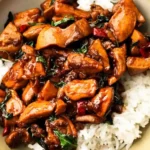
Thai Basil Chicken
- Total Time: 20 minutes
- Yield: 2 servings 1x
- Diet: General
Description
Look no further, I have the perfect weeknight dish for you: Thai basil chicken. This dish is bursting with flavor, easy-to-make and can be yours in 20-minutes!
Ingredients
- 1 pound chicken thigh, boneless + skinless and chopped into small pieces
- ½ tablespoons avocado oil or ghee
- ¼ cup shallots, finely chopped
- 1 tablespoon garlic, finely chopped
- 1 Thai bird’s eye chili, deseeded + chopped (optional)
- 1½ teaspoons brown sugar
- 1½ teaspoons oyster sauce
- 1 teaspoon light soy sauce
- 1 teaspoon dark soy sauce
- ½ teaspoon fish sauce
- ¼ cup + 1 tablespoon water
- 35–45 Thai basil leaves, separated from stems
- Steamed jasmine rice
- Fried egg (optional, but highly recommend)
Instructions
- Marinate: In a medium mixing bowl add chicken along with 1 teaspoons light soy sauce and ½ teaspoon fish sauce. Mix to combine then set aside for 15 minutes to marinate.
- Prepare Sauce: In a small bowl, add brown sugar, oyster sauce, light + dark soy sauces, fish sauce, and water and whisk until brown sugar dissolves. Set aside.
- Sauté Aromatics: In a wok or skillet over medium-high heat, add avocado oil. Add shallot and garlic. Sauté for 2 minutes or until fragrant. Add chilis and stir to combine, cooking for 1 minute longer.
- Cook Chicken: Add chicken and cook for 6 minutes or until chicken is cooked.
- Thicken Sauce: Pour in sauce mixture and mix well, make sure chicken is coated in mixture. Cook for 2 minutes or until sauce is slightly reduced.
- Add Basil: Turn off flame and add holy basil. Stir until leaves are wilted.
- Serve: Serve with steamed rice (don’t forget the fried egg!) and enjoy!
Notes
If you prefer more sauce, double the sauce recipe.
- Prep Time: 5 minutes
- Cook Time: 15 minutes
- Category: Main Course
- Method: Stir-fry
- Cuisine: Asian
Nutrition
- Serving Size: 1 serving
- Calories: 780 kcal
- Sugar: 7 g
- Sodium: 1850 mg
- Fat: 28 g
- Saturated Fat: 8 g
- Unsaturated Fat: 18 g
- Trans Fat: 0 g
- Carbohydrates: 32 g
- Fiber: 2 g
- Protein: 48 g
- Cholesterol: 160 mg