
This Spicy Thai Basil Chicken Fried Rice is a fast, flavor-packed meal perfect for busy weeknights. It combines garlicky heat with the peppery notes of holy basil for an authentic taste in under 30 minutes.

List of ingredients
- 250 grams (0.55 lbs) Chicken Thighs, boneless, skinless – cleaned, pat-dried, trimmed of excess fat, and cut into bite-sized pieces
- 1 TSP Light Soy Sauce – used for the chicken marinade
- 1 TSP Fish Sauce – used for the chicken marinade
- ¼ TSP ground White Pepper – used for the chicken marinade
- 3 TBLS Oyster Sauce – for the main stir-fry sauce
- 1 TBLS Light Soy Sauce – for the main stir-fry sauce
- ½ TBLS Sweet Dark Soy Sauce – for the main stir-fry sauce
- 1 TSP White Sugar – for the main stir-fry sauce
- 1 TBLS Water or chicken broth – to thin the sauce for better coating
- 6-7 Garlic cloves – roughly chopped
- 6-10 Red Chilies (Bird’s eye preferred) – cut into halves or thirds, adjusted for heat preference
- 4-10 Green Chilies (Bird’s eye preferred) – cut into halves or thirds, adjusted for heat preference
- ¾ Yellow Onion – sliced into ¼-inch thick pieces
- 1 Large Red Chili – deseeded and thinly sliced at an angle (reserve some for garnish)
- 1.5 cups Thai Holy Basil Leaves – washed and dried (substitute with Italian or Thai sweet basil if needed)
- 2 TBLS Canola Oil – or any high-smoke point cooking oil
- 3 cups cooked Thai rice – long-grain, preferably day-old
- Cucumber slices – for serving
- Fish sauce with chopped chilies – optional side accompaniment
step-by-step instructions
- Marinate the chicken: Place the chicken pieces in a mixing bowl. Add the light soy sauce, fish sauce, and ground white pepper, mixing well before setting aside.
- Prepare aromatics: Roughly chop the garlic and Bird’s eye chilies. Use a mortar and pestle to smash them into a coarse paste. Slice the yellow onion and the large red chili, reserving a few red chili slices for the final garnish.
- Prepare the basil: Pick the holy basil leaves from the stems. Wash them thoroughly and pat them dry with paper towels.
- Whisk the sauce: In a small bowl or measuring cup, combine the oyster sauce, light soy sauce, sweet dark soy sauce, sugar, and water. Stir until the sugar dissolves and the sauce is uniform.
- Sear the chicken: Heat canola oil in a large wok over high heat. Add the marinated chicken and cook for 1-2 minutes until the meat is no longer pink and begins to brown.
- Sauté aromatics: Add the sliced onion to the wok and cook for 30 seconds. Stir in the garlic chili paste and the sliced large red chili, frying for another 30 seconds until fragrant.
- Fry the rice: Add the cooked rice to the wok. Pour the prepared sauce over the rice and stir-fry for about a minute. Break up any rice clumps to ensure every grain is evenly coated.
- Wilt the basil: Add the holy basil leaves to the pan. Toss quickly for 30 seconds until the leaves are wilted, then immediately turn off the heat.
- Plate and serve: Place reserved red chili slices in a bowl, spoon the rice on top, press down, and tip onto a plate. Serve with fresh cucumber slices and optional chili-fish sauce.
Optimal Rice Selection and Preparation
Using Day-Old Jasmine Rice
Using rice that has been refrigerated overnight is critical for the best texture. The cooling process allows the grains to dry out and the starches to crystallize. This prevents the rice from clumping or becoming mushy when it hits the hot oil and sauce.
Choosing Long-Grain Varieties
Thai Jasmine rice is the traditional choice due to its aromatic properties and distinct grain shape. If Jasmine is unavailable, Basmati rice is an excellent substitute. Avoid short-grain or sticky rice, as these release too much starch and will create a gummy consistency during stir-frying.
Preventing Rice Clumps
Before adding the rice to the wok, use your hands or a fork to gently break up any large chilled masses. This ensures that the heat and the sauce penetrate the rice evenly. If the rice is too frozen or hard, let it sit at room temperature for 10 minutes before cooking.
Protein Alternatives and Adjustments
Substituting with Tofu
For a plant-based version, use extra-firm tofu cut into small cubes. Pan-fry the tofu in oil for 10-12 minutes until all sides are golden brown and crisp. Set the tofu aside and add it back to the wok at the very end, after the rice and sauce have been combined.
Cooking with Shrimp
Shrimp can replace chicken for a lighter seafood version. Sauté the shrimp quickly over high heat for about 1-2 minutes per side until they turn opaque and pink. Remove the shrimp from the wok to avoid overcooking them, then stir them back in with the basil.
Using Beef or Pork-Free Meats
Beef sirloin or flank steak cut into thin strips works well in this recipe. Sear the beef quickly over very high heat to ensure a brown crust without overcooking the center. Follow the same marination process as the chicken for consistent flavor.
Guide to Thai Basil Varieties
The Unique Profile of Holy Basil
Thai Holy Basil (Bai Gaprao) is the authentic choice for this dish, offering a peppery, clove-like flavor. It is more pungent than sweet basil and provides the signature spicy undertone. Look for leaves with slightly ridged edges and furry stems.
Substituting with Thai Sweet Basil
Thai Sweet Basil is more common in grocery stores and has a distinct anise or licorice scent. While it lacks the peppery bite of holy basil, it still provides a deep herbal sweetness. It is a suitable alternative if holy basil is unavailable.
Using Italian Genovese Basil
Italian basil is a viable last resort, though its flavor is milder and sweeter. To compensate for the lack of pepperiness, you may want to add a small pinch of extra black pepper. It provides a fresh, aromatic quality that complements the garlic and chilies.
Managing Heat and Spice Levels
Understanding Bird’s Eye Chilies
Bird’s eye chilies are small but extremely potent, providing a sharp, immediate heat. The amount specified in the recipe is for those who enjoy a traditional Thai spice level. These chilies are best smashed into a paste to distribute the heat evenly throughout the dish.
Reducing the Spice Intensity
To lower the heat, remove the seeds and white membranes from the chilies before chopping. You can also reduce the number of Bird’s eye chilies and replace them with a milder red chili. This maintains the color and flavor while significantly lowering the burn.
Increasing the Pungency
For those who prefer extreme heat, increase the quantity of green Bird’s eye chilies. Green chilies often have a slightly different, more grassy heat than red ones. Adding a teaspoon of dried chili flakes during the searing process can also add a deeper layer of spice.
Professional Stir-Fry Techniques
The Importance of Wok Temperature
The wok must be shimmering hot before any oil or ingredients are added. This high heat creates the ‘wok hei’ or ‘breath of the wok,’ which sears the ingredients instantly. This process prevents the chicken from stewing in its own juices and keeps the rice firm.
Creating the Garlic Chili Paste
Using a mortar and pestle to smash garlic and chilies is superior to chopping. Smashing ruptures the cell walls of the aromatics, releasing essential oils and juices. This creates a more potent flavor base that integrates seamlessly into the oil.
Avoiding Overcrowding the Pan
If you are doubling the recipe, cook the chicken in batches. Overcrowding the wok lowers the surface temperature, which leads to steaming rather than searing. Cook the meat first, remove it, and then proceed with the aromatics and rice.
Serving and Pairing Suggestions
The Role of Fresh Cucumber
Cool, crisp cucumber slices are the traditional accompaniment to spicy Thai fried rice. The high water content and neutral flavor of the cucumber act as a palate cleanser. This helps balance the intense heat of the Bird’s eye chilies.
Customizing the Side Sauce
A side of fish sauce mixed with lime juice and chopped chilies (Prik Nam Pla) adds a bright, acidic element. The acidity cuts through the richness of the oyster sauce and the oil. Drizzle a small amount over the rice just before eating.
Complementary Vegetable Sides
Pair this dish with a simple stir-fried bok choy or steamed broccoli. The greens provide a nutritional balance to the carb-heavy rice. A side of sliced tomatoes can also add a refreshing sweetness that pairs well with the basil.
Storage and Reheating Guide
Refrigerator Storage
Store leftovers in an airtight glass or plastic container. The fried rice will keep well for 3 to 4 days in the refrigerator. Ensure the rice is completely cooled before sealing the lid to prevent excess moisture buildup.
Freezer Storage
This recipe is excellent for meal prep and can be frozen for up to two months. Freeze the rice in individual portions to make reheating easier. Avoid freezing the fresh cucumber garnish, as it will lose its texture.
Best Reheating Methods
For the best texture, reheat the rice in a skillet over medium-high heat with a teaspoon of oil. This restores the slightly crisp edges of the rice grains. If using a microwave, add a splash of water and cover the dish to keep the moisture in.
Common Troubleshooting
Why is my rice mushy?
Mushy rice usually results from using freshly cooked rice or adding too much sauce too quickly. Ensure the rice is cold and dry before frying. If the sauce seems to be making the rice wet, increase the heat to evaporate the liquid faster.
Why did the basil turn black?
Basil leaves oxidize and darken quickly when exposed to prolonged heat. To prevent this, add the basil at the very last second and toss only until wilted. Turn off the heat immediately to preserve the bright green color.
How to fix a sauce that is too salty?
If the combined soy and fish sauces make the dish too salty, add a small pinch of extra sugar or a squeeze of lime juice. The sweetness or acidity helps neutralize the saltiness. You can also serve the dish with extra unsalted cucumber slices.
Frequently Asked Questions
Can I make this recipe gluten-free?
Yes, you can make this gluten-free by substituting the soy sauces with tamari or certified gluten-free soy sauce. Use a gluten-free oyster sauce and ensure your fish sauce is certified GF. All other ingredients are naturally gluten-free.
Can I use chicken breast instead of thighs?
Chicken breast can be used, but it cooks faster and can dry out more easily than thighs. Reduce the searing time slightly and ensure the pieces are cut uniformly. Thighs are recommended for their higher fat content and tenderness.
What if I cannot find Holy Basil?
If Holy Basil is unavailable, Italian basil is the next best choice because it shares a similar aromatic profile. Thai sweet basil is also acceptable, though it is more anise-like. Avoid using dried basil, as it lacks the necessary fresh punch.
Can this be made vegan?
To make this vegan, replace the chicken with crispy pan-fried tofu and use a mushroom-based vegetarian oyster sauce. Swap the fish sauce for a vegan fish sauce or a mixture of soy sauce and a pinch of salt. Ensure the sugar used is vegan-certified.
Print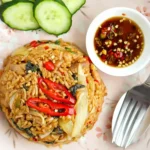
Spicy Thai Basil Chicken Fried Rice
- Total Time: 27 minutes
- Yield: 4 servings 1x
- Diet: Dairy-free
Description
This Spicy Thai Basil Chicken Fried Rice is super easy to stir-fry on any given weeknight, exploding with garlicky chili and peppery basil flavors, and great for meal prep! Ready in under 30 minutes!
Ingredients
- 250 grams boneless, skinless chicken thighs, cut into bite-sized pieces
- 1 TSP light soy sauce (for marinade)
- 1 TSP fish sauce (for marinade)
- ¼ TSP ground white pepper (for marinade)
- 3 TBLS oyster sauce
- 1 TBLS light soy sauce (for sauce)
- ½ TBLS sweet dark soy sauce
- 1 TSP white sugar
- 1 TBLS water or chicken broth
- 6–7 garlic cloves, roughly chopped
- 6–10 red Bird’s eye chilies, cut into halves or thirds
- 4–10 green Bird’s eye chilies, cut into halves or thirds
- ¾ yellow onion, sliced into ¼-inch thick pieces
- 1 large red chili, thinly sliced at an angle
- 1.5 cups Thai holy basil leaves, washed and dried
- 2 TBLS canola oil
- 3 cups cooked Thai long-grain rice, preferably day-old
- Cucumber slices (for serving)
- Fish sauce with chopped chilies (for serving)
Instructions
- Marinate: Combine chicken pieces with 1 TSP light soy sauce, 1 TSP fish sauce, and ¼ TSP ground white pepper in a bowl and set aside.
- Prep Aromatics: Roughly chop garlic and Bird’s eye chilies, then smash them into a coarse paste using a mortar and pestle. Slice the yellow onion and large red chili.
- Make Sauce: Whisk together oyster sauce, 1 TBLS light soy sauce, sweet dark soy sauce, sugar, and water in a small bowl.
- Brown Chicken: Heat canola oil in a large wok over high heat. Add chicken and cook for 1-2 minutes until browned.
- Sauté Aromatics: Add sliced onion and cook for 30 seconds, then stir-fry the garlic chili paste and red chili slices for another 30 seconds.
- Fry Rice: Add cooked rice and pour the sauce on top. Stir-fry for one minute, breaking up clumps until rice is evenly coated.
- Wilt Basil: Add holy basil leaves and toss for 30 seconds until wilted, then switch off the heat.
- Serve: Plate the rice and garnish with reserved red chili slices and serve with cucumber slices.
Notes
If you don’t have a mortar and pestle, you can finely mince the garlic and chilies or pulse them in a mini blender. Use day-old rice for the best texture. High heat is essential to prevent the rice from becoming mushy.
- Prep Time: 15 minutes
- Cook Time: 12 minutes
- Category: Dinner
- Method: Stir-fry
- Cuisine: Thai
Nutrition
- Serving Size: 1 plate
- Calories: 411 kcal
- Sugar: 13.4 g
- Sodium: 764.7 mg
- Fat: 10.7 g
- Saturated Fat: 1.4 g
- Unsaturated Fat: 8.6 g
- Trans Fat: 0 g
- Carbohydrates: 59.8 g
- Fiber: 4.3 g
- Protein: 21.1 g
- Cholesterol: 58.8 mg