
These tender beef bites are simmered in a savory-sweet teriyaki glaze using a slow cooker for maximum tenderness. They work perfectly as a standalone appetizer or as a hearty main course served over steamed rice.

List of ingredients
- 3 lb. chuck roast, stew meat, filet mignon, round steak, sirloin, or flat iron steak – choose based on your preferred tenderness and budget.
- 2 Tbsp. corn starch mixed with 1/4 cup cold water – used to create a thickening slurry for the final glaze.
- 1 cup pineapple juice or beef broth – pineapple juice adds sweetness and natural tenderizers.
- 1/2 cup soy sauce – provides the essential salty and umami foundation.
- 1/2 to 1 cup brown sugar – adjust the amount based on how sweet you prefer your sauce.
- 2 Tbsp. minced garlic – adds a pungent and aromatic depth to the glaze.
- 2 Tbsp. apple cider vinegar or rice vinegar – provides a necessary acidic balance to the sugar.
- 1 Tbsp. sesame oil – adds a distinct, toasted nutty aroma.
- 1 Tbsp. fresh minced ginger – adds a bright, spicy kick to the flavor profile.
- 1/2 tsp. black pepper – adds a subtle layer of warmth.
- Green onions and sesame seeds – used for a fresh, colorful garnish.
step-by-step instructions
- Prepare the Meat: Remove the steak from the refrigerator and let it sit at room temperature for at least 30 minutes before cutting to ensure more even cooking.
- Mix the Glaze: In a liquid measuring cup, whisk together the pineapple juice, soy sauce, brown sugar, minced garlic, vinegar, sesame oil, minced ginger, and black pepper.
- Assemble the Crock Pot: Cut the meat into uniform, bite-sized pieces. Place the beef pieces in the bottom of the slow cooker and pour the prepared sauce evenly over the top.
- Slow Cook: Cover the pot with the lid and cook on the LOW setting. For sirloin or leaner cuts, cook for 4-5 hours; for chuck roast or stew meat, cook for approximately 8 hours to ensure the meat is tender.
- Strain the Sauce: Carefully pour the liquid from the slow cooker through a fine mesh sieve into a small saucepan to remove solids.
- Thicken the Glaze: Bring the strained sauce to a simmer over medium heat. Whisk the cornstarch and cold water together, then stir the slurry into the simmering sauce until it thickens to your liking.
- Final Touch: Taste and adjust the seasoning if necessary. Garnish the steak bites with sliced green onions and toasted sesame seeds before serving.
Choosing the Right Beef Cut
Using Chuck Roast for Maximum Tenderness
Chuck roast is an ideal choice for slow cooking because it contains a high concentration of connective tissue and collagen. Over several hours of low heat, these tissues break down into gelatin, resulting in incredibly tender, melt-in-your-mouth steak bites. This cut is typically more affordable and offers a deeper beef flavor than leaner options.
Sirloin for Quicker Cooking Times
Sirloin is a leaner cut that cooks much faster than roast or stew meat. While it provides a great texture, it can become dry if left in the slow cooker for too long, which is why a shorter window of 4-5 hours is recommended. It is a great option for those who want a more structured bite rather than a shredding texture.
The Convenience of Pre-Cut Stew Meat
Stew meat is a practical choice for those who want to skip the chopping process. Depending on the source, stew meat can vary in tenderness, so it is often best to treat it like a chuck roast and cook it for a full 8 hours. This ensures that any tougher pieces are fully softened by the slow cooking process.
Flat Iron and Round Steak Alternatives
Flat iron steak is known for its tenderness and can be used similarly to sirloin. Round steak is leaner and slightly tougher, making it a better candidate for the longer 8-hour cooking cycle. Regardless of the cut, keeping the pieces uniform in size ensures they all reach the same level of doneness.
Mastering the Teriyaki Glaze
The Tenderizing Effect of Pineapple Juice
Pineapple juice contains an enzyme called bromelain, which naturally breaks down the proteins in the meat. This process helps to tenderize the beef while it simmers, making the final result softer. If you prefer a less sweet profile, you can substitute beef broth, though you will lose that specific enzymatic tenderizing effect.
Adjusting Sweetness with Brown Sugar
The amount of brown sugar used can be scaled from 1/2 cup to a full cup depending on your taste. A higher sugar content creates a thicker, stickier glaze that mimics traditional restaurant-style teriyaki. Brown sugar also adds a molasses-like depth that balances the saltiness of the soy sauce.
Achieving the Perfect Umami Balance
Soy sauce is the primary source of salt and umami in this recipe. To maintain a balanced flavor, ensure you use a consistent brand of soy sauce, as sodium levels can vary between manufacturers. For those needing a different option, tamari is a suitable replacement that maintains the same savory profile.
The Importance of Acidic Balance
Apple cider vinegar or rice vinegar is crucial for cutting through the richness of the beef and the sweetness of the sugar. The acidity brightens the overall flavor and prevents the sauce from tasting one-dimensional. Rice vinegar is generally milder and more traditional for Asian-inspired dishes, while apple cider vinegar provides a slightly fruitier tang.
Advanced Sauce Thickening Techniques
Creating a Stable Cornstarch Slurry
A slurry is made by mixing cornstarch with cold water before adding it to a hot liquid. This prevents the cornstarch from clumping, which would otherwise create small, floury lumps in your sauce. Always whisk the slurry immediately before pouring it into the saucepan to ensure the starch remains suspended in the water.
Using a Fine Mesh Sieve for Smoothness
Straining the sauce through a sieve removes bits of garlic and ginger that may have become overcooked during the long simmering process. This creates a professional, glossy finish to the glaze that coats the meat evenly. It also allows you to control exactly how much of the aromatic solids remain in the final dish.
Simmering for Better Reduction
Bringing the sauce to a simmer before adding the slurry ensures that the starch activates quickly. The heat helps the cornstarch molecules expand and bind the liquid together. Avoid boiling the sauce vigorously for too long, as this can cause the sauce to break or lose its glossy appearance.
Serving and Pairing Suggestions
Traditional Jasmine or Basmati Rice
Steamed white rice is the most classic accompaniment for teriyaki beef. The neutral flavor and fluffy texture of jasmine or basmati rice absorb the excess glaze, ensuring none of the sauce goes to waste. For a heartier option, brown rice or quinoa provides additional nutrients and a nuttier taste.
Adding Steamed Broccoli and Carrots
Fresh broccoli and carrots provide a crisp contrast to the tender beef. Steaming these vegetables separately and adding them to the plate prevents them from becoming mushy in the slow cooker. The brightness of the vegetables also balances the rich, savory notes of the teriyaki sauce.
Pairing with Sautéed Asparagus
Asparagus offers a sophisticated side that pairs well with the ginger and garlic notes of the beef. Quickly sautéing asparagus in a pan with a touch of sesame oil mirrors the flavors in the steak bites. This addition adds a refined element to the meal, making it suitable for guests.
Fresh Green Salads for Balance
A light garden salad with a ginger-soy vinaigrette can refresh the palate between bites of the rich beef. Using mixed greens, shredded cabbage, and sliced cucumbers adds a necessary crunch. This combination makes the meal feel more balanced and less heavy.
Storage and Meal Prep Advice
Optimal Refrigeration Guidelines
Store leftover steak bites in an airtight container in the refrigerator for up to 3 to 4 days. Keeping the meat submerged in the sauce prevents the beef from drying out during storage. Ensure the beef has cooled slightly before sealing the container to avoid excessive condensation.
Freezing Instructions for Long-Term Storage
These beef bites can be frozen for up to three months. Place them in a freezer-safe bag or container, leaving a small amount of headspace for expansion. Thaw them slowly in the refrigerator overnight before reheating to maintain the best texture.
The Best Ways to Reheat
To reheat on the stove, place the beef and sauce in a skillet over medium-low heat, adding a splash of water or broth to loosen the glaze. If using a microwave, heat in short 30-second intervals and stir in between. This prevents the meat from overcooking and becoming rubbery.
Troubleshooting Your Beef Bites
What to Do if the Meat is Still Tough
If the beef is not tender after the recommended time, it is likely due to the specific cut of meat used. Simply continue cooking on LOW for another 1 to 2 hours. The connective tissues in tougher cuts like chuck roast require time and consistent heat to fully break down.
Correcting an Overly Salty Sauce
If the sauce tastes too salty, you can dilute it by adding a small amount of water or unsalted beef broth. Adding an extra tablespoon of brown sugar or a squeeze of fresh lime juice can also help mask the excess salt. Always taste the sauce after thickening, as the flavor concentrates during the simmering process.
Fixing a Sauce That Won’t Thicken
If the sauce remains thin after adding the initial slurry, mix another teaspoon of cornstarch with a tablespoon of cold water. Whisk this second batch into the simmering sauce and continue to heat it until the desired consistency is reached. Be careful not to over-thicken, or the sauce may become gluey.
Frequently Asked Questions
Can I use honey instead of brown sugar?
Yes, honey is an excellent substitute for brown sugar and provides a different type of sweetness. Since honey is a liquid, you may need to slightly reduce the amount of pineapple juice to maintain the correct sauce consistency. Honey also adds a floral note that complements the ginger well.
Is it possible to cook this recipe on the HIGH setting?
It is not recommended to cook this recipe on HIGH, as the high heat can cause the beef to seize and become tough. The slow and steady temperature of the LOW setting is what allows the collagen to break down properly. If you are short on time, choosing a leaner cut like sirloin can help speed up the process on LOW.
Can I add vegetables directly into the crockpot?
You can add hearty vegetables like bell peppers and onions, but they should be added during the last 2 hours of cooking. If added at the beginning, the vegetables will overcook and lose their shape and flavor. This is a great way to create a one-pot meal.
What can I use if I don’t have sesame oil?
If sesame oil is unavailable, you can use a neutral oil such as canola or vegetable oil. To compensate for the loss of flavor, increase the amount of toasted sesame seeds used as a garnish. The seeds provide the same nutty essence that the oil typically offers.
How do I know when the beef is fully done?
The beef is done when it can be easily pierced with a fork or when it begins to pull apart with minimal effort. For lean cuts like sirloin, the meat should be tender but still hold its cube shape. For chuck roast, the meat should feel very soft and almost shreddable.
Print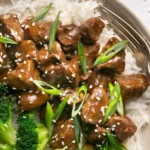
Slow Cooker Teriyaki Beef Bites
- Total Time: 6 hours 10 minutes
- Yield: 8 servings 1x
- Diet: General
Description
Teriyaki sauce flavors this sirloin steak and the crock pot makes it effortless to cook! Enjoy as an appetizer or make it into a meal with rice and a veggie such as broccoli or a green salad!
Ingredients
- 3 lb beef (chuck roast, stew meat, filet mignon, round steak, sirloin, or flat iron steak)
- 2 Tbsp corn starch
- 1/4 cup cold water
- 1 cup pineapple juice or beef broth
- 1/2 cup soy sauce
- 1/2 to 1 cup brown sugar
- 2 Tbsp garlic, minced
- 2 Tbsp apple cider vinegar or rice vinegar
- 1 Tbsp sesame oil
- 1 Tbsp ginger, fresh, minced
- 1/2 tsp black pepper
- Green onions for garnish
- Sesame seeds for garnish
Instructions
- Step: Set the steak out at least 30 minutes before cutting into pieces.
- Step: In a liquid measuring cup, whisk together the pineapple juice, soy sauce, brown sugar, minced garlic, vinegar, sesame oil, minced ginger, and black pepper; set aside.
- Step: Cut the meat into bite-sized pieces and place them in the bottom of a crock pot, then pour the sauce over the top.
- Step: Cover with the lid and cook on LOW for 4-5 hours if using sirloin or leaner cuts, or approximately 8 hours if using stew meat or chuck roast.
- Step: To thicken the sauce, carefully pour it through a fine mesh sieve into a small saucepan and bring to a simmer over medium heat.
- Step: Mix the cornstarch and water together and whisk into the sauce until it thickens.
- Step: Garnish with green onions and sesame seeds.
Notes
The steak bites may look dark because of the soy sauce. Store any leftovers in the fridge for up to 3 days.
- Prep Time: 10 minutes
- Cook Time: 6 hours
- Category: Appetizer
- Method: Slow Cooking
- Cuisine: Asian-inspired
Nutrition
- Serving Size: 1 serving
- Calories: 271 kcal
- Sugar: 18 g
- Sodium: 950 mg
- Fat: 12 g
- Saturated Fat: 5 g
- Unsaturated Fat: 7 g
- Trans Fat: 0 g
- Carbohydrates: 22.2 g
- Fiber: 1 g
- Protein: 31.3 g
- Cholesterol: 70 mg