
This taco spaghetti combines the zesty flavors of a taco with the comfort of pasta for a satisfying meal. It is an efficient one-pot style dish that is ideal for families on a tight schedule.

List of ingredients
- 12 oz 340 g spaghetti noodles – provides the hearty base.
- 1 lb 450 g ground beef – the primary protein source.
- 1 small onion, diced – adds savory depth.
- 3 cloves garlic, minced – provides aromatic flavor.
- 1 packet (1 oz / 28 g) taco seasoning – for a bold Tex-Mex kick.
- 1 can (14.5 oz / 411 g) diced tomatoes – adds texture and acidity.
- 1 can (10 oz / 284 g) mild diced tomatoes with green chilies (like Rotel) – introduces mild heat.
- 2 cups 480 ml beef broth – creates a rich sauce consistency.
- 1 cup 240 ml tomato sauce – binds the flavors together.
- 1½ cups 170 g shredded cheddar cheese – for a melty, cheesy finish.
- ½ cup 120 ml sour cream – adds creaminess and tang.
- 2 tbsp olive oil or vegetable oil – used for browning the meat.
- Salt and black pepper to taste – basic seasoning for balance.
- Optional toppings: chopped fresh cilantro, sliced jalapeños, diced avocado – for fresh contrast.
step-by-step instructions
- Cook Pasta: Bring a large pot of salted water to a boil. Add spaghetti noodles and cook until just al dente (about 1–2 minutes less than package directions). Drain and set aside.
- Brown the Meat: In a large skillet or Dutch oven, heat olive oil over medium-high heat. Add ground beef and cook, breaking it apart with a spatula, until browned and no longer pink. Drain excess grease if needed.
- Add Aromatics & Seasoning: Stir in the diced onion and cook until softened, about 3–4 minutes. Add garlic and cook for another 30 seconds. Sprinkle in taco seasoning and stir well.
- Build the Sauce: Pour in diced tomatoes, tomatoes with green chilies, beef broth, and tomato sauce. Stir and bring to a gentle boil.
- Combine Pasta & Sauce: Add the drained spaghetti to the sauce. Reduce heat to low, toss to coat the pasta evenly, and let it simmer for 3–4 minutes so flavors meld.
- Make it Creamy: Stir in sour cream and half of the shredded cheese until melted and creamy.
- Top & Serve: Sprinkle the remaining cheese on top, cover, and let sit for 1–2 minutes until melted. Garnish with your favorite toppings and serve hot.
Cooking Techniques for Maximum Flavor
Achieving a Deep Brown Sear on Beef
To get the best flavor, ensure the skillet is hot before adding the ground beef. Let the meat sit undisturbed for a few minutes to create a brown crust, which is the result of the Maillard reaction. This step adds a rich, savory depth that cannot be achieved by steaming the meat.
Properly Sautéing Aromatics
Cook the diced onions until they become translucent and slightly golden. This removes the raw bite of the onion and brings out its natural sweetness. Always add the minced garlic last, as it burns quickly and can turn bitter if exposed to high heat for too long.
Toasting Dry Spices
Stirring the taco seasoning into the browned beef and aromatics before adding liquids is essential. This process toasts the spices, releasing the essential oils and intensifying the flavor profile. It ensures the seasoning is evenly distributed throughout the meat.
Managing Pasta Texture
Cooking the spaghetti until it is slightly underdone (al dente) is critical. Since the pasta will simmer in the sauce for several minutes, undercooking it initially prevents it from becoming mushy. This preserves the structural integrity of the noodles.
Ingredient Selection and Quality
Choosing the Right Ground Beef Ratio
An 85/15 lean-to-fat ratio is recommended for this recipe. This provides enough fat for flavor and moisture while avoiding excessive grease. If using a leaner beef, you may need to add an extra tablespoon of oil to prevent the meat from sticking.
Selecting the Best Pasta Type
While spaghetti is the traditional choice, linguine is an excellent alternative due to its slightly wider surface. If you prefer a dish with more sauce adherence, rotini or penne can be used. Just be sure to adjust the simmering time based on the pasta shape.
Choosing the Best Shredded Cheese
For the best melt, grate your own cheddar cheese from a block. Pre-shredded cheeses often contain cornstarch or cellulose to prevent clumping, which can make the sauce slightly grainy. Freshly grated cheese melts more smoothly into the sauce.
Using High-Quality Beef Broth
Low-sodium beef broth is often the best choice because taco seasoning already contains a significant amount of salt. This allows you to control the overall saltiness of the dish. A rich broth provides a more cohesive flavor than using water.
Customizing the Flavor Profile
Increasing the Heat Level
To add more spice, incorporate diced fresh jalapeños during the sautéing process. You can also stir in a pinch of crushed red pepper flakes or a few dashes of hot sauce at the end. Adjusting the type of diced tomatoes with chilies can also change the heat level.
Adding Fresh Vegetable Components
Stirring in a can of drained black beans or corn adds texture and nutritional value. Diced bell peppers can also be sautéed with the onions for extra sweetness and color. These additions make the meal more filling and visually appealing.
Adjusting the Creaminess
If you prefer a thicker, richer sauce, you can substitute a portion of the sour cream with cream cheese. This creates a denser emulsion that clings better to the pasta. Ensure the cheese is softened before stirring it in to avoid lumps.
Reducing the Sodium Content
You can lower the salt by making your own taco seasoning using chili powder, cumin, paprika, and garlic powder. This eliminates the additives found in store-bought packets. Always taste the sauce before adding additional salt and pepper.
Practical Substitutions
Swapping Beef for Lean Turkey or Chicken
Ground turkey or chicken is a great alternative for those seeking a leaner protein. Because these meats have less fat, you should increase the olive oil slightly during the browning phase. Turkey provides a milder flavor that allows the taco seasoning to shine.
Using Vegetable Broth for a Lighter Taste
Replacing beef broth with vegetable broth creates a lighter flavor profile. This is especially useful if you are adding more vegetables to the dish. The vegetable broth provides a clean base that doesn’t overpower the other ingredients.
Substituting Pasta for Zucchini Noodles
For a low-carb version, use spiralized zucchini noodles instead of spaghetti. Add the zucchini noodles at the very end and toss them in the sauce for only one minute. Overcooking zucchini leads to a watery sauce and mushy vegetables.
Using Alternative Cheeses
Monterey Jack or Pepper Jack are excellent substitutes for cheddar. Monterey Jack provides a creamier melt, while Pepper Jack adds an extra layer of spice. A blend of both can offer a balanced flavor and texture.
Serving and Presentation Ideas
Adding Fresh Toppings for Contrast
Fresh toppings provide a necessary contrast to the rich, cheesy sauce. Chopped cilantro adds a bright, herbaceous note, while diced avocado provides a cool creaminess. A squeeze of fresh lime juice just before serving can brighten the overall flavor.
Pairing with Side Dishes
Serve this dish with a side of warm cornbread to complement the Tex-Mex flavors. A crisp green salad with a lime-vinaigrette can balance the heaviness of the pasta. Corn on the cob is another traditional pairing that fits the theme.
Plating for Family Style
Serving the pasta directly from a large cast-iron skillet creates a rustic, family-style presentation. Use a wide bowl to allow the toppings to be spread across the top. Garnish with a sprinkle of fresh green onions for a professional look.
Storage and Preservation
Refrigeration Guidelines
Store leftovers in an airtight container in the refrigerator for up to three days. The pasta will continue to absorb the sauce as it sits, which may make the dish thicker over time. Keep the container tightly sealed to prevent the pasta from drying out.
Freezing the Dish
Taco spaghetti can be frozen for up to two months. Use a freezer-safe container and leave a small amount of space at the top for expansion. Note that the sour cream may separate slightly upon thawing, which can be fixed during reheating.
Preventing Pasta from Drying Out
When storing the dish, consider adding a tablespoon of extra beef broth or water before sealing. This ensures there is enough moisture remaining for the reheating process. This prevents the noodles from becoming gummy or dry.
Reheating Methods
Stovetop Reheating Technique
The stovetop is the best method for reheating this dish. Place the pasta in a skillet over low heat and add a splash of beef broth or water. Stir gently and cover with a lid to steam the noodles back to their original texture.
Microwave Reheating Tips
When using a microwave, heat the pasta in short bursts of 60 seconds. Stir the dish between each interval to ensure the heat is distributed evenly. Adding a teaspoon of water helps create steam, which prevents the cheese from becoming oily.
Oven Reheating for Crispy Toppings
Place the leftovers in an oven-safe dish and cover with foil. Heat at 350 degrees Fahrenheit until warm, then remove the foil and turn on the broiler for two minutes. This creates a bubbly, toasted cheese crust on top.
Troubleshooting Common Issues
Fixing a Sauce that is Too Thick
If the sauce becomes too thick, stir in a small amount of beef broth or water. Add the liquid one tablespoon at a time until the desired consistency is reached. Stir over low heat to ensure the liquid integrates smoothly.
Correcting a Sauce that is Too Thin
To thicken a sauce that is too runny, simmer it uncovered for several minutes. This allows the excess moisture to evaporate and concentrates the flavors. You can also stir in an extra handful of shredded cheese to bind the sauce.
Preventing the Sour Cream from Curdling
To avoid curdling, ensure the heat is reduced to low before stirring in the sour cream. Adding dairy to boiling liquids can cause the proteins to separate. Stirring in a small amount of the warm sauce into the sour cream first can also help.
Handling Overcooked Pasta
If the pasta is overcooked, serve it immediately rather than letting it sit. Do not over-stir the noodles, as this can break them and make the dish gummy. Adding a bit of extra acidity, like lime juice, can help cut through the heaviness of overcooked starch.
Common Questions
Can I make this in a slow cooker?
While this recipe is designed for the stovetop, you can brown the beef and onions first, then add all ingredients except the pasta and dairy to a slow cooker. Cook on low for 4 hours, then stir in the cooked pasta, sour cream, and cheese at the end.
Is this recipe suitable for meal prep?
Yes, this dish is excellent for meal prep because it holds its flavor well. To keep the quality high, store the pasta and sauce together but wait to add fresh toppings like avocado until the day of consumption.
How do I store leftovers safely?
Cool the pasta to room temperature before transferring it to an airtight container. Ensure the container is placed in the refrigerator within two hours of cooking to maintain food safety and prevent spoilage.
Can I use a different type of tomato?
You can use crushed tomatoes or tomato puree instead of diced tomatoes. Crushed tomatoes will result in a smoother, more uniform sauce, whereas diced tomatoes provide chunks of fruit for added texture.
Print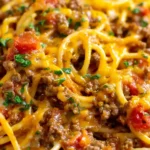
Savory Taco Spaghetti
- Total Time: 35 minutes
- Yield: 6 servings 1x
- Diet: General
Description
This Taco Spaghetti is a fun, flavorful mashup of two comfort food favorites! Tender pasta is tossed with seasoned ground beef, zesty taco seasoning, salsa, and melty cheese for a one-pot meal that’s bold, cheesy, and perfect for busy weeknights!
Ingredients
- 12 oz (340 g) spaghetti noodles
- 1 lb (450 g) ground beef
- 1 small onion, diced
- 3 cloves garlic, minced
- 1 packet (1 oz / 28 g) taco seasoning
- 1 can (14.5 oz / 411 g) diced tomatoes
- 1 can (10 oz / 284 g) mild diced tomatoes with green chilies
- 2 cups (480 ml) beef broth
- 1 cup (240 ml) tomato sauce
- 1½ cups (170 g) shredded cheddar cheese
- ½ cup (120 ml) sour cream
- 2 tbsp olive oil or vegetable oil
- Salt and black pepper to taste
- Chopped fresh cilantro, sliced jalapeños, and diced avocado for topping
Instructions
- Cook Pasta: Bring a large pot of salted water to a boil. Add spaghetti noodles and cook until just al dente (about 1–2 minutes less than package directions). Drain and set aside.
- Brown the Meat: In a large skillet or Dutch oven, heat olive oil over medium-high heat. Add ground beef and cook, breaking it apart with a spatula, until browned and no longer pink. Drain excess grease if needed.
- Add Aromatics & Seasoning: Stir in the diced onion and cook until softened, about 3–4 minutes. Add garlic and cook for another 30 seconds. Sprinkle in taco seasoning and stir well.
- Build the Sauce: Pour in diced tomatoes, tomatoes with green chilies, beef broth, and tomato sauce. Stir and bring to a gentle boil.
- Combine Pasta & Sauce: Add the drained spaghetti to the sauce. Reduce heat to low, toss to coat the pasta evenly, and let it simmer for 3–4 minutes so flavors meld.
- Make it Creamy: Stir in sour cream and half of the shredded cheese until melted and creamy.
- Top & Serve: Sprinkle the remaining cheese on top, cover, and let sit for 1–2 minutes until melted. Garnish with your favorite toppings and serve hot.
Notes
Use 85/15 ground beef for a balance of flavor and less grease. For a spicier version, stir in chopped jalapeños or a dash of hot sauce before serving.
- Prep Time: 10 minutes
- Cook Time: 25 minutes
- Category: Main Course
- Method: Stovetop
- Cuisine: American-Mexican Fusion
Nutrition
- Serving Size: 1 serving
- Calories: 580 kcal
- Sugar: 9 g
- Sodium: 1250 mg
- Fat: 28 g
- Saturated Fat: 14 g
- Unsaturated Fat: 11 g
- Trans Fat: 0 g
- Carbohydrates: 48 g
- Fiber: 5 g
- Protein: 32 g
- Cholesterol: 95 mg