
These hearty baked meatballs are a filling meal option that works perfectly for family dinners. They are cooked in the oven to maintain tenderness and topped with bubbling cheese and rich sauce.

List of ingredients
- 1 lb ground beef – use a lean variety to reduce excess grease.
- 1 lb Italian-style ground beef sausage – provides a robust blend of herbs and spices.
- 1 small onion, diced – adds sweetness and moisture.
- 2 eggs – acts as a binder to hold the meatballs together.
- 1 cup breadcrumbs – helps maintain structure and absorb juices.
- 1 clove garlic, minced – adds a pungent, aromatic flavor.
- 1/2 cup milk – ensures the meat remains tender.
- 1 tsp Italian seasoning – a classic blend for traditional flavor.
- 1 tsp parsley – adds a fresh, herbaceous note.
- 1/4 cup parmesan cheese – provides a salty, nutty depth.
- Salt and pepper to taste – essential for enhancing all other flavors.
- 4 cups spaghetti sauce – used for topping and baking.
- 1 cup mozzarella cheese – creates a melted, golden crust.
step-by-step instructions
- Preheat the Oven: Set your oven to 375 degrees F to ensure a steady cooking temperature.
- Combine Ingredients: In a large mixing bowl, add the ground beef, Italian-style beef sausage, diced onion, eggs, breadcrumbs, minced garlic, milk, Italian seasoning, parsley, salt, pepper, and parmesan cheese.
- Mix Gently: Use your hand or a spoon to blend the ingredients together. Stop mixing as soon as they are combined to avoid overworking the meat, which can lead to a tough texture.
- Form and First Bake: Using an ice cream scoop or your hands, divide the mixture into 15 equal portions. Place them in a 9″x13″ baking dish and bake for 25-30 minutes.
- Add Toppings: Remove the dish from the oven. Pour 4 cups of spaghetti sauce over the meatballs and sprinkle with one cup of mozzarella cheese.
- Final Bake: Return the dish to the oven and bake for another 20-25 minutes. The meatballs are done when they reach an internal temperature of 160 degrees F and the cheese is melted and golden brown.
Meat Selection and Proportions
Choosing the Right Beef Lean-to-Fat Ratio
Selecting the right ground beef is crucial for managing the amount of grease in the pan. A 90% lean beef reduces the amount of fat that renders out during the first bake. If you use a higher fat percentage, you may find more oil floating on top of the sauce in the final stage.
Substituting Beef Sausage for Pork
To keep the recipe clean and consistent, use an Italian-style beef sausage or a turkey-based Italian sausage. These alternatives provide the same fennel and garlic notes found in traditional sausages without using pork. Ensure the sausage is ground finely to blend seamlessly with the beef.
Using All-Beef Meatballs
If you prefer not to use sausage, you can substitute the entire 2 lbs with ground beef. In this case, increase the Italian seasoning by an extra teaspoon to compensate for the lost flavor of the sausage. Adding a pinch of fennel seeds can also replicate that signature Italian sausage taste.
Texture and Binding Techniques
Preventing Tough Meatballs
The most common mistake is over-mixing the meat. When you work the meat too much, the proteins bond too tightly, resulting in a rubbery or dense texture. Mix only until the ingredients are just incorporated and the breadcrumbs are evenly distributed.
The Role of the Panade
The combination of milk and breadcrumbs creates a basic panade. This mixture prevents the meat proteins from tightening up too much during the baking process. It traps moisture inside the meatball, ensuring they remain juicy even after two rounds of oven baking.
Incorporating Fresh Herbs
While dried Italian seasoning is convenient, adding a tablespoon of fresh chopped parsley or basil can brighten the flavor. Fresh herbs should be folded in at the very end of the mixing process. This prevents the herbs from bruising and losing their aromatic oils.
Oven Temperature and Timing
Benefits of Moderate Baking Heat
Baking at 375 degrees F allows the meatballs to cook through without searing the outside too quickly. This temperature ensures the center reaches the safe internal temperature of 160 degrees F while keeping the exterior tender. It provides a more consistent cook than high-heat roasting.
High-Heat Searing Alternative
If you prefer a browned crust, you can bake the meatballs at 450 degrees F for 15-20 minutes. After this initial sear, add the sauce and cheese and lower the temperature to 375 degrees F for the final 10-15 minutes. This creates a firmer exterior while maintaining a moist interior.
Monitoring Internal Temperature
Using a meat thermometer is the only way to guarantee food safety and quality. Pull the meatballs out once they hit 160 degrees F to prevent them from drying out. Overcooking beyond this point can make the beef grainier and less succulent.
Serving and Pairing Ideas
Classic Pasta Pairings
Serving these meatballs over spaghetti or linguine is the traditional choice. The sauce from the baking dish can be tossed with the pasta to ensure every strand is coated. Al dente pasta provides a firm contrast to the tender meatballs.
Low-Carb Vegetable Alternatives
For a lighter meal, serve the meatballs over spiralized zucchini noodles or steamed spaghetti squash. These options absorb the sauce well while significantly reducing the carbohydrate count. Roasted cauliflower steaks also serve as a sturdy base for the meatballs.
Complementary Side Dishes
Garlic bread or toasted ciabatta is ideal for soaking up the extra sauce and melted cheese. A crisp side salad with a light vinaigrette helps cut through the richness of the beef and mozzarella. Steamed broccoli or sautéed spinach also adds necessary nutrients to the plate.
Storage and Preservation
Freezing Raw Meatballs
To prepare for future meals, roll the meatballs but do not bake them. Place them on a baking sheet and freeze individually until solid to prevent them from sticking together. Once frozen, transfer them to an airtight freezer bag for up to two months.
Refrigerating Cooked Meatballs
Cooked meatballs can be stored in an airtight container in the refrigerator for up to four days. Keep them submerged in the sauce to prevent the meat from oxidizing or drying out. Ensure the container is fully sealed to avoid absorbing other fridge odors.
Using Airtight Storage Containers
Glass containers are preferable for storing these meatballs because they do not stain from the tomato sauce. Ensure there is enough headspace in the container to avoid crushing the meatballs. Plastic Ziploc bags can also work if the sauce has cooled completely.
Reheating Guidelines
Best Oven Reheating Method
Cover the meatballs and sauce with aluminum foil to trap moisture. Heat at 325 degrees F for about 15-20 minutes until the center is hot. This method preserves the texture of the meat and keeps the cheese gooey.
Microwave Quick Heating
For a faster option, place a portion of meatballs and sauce in a microwave-safe dish. Cover with a damp paper towel to prevent the meat from becoming rubbery. Heat in 1-minute intervals, stirring gently in between, until warmed through.
Stovetop Simmering
Place the meatballs and sauce in a skillet over low heat. Add a tablespoon of water or beef broth to loosen the sauce if it has thickened too much in the fridge. Simmer gently for 10 minutes, covering with a lid to steam the meatballs.
Troubleshooting Common Issues
Fixing Meatballs That Fall Apart
If your meatballs are crumbling, it is usually due to a lack of binder or too much moisture from the onions. Ensure the breadcrumbs are fully incorporated and that the onion is finely diced. Adding an extra egg can provide more structural integrity if the meat is very loose.
Managing Excess Pan Grease
If you notice a layer of oil on top of the sauce, use a wide spoon to skim it off before serving. Alternatively, bake the meatballs on a wire rack over a baking sheet for the first 25 minutes. This allows the fat to drip away from the meat before you transfer them to the sauce dish.
Correcting Dry Meatballs
Dry meatballs often result from using meat that is too lean or over-mixing the batter. To fix this, ensure you are using the milk and egg as specified in the recipe. If they come out dry, simmer them in the sauce for an extra 10 minutes to rehydrate the proteins.
Frequently Asked Questions
Can I use different cheeses instead of mozzarella?
Yes, you can use a blend of Italian cheeses such as provolone, fontina, or an Italian four-cheese blend. For a sharper taste, a mix of mozzarella and sharp white cheddar also works well.
How do I keep the meatballs moist?
The secret is the combination of milk and breadcrumbs, which keeps the meat tender. Additionally, avoiding over-mixing prevents the meat from becoming tough and ensures the juices stay inside.
What is the best type of spaghetti sauce to use?
A thick marinara or a garlic-heavy tomato sauce works best for baking. If using a homemade sauce, ensure it is slightly thicker than usual so it doesn’t become watery in the oven.
Can I make these meatballs in a slow cooker?
While this is a baked recipe, you can brown the meatballs in a pan first and then simmer them in a slow cooker with sauce on low for 4-6 hours. However, you will lose the melted cheese crust unless you finish them under a broiler.
} Print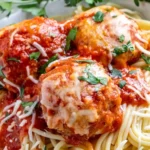
Savory Oven-Baked Meatballs with Melted Cheese
- Total Time: 75 minutes
- Yield: 5 servings 1x
- Diet: General
Description
If you want a dish that is absolutely delicious and filling these Baked Meatballs are it! Giant, full of flavor and perfect for the whole family!
Ingredients
- 1 lbs ground beef
- 1 lb beef Italian sausage
- 1 small onion (diced)
- 2 eggs
- 1 cup breadcrumbs
- 1 clove garlic (minced)
- 1/2 cup milk
- 1 tsp italian seasoning
- 1 tsp parsley
- 1/4 cup parmesan cheese
- Salt & pepper (to taste)
- 4 cups spaghetti sauce
- 1 cup mozzarella cheese
Instructions
- Preheat: Preheat oven to 375.
- Combine: In large bowl add your ground beef, onion, eggs, breadcrumbs, garlic, milk, italian seasoning, parsley, salt, pepper and parmesan cheese.
- Mix: Using your hand or a spoon mix it all together gently just until it is combined, you don’t want to over mix.
- Portion & Bake: Using an ice cream scoop or your hands portion your meat mixture out into 15 equally sized meatballs and place in 9″x13″ baking dish, bake for 25-30 minutes.
- Top: Remove from oven and top with 4 cups of spaghetti sauce and one cup of cheese.
- Final Bake: Place back in oven and bake for another 20-25 minutes until meatballs reach internal temperature of 160 degrees F and cheese is melted and golden.
Notes
Use the leanest beef you can find to produce less grease. Do not overmix the meatball mixture, as this will cause it to get tough. You can use canned sauce or a homemade version, ensuring you have 4 cups total.
- Prep Time: 15 minutes
- Cook Time: 60 minutes
- Category: Main Course
- Method: Baking
- Cuisine: American, Italian
Nutrition
- Serving Size: 1 serving
- Calories: 814 kcal
- Sugar: 11 g
- Sodium: 2085 mg
- Fat: 57 g
- Saturated Fat: 22 g
- Unsaturated Fat: 29 g
- Trans Fat: 1 g
- Carbohydrates: 32 g
- Fiber: 4 g
- Protein: 44 g
- Cholesterol: 220 mg