
Water bath canning is an efficient method to store summer peaches for year-round enjoyment. This process uses a simple syrup to preserve the fruit’s sweetness and texture while ensuring a safe seal.

List of ingredients
- Fresh peeled peaches – use firm, ripe fruit for best results.
- 7 quart Mason jars – ensure jars are free of chips or cracks.
- 9 cups simple syrup – a medium-density mixture of sugar and water.
step-by-step instructions
- Sterilize Jars: Heat washed jars in an oven at 275 degrees Fahrenheit for twenty minutes or place them in boiling water for ten minutes.
- Slice Peaches: Cut the peeled peaches into halves, quarters, or slices using a paring knife.
- Pack Peaches: Place peach slices into the jars firmly without crushing them, leaving 1 inch of headspace.
- Fill with Syrup: Pour the simple syrup over the peaches, leaving 1/2 inch of headspace at the top of the jar.
- Place in Canner: Set the jars in a large pot or canner on a rack or towel, ensuring they are covered by at least one inch of water.
- Water Bath Process: Bring the water to a gentle boil and process quarts for 25 minutes or pints for 20 minutes.
Syrup Preparation and Customization
The Medium Syrup Ratio
A medium syrup is achieved by using a ratio of one part sugar to two parts water. This provides a balanced sweetness that preserves the fruit without overpowering its natural flavor.
Creating a Light Syrup
For those who prefer a less sweet preserve, a light syrup can be made by increasing the water ratio to three parts water for every one part sugar. This is ideal for peaches that are exceptionally sweet on their own.
Creating a Heavy Syrup
A heavy syrup uses a one-to-one ratio of sugar to water. This creates a thicker consistency and a much sweeter result, which is often preferred for use in desserts or baking.
Using Raw Sugars for Depth
Replacing refined white sugar with raw sugars like Demerara can add a richer, more complex flavor profile to the syrup. The molasses notes in raw sugar complement the natural acidity of the peaches.
Fruit Selection and Preparation
Choosing the Best Peach Variety
Select peaches that are ripe but still firm to the touch. Overripe peaches tend to break down and become mushy during the water bath canning process.
Efficient Peeling Techniques
Peaches should be washed and peeled before slicing to ensure a smoother texture in the final product. Blanching peaches in boiling water for a few seconds allows the skin to slip off easily.
Proper Slicing Methods
Use a sharp paring knife to cut peaches into consistent sizes, such as halves or quarters. Slicing over a bowl prevents the slippery fruit from sliding across the counter.
Preventing Fruit Oxidation
Process the peaches quickly once they are peeled and sliced to prevent browning. Keeping the slices in a light syrup solution before packing can also help maintain their bright color.
Equipment and Sterilization Guide
Selecting the Right Canning Pot
Use a pot that is deep enough to cover the tops of the jars by at least one inch of water. This ensures that heat is distributed evenly around the entire jar during the boiling process.
Importance of Jar Sterilization
Sterilizing jars eliminates microorganisms that could cause spoilage. This step is critical for ensuring that the contents remain safe for consumption over several months.
Using the Oven Sterilization Method
Place clean jars in the oven at 275 degrees Fahrenheit for 20 minutes. This method keeps the jars warm, which prevents them from cracking when filled with hot syrup.
Using the Boiling Water Method
Alternatively, jars can be sterilized by boiling them in water for 10 minutes. Ensure the jars are handled with care and cooled slightly to match the temperature of the syrup.
Safe Jar Handling Tools
Use a dedicated jar lifter or insulated rubber gloves when moving jars in and out of the canner. The glass and water are extremely hot and can cause severe burns if handled improperly.
The Canning Process Nuances
Managing Headspace
Leave exactly one inch of space when packing the fruit and 1/2 inch of space after adding the syrup. Correct headspace is essential for creating a proper vacuum seal during cooling.
Removing Trapped Air Bubbles
Run a thin butter knife or a specialized canning bubble remover around the inside of the jar before sealing. This removes air pockets that could interfere with the sealing process.
Cleaning the Jar Rims
Wipe the rims of the jars with a clean, damp dishcloth to remove any sticky syrup residue. Even a small amount of syrup on the rim can prevent the lid from sealing airtight.
Securing the Lids Correctly
Place the flat lid on the jar and screw the metal ring on until it is finger-tight. Over-tightening the ring can prevent the lid from sealing properly as the jar cools.
Preventing Glass Breakage
Never place jars directly on the bottom of the canning pot. Use a canning rack or a folded dish towel to create a barrier between the glass and the direct heat source.
Post-Canning Procedures
Safe Removal from the Canner
Carefully lift the jars out of the boiling water using a jar lifter. Place them immediately onto a towel or a wooden cutting board to insulate them from cold countertops.
The Cooling Window
Allow the jars to sit undisturbed for at least six hours, though overnight is preferred. This cooling period is when the vacuum seal is actually formed.
Testing the Vacuum Seal
Once the jars are completely cool, press the center of the lid. If the lid does not pop or flex, the vacuum seal has been successfully achieved.
Accurate Labeling Practices
Label each jar with the specific content and the date it was canned. This helps with inventory management and ensures you use the oldest jars first.
Storage and Longevity
Optimal Storage Environment
Store the canned peaches in a cool, dark, and dry location such as a pantry or cellar. Avoid areas with extreme temperature fluctuations, as this can affect the quality of the seal.
Expected Shelf Life
Home-canned peaches typically maintain peak quality for 18 to 24 months. While they may remain safe to eat after this period, the flavor and color will gradually decline.
Identifying Signs of Spoilage
Inspect jars for bulging lids, leaking seals, or unusual cloudiness in the syrup. If you see mold or notice an off-smell upon opening, discard the contents immediately.
Troubleshooting and FAQs
Why didn’t my jars seal?
Seal failure is often caused by residue on the jar rim, incorrect headspace, or over-tightening the rings. Ensure the rims are perfectly clean and the rings are only finger-tight.
Do peaches have to be peeled to can them?
Peeling is not strictly required for safety, but it is highly recommended for quality. Peeling results in a much more pleasant eating experience and a more professional appearance.
Is a pressure canner better for peaches?
No, water bath canning is preferred for peaches. Using a pressure canner can overcook the fruit, resulting in a mushy texture rather than the desired firm-yet-tender consistency.
How can I prevent mushy peaches?
Use firm, under-ripe peaches and ensure you adhere strictly to the boiling times. Over-processing the jars in the water bath will break down the cellular structure of the fruit.
Can I adjust the syrup sweetness?
Yes, you can switch between light, medium, and heavy syrups depending on your preference. Always maintain the correct ratio of sugar to water to ensure the syrup remains stable.
Print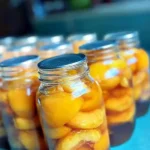
Preserving Fresh Peaches with Water Bath Canning
- Total Time: 55 minutes
- Yield: 7 quarts 1x
- Diet: Vegetarian
Description
Water bath canning peaches at home is simple and delicious!
Ingredients
- Fresh peeled peaches
- 7 quart Mason jars
- 9 cups simple syrup
Instructions
- Sterilize: Sterilize jars.
- Slice: Slice peaches as desired (half, quarter, or slices).
- Pack: Pack peaches into jars.
- Fill: Fill jars with simple syrup leaving 1/2″ headspace.
- Place: Place jars in canner.
- Water Bath: Water bath jars for 25 minutes for quarts or 20 minutes for pints.
Notes
We use medium simple syrup for our peaches but light or heavy syrup can also be used.
- Prep Time: 30 minutes
- Cook Time: 25 minutes
- Category: Canning
- Method: Water Bath Canning
- Cuisine: American
Nutrition
- Serving Size: 1 cup
- Calories: 160 kcal
- Sugar: 32 g
- Sodium: 10 mg
- Fat: 0 g
- Saturated Fat: 0 g
- Unsaturated Fat: 0 g
- Trans Fat: 0 g
- Carbohydrates: 40 g
- Fiber: 2 g
- Protein: 1 g
- Cholesterol: 0 mg