
This elegant dessert combines a tender vanilla sponge with the freshness of sugar-macerated peaches and rich vanilla bean whipped cream. It is a structured yet light cake perfect for summer celebrations.

List of ingredients
- 2 1/4 cups cake flour – provides a fine, tender crumb.
- 1 1/2 tsp baking powder – essential for cake lift.
- 1/4 tsp baking soda – reacts with buttermilk for leavening.
- 1/2 tsp salt – balances the sweetness of the batter.
- 1/2 cup + 2 tbsp unsalted butter, softened – creates a creamy emulsion.
- 1 cup buttermilk – adds moisture and acidity.
- 1 1/2 cups granulated sugar – sweetens the cake base.
- 1 1/2 tbsp vanilla bean paste – provides intense vanilla flavor with visible seeds.
- 3 eggs, room temperature – ensures stable batter aeration.
- 3 cups fresh, thinly sliced peaches – the primary fruit filling.
- 1/4 cup + 2 tbsp granulated white sugar – used for macerating the peaches.
- 1 1/2 cups heavy whipping cream – chilled for the whipped topping.
- 3/4 cup powdered sugar – sweetens and stabilizes the cream.
- 1 1/2 tsp vanilla bean paste – flavors the whipped cream.
step-by-step instructions
- Prepare the Oven: Preheat your oven to 350 degrees Fahrenheit to ensure a consistent temperature for baking.
- Cream Butter and Sugar: In a large mixing bowl, cream together the softened butter and 1 1/2 cups of granulated sugar until the mixture is light and fluffy.
- Mix in Wet Ingredients: Add the three room-temperature eggs and 1 1/2 tbsp of vanilla bean paste, mixing until well combined. Stir in the buttermilk until the batter is smooth.
- Sift Dry Ingredients: In a separate medium bowl, sift together the cake flour, salt, baking powder, and baking soda to remove lumps.
- Combine Batter: Gradually add the dry ingredients into the wet mixture, stirring until everything is just combined without overmixing.
- Bake the Layers: Divide the batter evenly between three greased 6-inch cake pans. Bake at 350 degrees for 35-38 minutes, or until a toothpick inserted in the center comes out clean.
- Cool the Cakes: Let the cakes rest in their pans for five minutes before transferring them to a cooling rack to cool completely.
- Prepare the Peaches: Place thinly sliced peaches in a bowl and sprinkle with 1/4 cup + 2 tbsp of granulated sugar. Stir gently and let sit covered for 30 minutes to create a natural syrup.
- Make the Whipped Cream: Use an electric mixer to beat heavy whipping cream on high until stiff peaks form. Sift in powdered sugar, mix briefly, then fold in the vanilla bean paste.
- Level the Cakes: Use a sharp knife to slice off the domed tops of the cooled cake layers to ensure they stack evenly.
- Assemble First Layer: Pour 2-3 tbsp of the peach syrup over the first cake layer. Arrange a layer of sliced peaches on top, followed by one-third of the whipped cream and another layer of peaches.
- Assemble Second Layer: Place the second cake layer on top. Repeat the process by adding peach syrup, a layer of peaches, whipped cream, and more peaches.
- Final Assembly: Place the third cake layer on top. Cover with the remaining whipped cream, top with the last of the peaches, and drizzle the remaining peach syrup over the entire cake.
Professional Baking Techniques
Use Room Temperature Ingredients for Emulsification
Ensure that your eggs, butter, and buttermilk are all at room temperature before starting. Cold ingredients do not emulsify properly, which can lead to a broken batter and a denser cake texture. Room temperature fats trap air more effectively during the creaming stage, resulting in a fluffier sponge.
The Advantage of Cake Flour
Cake flour has a lower protein content than all-purpose flour, which prevents excessive gluten development. This results in a softer, finer crumb that is characteristic of professional layer cakes. If you cannot find cake flour, you can substitute it by removing two tablespoons of all-purpose flour from a cup and replacing them with cornstarch.
Sifting for Aeration and Consistency
Sifting your dry ingredients is a critical step for avoiding lumps of baking powder or soda. It also aerates the flour, making it easier to incorporate into the wet ingredients without overworking the batter. Overmixing the batter after adding flour can lead to a tough cake, so sifting ensures a smooth blend quickly.
Preventing Cake Sticking
Using circular parchment paper inserts at the bottom of 6-inch pans is highly recommended. While greasing the sides is helpful, parchment provides a foolproof release for the cake layers. This prevents the bottom of the cake from tearing when you invert the pan onto the cooling rack.
Ensuring Even Layers
To ensure each cake layer is the same height, use a kitchen scale to weigh the batter into the three pans. Even distribution prevents one layer from being thinner than the others. This makes the final assembly much more stable and visually appealing.
Peach Preparation and Maceration
Choosing the Right Peach Ripeness
Select peaches that are fragrant and give slightly to gentle pressure when squeezed. Overripe peaches can become too mushy and lose their structure during slicing. Underripe peaches will not release enough juice when mixed with sugar, resulting in less syrup for the cake.
The Science of Maceration
Sprinkling sugar over sliced peaches triggers osmosis, drawing the moisture out of the fruit to create a natural syrup. This process softens the fruit and intensifies the peach flavor. Letting the peaches sit for 30 minutes is essential for the sugar to dissolve completely.
Maintaining Consistent Slice Thickness
Slice the peaches as thinly and uniformly as possible. Thin slices allow for more stable layering and ensure that every bite of the cake has a balanced ratio of fruit to sponge. Thick slices can cause the whipped cream layers to slide or the cake to lean.
Deciding Whether to Peel
Peeling peaches is optional but results in a more refined texture. If the skins are thin and tender, you can leave them on for a more rustic look and additional nutrients. For a professional, smooth finish, use a vegetable peeler or blanch the peaches in boiling water for a few seconds to slip the skins off.
Whipped Cream Stability and Flavor
Maintaining Cold Equipment
Keep your heavy whipping cream, mixing bowl, and beaters in the freezer for 10-15 minutes before whipping. Cold fat molecules in the cream hold air bubbles more effectively, which allows the cream to reach stiff peaks faster. This is especially important in warm kitchen environments.
Identifying Stiff Peaks
Whip the cream until stiff peaks form, meaning the cream stands straight up when the beaters are lifted without drooping. Be careful not to over-whip, as this will cause the cream to separate and turn into butter. If the cream looks grainy, you have gone too far.
Incorporating Vanilla Bean Paste
Vanilla bean paste is preferred over extract because it contains the actual seeds of the vanilla pod. This provides a deeper, more complex flavor and a professional visual appearance with small black specks. Fold the paste in gently at the end to avoid deflating the whipped air.
Adding Powdered Sugar Correctly
Sift the powdered sugar into the whipped cream to avoid clumps. Sifting ensures the sweetener is distributed evenly throughout the cream without requiring excessive mixing. Over-mixing the sugar into the cream can sometimes cause it to lose volume.
Structural Assembly and Layering
Leveling the Cake Domes
Most cakes dome slightly during baking due to the way heat penetrates the pan. Use a serrated knife to carefully saw off these domes to create flat surfaces. Flat layers are necessary to prevent the cake from tilting or sliding as you add the weight of the peaches and cream.
Managing the Peach Syrup
The syrup produced during maceration is a natural soak that adds moisture to the sponge. Applying 2-3 tablespoons per layer ensures the cake stays moist without becoming soggy. Drizzle the syrup evenly across the surface, focusing on the edges where the cake often dries out.
Layering for Balance
Place the peaches directly on the syrup-soaked cake to lock in moisture. Then, apply a generous layer of whipped cream to act as a glue for the next layer of peaches. This alternating pattern of sponge, fruit, and cream ensures structural integrity and flavor balance.
Final Topping and Drizzling
The final drizzle of peach syrup should be done just before serving or shortly after assembly. This gives the cake a glossy, appetizing finish. Avoid over-saturating the top layer of cream, as too much syrup can cause the cream to break down over time.
Customization and Variations
Adding Almond Extract
Almond and peach are classic flavor pairings that complement each other well. You can replace a small portion of the vanilla bean paste with almond extract in the cake batter. This adds a subtle nutty depth that enhances the natural sweetness of the peaches.
Using Different Summer Fruits
While peaches are the star, this method works well with nectarines or a mix of stone fruits. You can also incorporate fresh raspberries or blueberries into the peach layers. Ensure any added fruits are sliced similarly to the peaches to maintain the cake’s stability.
Adjusting the Flour Blend
If you prefer a slightly sturdier cake for transport, you can use a 50/50 blend of cake flour and all-purpose flour. This increases the protein content and provides more support for the fruit layers. However, this will result in a slightly less tender crumb.
Reducing the Sweetness
If the peaches are exceptionally sweet, you can reduce the macerating sugar by one tablespoon. Similarly, you can reduce the powdered sugar in the whipped cream. Taste the components individually to ensure a balanced final product.
Storage and Preservation
Refrigeration Requirements
Because this cake contains fresh fruit and whipped cream, it must be stored in the refrigerator. The dairy components are perishable and the fruit can ferment if left at room temperature. A consistent temperature of 40 degrees Fahrenheit or below is ideal.
Using Air-Tight Containers
Store the cake in a cake dome or a large airtight container to prevent it from absorbing odors from other foods in the fridge. Air exposure can also dry out the sponge and cause the whipped cream to lose its loft. If no container is available, a loose covering of plastic wrap can work.
Understanding Maximum Shelf Life
This cake is best enjoyed within 48 hours of assembly. Over time, the moisture from the peaches will continue to migrate into the cake, which may eventually make the bottom layers too soft. The whipped cream also tends to lose its stability after two days.
Serving and Slicing Techniques
Optimal Serving Temperature
Serve the cake chilled to ensure the whipped cream and peach layers remain firm. If the cake becomes too warm, the cream may soften and the layers could shift during slicing. Chilling helps the syrup set and the flavors to meld.
Cutting Clean Slices
To get a clean cut through the layers, use a long, sharp knife dipped in hot water. Wipe the knife clean after every single cut. This prevents the whipped cream and peaches from smearing across the sides of the slices, preserving the visual layers.
Plating and Presentation
Place each slice on a plate and garnish with a fresh mint leaf or an extra slice of fresh peach. Since the cake is already drizzled with syrup, no additional sauce is needed. The contrast between the white cream and golden peaches is the main visual attraction.
Troubleshooting Common Issues
Dealing with a Sinking Center
If the cake sinks in the middle, it is often due to over-leavening or opening the oven door too early. Ensure your baking powder and soda are fresh and avoid peaking at the cake until at least 30 minutes have passed. If it sinks, you can simply level it off with a knife during assembly.
Fixing Grainy Whipped Cream
Grainy cream is a sign of over-beating, where the fat begins to separate from the liquid. If you catch it early, you can sometimes fold in a tablespoon of liquid heavy cream by hand to smooth it out. If it has turned into butter, you must start over with fresh cream.
Preventing Watery Peach Layers
If the peaches release too much liquid, the cake can become soggy. To prevent this, ensure you let the peaches macerate for the full 30 minutes, then use a slotted spoon to place the fruit on the cake. This allows you to control exactly how much syrup is applied to the sponge.
Managing Batter Separation
If the batter looks curdled after adding eggs or buttermilk, it is usually a temperature issue. You can gently warm the bottom of the bowl over a pot of simmering water for a few seconds while whisking. This helps the fats and liquids re-emulsify into a smooth batter.
Frequently Asked Questions
Can I use frozen peaches instead of fresh?
Yes, you can use frozen peaches, but they must be completely thawed and drained of excess moisture first. Frozen peaches tend to release more water than fresh ones, so be cautious with the amount of syrup you pour over the cake layers.
Can I use a different pan size?
You can use 8-inch or 9-inch pans, but you will need to adjust the baking time. Larger pans result in thinner layers, so they will likely bake faster than 35-38 minutes. Use the toothpick test to ensure they are done.
How can I substitute buttermilk?
If you do not have buttermilk, you can make a substitute by adding one tablespoon of lemon juice or white vinegar to one cup of whole milk. Let the mixture sit for 5 to 10 minutes until it curdles slightly before adding it to the batter.
What can I use if I don’t have heavy whipping cream?
Heavy whipping cream is necessary for the structure of the filling. You can substitute it with a stabilized whipped topping or a stiff mascarpone-based cream. Avoid using non-dairy creamers as they lack the fat content required to hold up the peach layers.
Print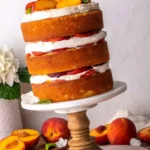
Peaches and Cream Layer Cake
- Total Time: 95 minutes
- Yield: 10 cake slices 1x
- Diet: General
Description
Moist and tender vanilla cake filled with fresh peaches and vanilla bean whipped cream topped with fresh peach syrup.
Ingredients
- 2 1/4 cups cake flour
- 1 1/2 tsp baking powder
- 1/4 tsp baking soda
- 1/2 tsp salt
- 1/2 cup + 2 tbsp softened, unsalted butter
- 1 cup buttermilk
- 1 1/2 cups granulated sugar
- 1 1/2 tbsp vanilla bean paste
- 3 eggs, at room temperature
- 3 cups fresh, thinly sliced peaches
- 1/4 cup + 2 tbsp granulated white sugar
- 1 1/2 cups heavy whipping cream
- 3/4 cup powdered sugar
- 1 1/2 tsp vanilla bean paste
Instructions
- Step: Preheat oven to 350 degrees.
- Step: Cream 1/2 cup + 2 tbsp of butter and 1 1/2 cups of granulated sugar together in a large bowl.
- Step: Add in 3 eggs and 1 1/2 tbsp vanilla bean paste and mix until combined.
- Step: Add in 1 cup of buttermilk and combine.
- Step: Sift 2 1/4 cups of cake flour, 1/2 tsp of salt, 1 1/2 tsp of baking powder and 1/4 tsp of baking soda together.
- Step: Add the dry ingredients to the wet ingredients a little at a time until everything is combined together.
- Step: Divide the batter evenly between 3 6″ greased cake pans.
- Step: Bake the cakes at 350 degrees for 35-38 minutes, or until a toothpick comes out clean from the centers.
- Step: Let the cakes cool in their pans for five minutes and then transfer them to a cooling rack to finish cooling completely.
- Step: Add 3 cups of thinly sliced peaches to a bowl and sprinkle 1/4 cup + 2 tbsp of granulated white sugar over the peaches.
- Step: Gently stir to coat the peaches with sugar, cover, and let sit for around 30 minutes.
- Step: Whip 1 1/2 cups of heavy whipping cream with an electric mixer on high until stiff peaks form.
- Step: Sift in 3/4 cup of powdered sugar and mix just until combined.
- Step: Add in 1 1/2 tsp of vanilla bean paste and combine.
- Step: Using a sharp knife cut the domed tops off of each cake layer.
- Step: Pour 2-3 tbsp of peach syrup over the first cake layer.
- Step: Arrange a layer of sliced peaches on top of the cake layer.
- Step: Add about 1/3 of the whipped cream on top of the peaches.
- Step: Arrange another layer of peaches over the whipped cream.
- Step: Add the second cake layer on top and repeat the steps.
- Step: Add the remaining cake layer on top and top with the rest of the whipped cream.
- Step: Add the remaining sliced peaches on top of the cake.
- Step: Drizzle the remaining peach syrup over the cake and serve!
Notes
Store leftovers in the fridge for up to two days. Ensure all wet ingredients (eggs, buttermilk, butter) are room temperature. Weigh cake batter in pans for even layers. Use 6″ circular parchment paper inserts to prevent sticking. Chill the bowl and beaters before whipping cream.
- Prep Time: 60 minutes
- Cook Time: 35 minutes
- Category: Dessert
- Method: Baking
- Cuisine: American
Nutrition
- Serving Size: 1 cake slice
- Calories: 620 kcal
- Sugar: 48 g
- Sodium: 310 mg
- Fat: 32 g
- Saturated Fat: 19 g
- Unsaturated Fat: 11 g
- Trans Fat: 0 g
- Carbohydrates: 58 g
- Fiber: 2 g
- Protein: 7 g
- Cholesterol: 115 mg