
Prepare a fast and savory dinner with this Mongolian-style beef and noodle dish. It uses ground beef and wide rice noodles tossed in a sweet and spicy glaze for a restaurant-quality meal at home.

List of ingredients
- 1 pound Ground Beef – lean is preferred for less grease.
- 1 teaspoon Ground Ginger – provides a warm, aromatic base.
- 1 Tablespoon Minced Garlic – adds a pungent, savory depth.
- 1/4 cup Brown Sugar – creates the signature sweet glaze.
- 1/2 cup Beef Broth – helps build the sauce volume.
- 1/2 cup Soy Sauce (low sodium) – the primary salty component.
- 1/4 cup Hoisin Sauce – adds thickness and a complex Asian flavor.
- 1/2 teaspoon Black Pepper – for basic seasoning.
- 1/2 teaspoon Red Pepper Flakes – adds a subtle heat.
- 8 oz Wide Rice Noodles – the chewy base of the dish.
- 2 Tablespoons Cornstarch – used to thicken the sauce.
- 4 Green Onions (sliced) – used for garnish and fresh flavor.
- 1 Tablespoon Sesame Seeds (optional) – adds a nutty crunch.
step-by-step instructions
- Brown the Beef: In a large skillet, brown the 1 pound ground beef, breaking it up as it cooks. Drain any excess grease. Add 1 tablespoon minced garlic and 1 teaspoon ground ginger, and cook for 1 minute until fragrant.
- Cook the Noodles: While the beef cooks, prepare 8 oz wide rice noodles according to package instructions. Rinse with cold water and set aside.
- Combine Sauce Ingredients: Add 1/2 cup soy sauce, 1/2 cup beef broth, 1/4 cup brown sugar, 1/4 cup hoisin sauce, 1/2 teaspoon black pepper, and 1/2 teaspoon red pepper flakes to the skillet. Stir well to combine.
- Thicken the Sauce: In a small bowl, mix 2 tablespoons cornstarch with a small amount of cold water until dissolved. Stir this mixture into the skillet. Bring to a low boil and cook until the sauce thickens.
- Toss with Noodles: Add the cooked noodles to the skillet and toss to coat evenly with the sauce and meat mixture.
- Final Rest and Garnish: Remove from heat and let sit for a few minutes so the noodles absorb the sauce. Serve warm topped with 4 sliced green onions and 1 tablespoon sesame seeds (optional).
Cooking Techniques for Best Results
Browning the Beef Thoroughly
Cook the beef on medium-high heat until it is fully browned and crumbled. This ensures the meat develops a deep flavor. Always drain the excess grease to prevent the final sauce from becoming oily.
Properly Preparing Rice Noodles
Follow the package directions strictly to avoid mushy noodles. Always rinse them with cold water immediately after draining. This removes excess starch and prevents the noodles from sticking together.
Creating the Perfect Cornstarch Slurry
Combine cornstarch with a small amount of cold water and stir until completely smooth. Adding the cornstarch as a slurry instead of a powder prevents lumps from forming in the hot sauce.
The Importance of Simmering the Sauce
Allow the sauce to reach a low boil after adding the slurry. This heat activates the cornstarch, ensuring the sauce thickens enough to cling to the noodles and beef.
Preventing Noodle Overcooking
Do not overcook the noodles during the initial boiling phase. Since they will be tossed in a hot skillet, keeping them slightly al dente prevents them from falling apart during the final step.
Using the Right Pan
Use a large skillet or a wok for this recipe. A wider pan provides more surface area for browning the beef and makes it easier to toss the noodles without breaking them.
Ingredient Alternatives and Swaps
Using Different Beef Cuts
While ground beef is budget-friendly, you can use thinly sliced flank steak. If using steak, sear the strips quickly on high heat before adding the sauce ingredients.
Low Sodium Soy Sauce Substitutes
For a soy-free alternative, use coconut aminos. Coconut aminos provide a similar salty and sweet profile but contain less sodium than traditional soy sauce.
Hoisin Sauce Replacements
If you lack hoisin sauce, you can use a mix of barbecue sauce and a splash of soy sauce. Garlic teriyaki sauce or bean paste are also suitable alternatives.
Alternative Sweeteners
Substitute brown sugar with coconut sugar or date sugar for a different flavor profile. You can also adjust the quantity of sugar based on your preference for sweetness.
Customizing the Spice Level
Increase the red pepper flakes for a spicier dish. Alternatively, add a teaspoon of Sriracha or a pinch of dried chili peppers for a more intense heat.
Other Protein Options
Ground turkey or ground chicken work well as leaner substitutes for beef. You can also use a mix of ground beef and turkey to balance flavor and fat content.
Adding Vegetables for Nutrition
Incorporating Broccoli and Cauliflower
Add small broccoli florets or cauliflower pieces during the sauce-thickening stage. Steam them slightly before adding to ensure they are tender but still crisp.
Adding Snap Peas and Carrots
Thinly sliced carrots and snap peas add color and a fresh crunch. Stir them in just before adding the noodles so they remain vibrant and firm.
Using Frozen Mixed Vegetable Blends
Frozen peas and carrots are a convenient way to add nutrition. Thaw them quickly under warm water and stir them into the skillet during the last few minutes of cooking.
Adding Sliced Mushrooms
Brown sliced mushrooms along with the ground beef at the beginning. This adds an earthy, umami flavor that complements the savory Mongolian sauce.
Serving Suggestions and Pairings
Pairing with Roasted Broccoli
Serve this dish with a side of oven-roasted broccoli. The charred flavor of the broccoli balances the sweetness of the beef glaze.
Serving with Roasted Asparagus
Roasted asparagus provides a light and healthy contrast to the hearty beef and noodles. Simply drizzle with olive oil and salt before roasting.
Adding Toppings for Extra Crunch
Beyond sesame seeds, try adding chopped roasted peanuts or cashews on top. This adds a textural contrast to the soft noodles and tender beef.
Serving with Steamed White Rice
If you prefer a larger meal, serve a portion of the beef and noodles over a bed of steamed jasmine rice. This helps stretch the meal for more people.
Storage and Meal Prep
Refrigeration Guidelines
Store leftovers in an airtight container in the refrigerator for up to 5 days. Ensure the dish is cooled slightly before sealing the lid to avoid excess moisture.
Freezing and Thawing Method
This dish can be frozen in a freezer-safe container for up to 3 months. Thaw the noodles in the refrigerator overnight before reheating to maintain the texture.
Meal Prepping for the Week
Divide the finished recipe into individual containers for easy weekday lunches. Add a side of steamed vegetables to each container for a complete balanced meal.
Reheating Instructions
Microwave Reheating Method
Place a portion in a microwave-safe bowl and sprinkle with a tablespoon of water. Heat in 1-minute intervals, stirring in between, until the dish is hot throughout.
Stovetop Reheating Method
Place the leftovers in a small saucepan over medium heat. Add a splash of beef broth or water to loosen the sauce as it warms up.
Adding Liquid During Reheating
Noodles tend to absorb sauce as they sit in the fridge. Adding a small amount of water or soy sauce during reheating restores the original glossy consistency of the glaze.
Common Cooking Troubleshooting
Fixing a Sauce That is Too Thin
If the sauce is too watery, mix an additional teaspoon of cornstarch with cold water. Stir the slurry into the simmering sauce and cook for another minute until thickened.
Adjusting a Sauce That is Too Sweet
If the brown sugar makes the dish too sweet, add a splash of soy sauce or a squeeze of lime juice. The acidity and salt will help balance the sugar.
Handling Stuck Rice Noodles
If the noodles clump together, use tongs to gently separate them while tossing them in the sauce. Ensure you rinsed them well with cold water after the initial boil.
Frequently Asked Questions
What is Mongolian Beef?
Mongolian Beef is a Chinese-American inspired dish characterized by a sweet and salty soy-based sauce. While traditionally made with flank steak, this version uses ground beef for efficiency and cost.
Can I use wheat noodles instead of rice noodles?
Yes, you can use linguine, fettuccine, or ramen noodles. Just be sure to cook them according to their specific package instructions before tossing them into the skillet.
Is ground beef better than flank steak for this?
Ground beef is faster to cook and more affordable. It also allows the sauce to coat the meat more evenly, making every bite flavorful.
Print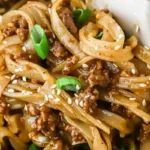
Mongolian Beef and Noodles
- Total Time: 25 minutes
- Yield: 6 servings 1x
- Diet: General
Description
Mongolian Beef and Noodles combines the flavors of beef, rice noodles and a delicious Asian inspired sauce. Delicious and easy to make.
Ingredients
- 1 pound Ground Beef
- 1 teaspoon Ground Ginger
- 1 Tablespoon Minced Garlic
- 1/4 cup Brown Sugar
- 1/2 cup Beef Broth
- 1/2 cup Soy Sauce (low sodium)
- 1/4 cup Hoisin Sauce
- 1/2 teaspoon Black Pepper
- 1/2 teaspoon Red Pepper Flakes
- 8 oz Wide Rice Noodles
- 2 Tablespoons Cornstarch
- 4 Green Onions (sliced)
- 1 Tablespoon Sesame Seeds (optional)
Instructions
- Step 1: In a large skillet, brown the 1 pound ground beef, breaking it up as it cooks. Drain any excess grease. Add 1 tablespoon minced garlic and 1 teaspoon ground ginger, and cook for 1 minute until fragrant.
- Step 2: While the beef cooks, prepare 8 oz wide rice noodles according to package instructions. Rinse with cold water and set aside.
- Step 3: Add ½ cup soy sauce, ½ cup beef broth, ¼ cup brown sugar, ¼ cup hoisin sauce, ½ teaspoon black pepper, and ½ teaspoon red pepper flakes to the skillet. Stir well to combine.
- Step 4: In a small bowl, mix 2 tablespoons cornstarch with a small amount of cold water until dissolved. Stir this mixture into the skillet. Bring to a low boil and cook until the sauce thickens.
- Step 5: Add the cooked noodles to the skillet and toss to coat evenly with the sauce and meat mixture.
- Step 6: Remove from heat and let sit for a few minutes so the noodles absorb the sauce. Serve warm topped with 4 sliced green onions and 1 tablespoon sesame seeds (optional).
Notes
For added flavor and color, you can mix in broccoli, cauliflower, green beans, or mushrooms. Ground turkey or ground chicken can be used as a substitute for beef.
- Prep Time: 10 minutes
- Cook Time: 15 minutes
- Category: Main Course
- Method: Stovetop
- Cuisine: Chinese
Nutrition
- Serving Size: 1 serving
- Calories: 427 kcal
- Sugar: 13 g
- Sodium: 1467 mg
- Fat: 17 g
- Saturated Fat: 6 g
- Unsaturated Fat: 11 g
- Trans Fat: 1 g
- Carbohydrates: 51 g
- Fiber: 2 g
- Protein: 17 g
- Cholesterol: 54 mg