
This grilled BBQ chicken method ensures juicy meat with a perfectly charred finish. It utilizes a two-zone grilling technique to cook bone-in pieces evenly without burning the exterior.

List of ingredients
- 3 ½ to 4 pounds chicken thighs or drumsticks (bone-in and skin-on) – ensures maximum juiciness and flavor.
- 1 teaspoon kosher salt – enhances the natural flavor of the meat.
- 1 teaspoon garlic powder – adds a savory, aromatic base.
- 1 teaspoon smoked paprika – provides a deep color and woody flavor.
- 1 teaspoon chili powder – adds a mild heat and complexity.
- 1 teaspoon onion powder – complements the garlic for a rounded savory profile.
- ½ teaspoon freshly ground black pepper – adds a subtle spicy bite.
- 1 cup BBQ sauce – used for glazing and final caramelization.
step-by-step instructions
- Prep the chicken: Place the chicken thighs on a large baking sheet and bring them to room temperature. Pat the skin dry with a paper towel to ensure the rub sticks and the skin crisps.
- Mix the dry rub: In a small bowl, combine the salt, garlic powder, smoked paprika, chili powder, onion powder, and black pepper. Sprinkle the rub over the chicken and use your hands to coat all sides, including under the skin.
- Prep the grill: Create two heat zones by setting one side of the grill to high, direct heat and leaving the other side off. If using charcoal, pile coals on one side to leave a cool area.
- Grill the chicken: Place chicken on the indirect heat side, close to the heat source. Cover and cook for 30 to 35 minutes, flipping every 10 minutes, until the internal temperature reaches 160°F to 165°F.
- Brush with BBQ sauce: Apply a layer of BBQ sauce and cook covered for 3 to 4 minutes. Flip, apply more sauce, and cook another 3 to 4 minutes until the internal temperature reaches 175°F.
- Serve: Move the chicken to a serving plate. Provide extra BBQ sauce on the side for dipping if desired.
Mastering the Grill Setup
Creating a Two-Zone Heat System
A two-zone setup prevents the chicken from burning before the inside is cooked. By keeping the meat on the cool side, you are essentially roasting it with the grill lid closed. This allows the heat to circulate like an oven.
Managing Direct vs Indirect Heat
Indirect heat is used for the bulk of the cooking to keep the meat tender. Direct heat is reserved only for a quick sear if you want extra char. Switching between zones allows you to control the caramelization of the BBQ sauce.
Using a Digital Meat Thermometer
Relying on time alone can lead to undercooked or dry meat. A digital instant-read thermometer ensures the chicken reaches the safe internal temperature of 175°F. Always insert the probe into the thickest part of the meat, avoiding the bone.
Controlling Grill Flare-Ups
Fat from the chicken skin can drip onto the heat source and cause flames. Keep a spray bottle of water handy or move the chicken further from the direct heat zone. Keeping the lid closed also helps limit oxygen and reduce flare-ups.
Ingredient Selection and Substitutions
Choosing Between Thighs and Drumsticks
Thighs are generally the juiciest option because they have a higher fat content. Drumsticks are a great alternative for those who prefer a handheld piece of meat. Both bone-in options hold up better to long grilling times than breast meat.
Adjusting the Spice Rub for Heat
If you prefer a spicier profile, replace the chili powder with cayenne pepper or add a pinch of crushed red pepper flakes. For a milder version, reduce the chili powder and increase the smoked paprika. This allows you to customize the flavor to your guests’ preferences.
Selecting the Best BBQ Sauce
Choose a sauce with a balanced sugar content to avoid premature burning. Tomato-based sauces provide a classic tang, while vinegar-based sauces offer a sharper profile. Check the labels to ensure the sauce matches the smoky notes of the dry rub.
Using Chicken Breasts Instead
If you prefer lean meat, you can use bone-in chicken breasts. Be careful not to overcook them, as they dry out faster than dark meat. Pull them off the grill when they reach an internal temperature of 160°F.
Pro Tips for Maximum Flavor
The Importance of Room Temperature Meat
Taking chicken out of the fridge 20 to 30 minutes before grilling ensures even cooking. Chilled meat can cause the outside to overcook before the center is safe. This step helps the chicken cook faster and more consistently.
Drying the Skin for a Better Crunch
Moisture on the skin creates steam, which prevents the skin from getting crispy. Use paper towels to pat the chicken completely dry before applying the rub. This ensures the spices adhere better and the skin browns efficiently.
Applying Rub Under the Skin
The skin acts as a barrier between the spices and the meat. Gently lift the skin and rub the seasoning directly onto the flesh. This infuses the meat with flavor and prevents the rub from simply burning on the surface.
The Advantage of Bone-In Cuts
Cooking with the bone in helps the meat retain moisture during the grilling process. The bone conducts heat slowly, preventing the surrounding meat from drying out. This results in a more tender and succulent piece of chicken.
Serving and Pairing Ideas
Pairing with Creamy Potato Salad
A cold, creamy potato salad provides a refreshing contrast to the smoky, warm chicken. Use a base of mayonnaise and mustard with diced celery for crunch. This classic combination is a staple for summer gatherings.
Adding a Vinegar-Based Coleslaw
A tangy coleslaw cuts through the richness of the BBQ sauce and chicken fat. Use a mix of shredded cabbage and carrots with a cider vinegar dressing. This acidity cleanses the palate between bites of savory meat.
Grilling Corn on the Cob
Since the grill is already hot, corn on the cob is a practical side dish. Grill the corn over direct heat for a few minutes until charred. Brush with butter and salt immediately after removing from the heat.
Serving with Garden Fresh Salads
A light green salad with a lemon vinaigrette balances the heavy flavors of the BBQ. Incorporate fresh cucumbers, cherry tomatoes, and red onion. This adds a fresh, crisp element to the overall meal.
Storage and Reheating Guidelines
Refrigerating Leftover Chicken
Allow the chicken to cool slightly before placing it in an airtight container. Store it in the refrigerator for up to 4 to 5 days. Ensure the container is sealed tightly to prevent the meat from absorbing other fridge odors.
Freezing and Thawing Process
For longer storage, freeze the cooked chicken in a freezer-safe bag for up to 3 months. Thaw the meat in the refrigerator overnight before reheating. Avoid thawing at room temperature to maintain food safety.
Reheating in the Oven for Texture
To maintain the crispiness of the skin, reheat the chicken in an oven at 350°F. Place the pieces on a wire rack over a baking sheet for 10 to 15 minutes. This prevents the bottom from becoming soggy.
Quick Microwave Reheating
If you are short on time, the microwave is a fast option. Heat the chicken in 1-minute intervals to avoid overcooking and toughening the meat. Cover the chicken with a damp paper towel to keep it moist.
Troubleshooting Common Issues
Dealing with Burnt BBQ Sauce
Sugar in BBQ sauce burns quickly over direct heat. If the sauce is darkening too fast, move the chicken further to the indirect heat zone. Only apply the sauce in the final stages of cooking to avoid carbonization.
Fixing Dry Chicken
Dry chicken is usually the result of overcooking or using lean cuts. If the meat is dry, serve it with extra BBQ sauce or a side of melted butter. Next time, use a thermometer to pull the meat off exactly at 175°F.
Preventing Skin from Sticking
Clean and oil your grill grates before placing the chicken down. Use a high-smoke point oil like canola or grapeseed oil on a paper towel. This creates a non-stick surface that prevents the skin from tearing.
Managing a Grill That Is Too Hot
If the chicken is charring too quickly, increase the distance between the meat and the heat source. You can also prop the grill lid open slightly to let some heat escape. This slows down the cooking process and prevents burning.
Frequently Asked Questions
Can I make this in an oven?
Yes, you can bake the chicken at 400°F on a baking sheet. Roast for 35-45 minutes, then brush with sauce and broil for 3-5 minutes to get the charred effect.
How do I know when the chicken is safe to eat?
The only certain way is using a meat thermometer to check the internal temperature. Bone-in thighs and drumsticks are safe and most tender when they reach 175°F.
Can I use a different type of wood for smoke?
Hickory and applewood are excellent choices for BBQ chicken. Hickory provides a strong, traditional smoke flavor, while applewood offers a sweeter, milder aroma.
Should I marinate the chicken overnight?
While a wet marinade is optional, the dry rub can be applied several hours in advance. Applying the rub overnight allows the salt to penetrate deeper into the meat for better seasoning.
Can I use a different sauce?
Absolutely. You can use honey garlic, spicy buffalo, or a mustard-based sauce. Just ensure you apply it at the end of the cooking process to avoid burning.
Print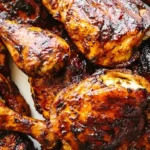
Juicy Grilled BBQ Chicken with Homemade Rub
- Total Time: 80 minutes
- Yield: 6 servings 1x
- Diet: General
Description
This BBQ chicken is insanely juicy, perfectly charred, and glistening with my secret homemade BBQ sauce. Perfect for your summer cookout!
Ingredients
- 3 ½ to 4 pounds chicken thighs or drumsticks (bone-in and skin-on)
- 1 teaspoon kosher salt
- 1 teaspoon garlic powder
- 1 teaspoon smoked paprika
- 1 teaspoon chili powder
- 1 teaspoon onion powder
- ½ teaspoon freshly ground black pepper
- 1 cup BBQ sauce
Instructions
- Prep the chicken: Place the chicken thighs on a large baking sheet and bring to room temperature. Pat dry with a paper towel.
- Mix the dry rub: In a small bowl, combine the salt, garlic powder, smoked paprika, chili powder, onion powder, and black pepper. Sprinkle the rub over the chicken and use your hands to make sure the chicken is well coated on all sides (and under the skin if you’d like).
- Prep the grill: Prepare one side of your grill for high, direct heat, leaving the burners on the other side off. If you are using charcoal or wood, make sure there is a cool side to the grill where there are few to no coals.
- Grill the chicken: Lay the chicken on the indirect heat side of the grill, yet close to the heat. Cover, and cook the chicken for 30 to 35 minutes, flipping the chicken every 10 minutes, until an instant-read thermometer reaches 160°F to 165°F.
- Brush with BBQ sauce: Brush the chicken with BBQ sauce and cook for 3 to 4 minutes, covered. Flip the chicken, brush with more BBQ sauce, and cook another 3 to 4 minutes. Repeat this process until the chicken thighs and drumsticks reach 175°F.
- Serve: Remove the chicken to a serving plate. Serve with extra BBQ sauce if desired.
Notes
Bring chicken to room temperature before grilling to ensure even cooking. Do not skip the dry rub to maximize flavor and skin crispness. For more blackened skin, perform a quick sear on the hot side of the grill for 1-2 minutes.
- Prep Time: 20 minutes
- Cook Time: 60 minutes
- Category: Dinner
- Method: Grilling
- Cuisine: American
Nutrition
- Serving Size: 2 pieces of chicken
- Calories: 656 kcal
- Sugar: 16 g
- Sodium: 1070 mg
- Fat: 40 g
- Saturated Fat: 11 g
- Unsaturated Fat: 26 g
- Trans Fat: 0.3 g
- Carbohydrates: 21 g
- Fiber: 1 g
- Protein: 50 g
- Cholesterol: 198 mg