
This oven-baked chicken parmesan provides a lighter take on a classic Italian-American dish. By baking instead of frying, you achieve a crispy crust and melted cheese with significantly fewer calories.

List of ingredients
- 1.5 lbs boneless, skinless chicken breasts – about 3 large breasts or 1.5 lbs cutlets.
- ¡/2 cup whole wheat flour – for the initial dredging.
- 3 large eggs – beaten for the binding layer.
- 1.5 cup shredded mozzarella – for the cheesy topping.
- 1.5 cups marinara sauce – used as a topping.
- 1 cup whole wheat bread crumbs – unseasoned for the crust.
- ¡/2 cup grated Parmesan cheese – mixed into the breading.
- ¡/4 teaspoon black pepper – for seasoning.
- 2 teaspoons dried basil – for aromatic flavor.
- 2 teaspoons dried parsley – for herbal notes.
step-by-step instructions
- Prepare the chicken: Butterfly and pound chicken breasts. Slice the chicken breasts in half lengthwise. Place them between plastic wrap and use a meat tenderizer to pound until they are about ¡/4 inch thick to ensure even cooking and tenderness. You should have 6 cutlets total.
- Setup oven: Preheat your oven to 425 degrees and prepare a baking sheet lined with parchment paper.
- Prepare dredging bowls: Set out 3 large shallow bowls. In the first, add whole wheat flour. In the second, crack and whisk the eggs. In the third, combine bread crumbs, parmesan cheese, pepper, dried basil, and dried parsley.
- Bread the cutlets: Form an assembly line with the bowls. Cover each chicken cutlet in flour, dip it into the egg, and then dip it into the bread crumb mixture. Press gently to ensure the coating adheres well.
- Initial Bake: Place the breaded cutlets on the baking sheet. Bake at 425 degrees for 15 minutes, flip them over, and bake for another 15 minutes.
- Add toppings: After 30 minutes of baking, top each cutlet with ¡/4 cup tomato sauce and ¡/4 cup shredded mozzarella.
- Final Broil: Return the pan to the oven and set it to broil for about 2 minutes until the cheese is fully melted and bubbly.
- Serve: Serve the chicken over pasta or alongside a fresh salad.
Mastering the Meat Preparation
Slicing Chicken Breasts Using the Butterfly Method
Butterflying involves slicing the thickest part of the breast horizontally without cutting all the way through. This opens the meat like a book, creating a wider, thinner piece of protein. This technique ensures the chicken cooks quickly and evenly throughout the piece.
Using a Meat Tenderizer for Consistent Thickness
Pounding the meat to a uniform ¡/4 inch thickness is critical for preventing tough spots. Use a mallet or heavy rolling pin over plastic wrap to avoid tearing the meat. Consistent thickness prevents the edges from overcooking before the center is done.
Selecting the Best Cut of Chicken
Boneless, skinless chicken breasts are ideal for this recipe due to their lean profile. If you prefer smaller portions, you can purchase pre-cut chicken cutlets to save time on the butterflying process. Avoid using chicken thighs as they have a higher fat content that can make the breading soggy.
Preparing Chicken Tenders as an Alternative
Chicken tenders are naturally thinner and do not require pounding or butterflying. If using tenders, reduce the initial baking time by a few minutes to prevent them from drying out. They follow the same breading process and yield a similar crispy result.
Breading and Coating Techniques
Creating a Secure Flour Base
The first layer of whole wheat flour absorbs surface moisture from the chicken. This allows the egg wash to cling more effectively to the meat. Shake off any excess flour so the coating does not become too thick or cakey.
Whisking Eggs for Maximum Adhesion
Whisk the eggs thoroughly until the yolks and whites are completely combined and no streaks remain. A smooth egg wash ensures an even coat of breadcrumbs across the entire surface of the cutlet. This prevents gaps where the breading might peel off during baking.
Optimizing the Breadcrumb and Herb Mix
Mixing the Parmesan cheese and dried herbs directly into the breadcrumbs distributes flavor evenly. The Parmesan adds a salty, nutty depth that complements the basil and parsley. Ensure the mixture is stirred well so the herbs are not clumped together.
Pressing the Coating for Better Crunch
Once the chicken is in the breadcrumb mixture, use your palms to press the crumbs firmly into the meat. This compression creates a denser crust that is less likely to separate during the flipping process. A firm press leads to a more professional, golden-brown finish.
Managing the Breading Station
Arrange your bowls in a clear line to avoid moving your hands back and forth. Use one hand for the ‘dry’ steps (flour and crumbs) and the other for the ‘wet’ step (eggs). This keeps your fingers from becoming heavily breaded and reduces mess in the kitchen.
Oven and Temperature Control
The Importance of 425 Degree Heat
High heat is necessary to mimic the crisping effect of frying. At 425 degrees, the exterior of the breading sears quickly, locking in moisture. Lower temperatures can lead to a softer, steamier crust that lacks the desired crunch.
The Role of Flipping the Cutlets
Flipping the chicken halfway through the baking process ensures both sides contact the hot baking sheet. This results in a uniform golden-brown color on both the top and bottom. Without flipping, the bottom may remain pale and soft.
Utilizing Parchment Paper to Prevent Sticking
Parchment paper provides a non-stick surface that prevents the breading from tearing when you flip the chicken. It also makes cleanup significantly easier by catching drips of egg and crumbs. Avoid using wax paper, as it can melt or smoke at high temperatures.
Precision Cooking with a Meat Thermometer
Use an instant-read thermometer to ensure the chicken reaches an internal temperature of 165 degrees Fahrenheit. Checking the thickest part of the cutlet prevents overcooking, which can make the lean breast meat dry. Pull the chicken out as soon as it hits the target temperature.
The Broiling Phase for Perfect Cheese
Broiling uses direct overhead heat to melt cheese rapidly without overcooking the chicken further. Keep a close eye on the oven during these two minutes, as cheese can go from melted to burnt very quickly. The goal is a bubbly, lightly browned mozzarella topping.
Cheese and Sauce Selection
Benefits of Shredding Your Own Mozzarella
Buying a block of mozzarella and shredding it yourself often results in a better melt. Pre-shredded cheeses are coated in potato starch or cellulose to prevent clumping, which can hinder the melting process. Freshly shredded cheese blends more smoothly into the sauce.
Choosing the Right Marinara Sauce
Look for a marinara sauce with no added sugars to keep the meal healthy. A thick, chunky sauce is preferable because it stays on top of the chicken rather than soaking into the crust. Homemade sauce allows you to control the acidity and salt levels perfectly.
Controlling Sauce Quantity to Avoid Sogginess
Limit the sauce to ¡/4 cup per cutlet to maintain the integrity of the crust. Too much sauce will seep through the breading and make the chicken soggy. Applying the sauce only at the end ensures the bottom remains crispy.
Adding Fresh Herb Garnishes
While dried herbs are used in the breading, adding fresh basil or parsley after cooking provides a bright, fresh contrast. Finely chop the leaves and sprinkle them over the melted cheese. This adds a professional visual touch and a burst of aromatic flavor.
Serving and Pairing Ideas
Pairing with Whole Grain Pasta
Serve the chicken over whole wheat spaghetti or penne for added fiber and nutrients. Toss the pasta in a light amount of the remaining marinara sauce. This creates a cohesive meal that is filling and balanced.
Low-Carb Vegetable Substitutions
For a low-carb option, serve the chicken over zucchini noodles or roasted spaghetti squash. These alternatives provide a similar texture to pasta without the heavy carbohydrates. Lightly sauté the zoodles in olive oil and garlic before topping with the chicken.
Incorporating Roasted Green Vegetables
Roasted broccoli, asparagus, or garlic brussels sprouts make excellent side dishes for this meal. Roast them on a separate sheet at the same 425-degree temperature as the chicken. The bitterness of the greens balances the richness of the cheese and sauce.
Creating a Light Salad Pairing
A fresh Caesar or garden salad with a lemon-based vinaigrette cuts through the richness of the Parmesan and mozzarella. Use crisp romaine lettuce and cherry tomatoes for a refreshing contrast. This keeps the overall dinner feeling light and healthy.
Storage and Reheating Guide
Proper Refrigeration Techniques
Store leftover chicken parmesan in an airtight container in the refrigerator for up to 3 days. To prevent the breading from absorbing too much moisture, let the chicken cool slightly before sealing the lid. Keep the sauce and chicken together if they are already combined.
The Best Method for Reheating
A toaster oven or conventional oven is the best way to reheat this dish. Heat at 350 degrees until the chicken is warmed through and the cheese bubbles again. This helps restore some of the original crispness to the breading.
Avoiding the Microwave for Reheating
Microwaving chicken parmesan often results in a rubbery texture and soggy breading. The microwave heats the moisture inside the breading, which turns the crust soft. If a microwave is the only option, heat on medium power in short intervals.
Reasons to Avoid Freezing
Freezing baked chicken parmesan is not recommended because the moisture in the sauce and cheese crystallizes. Upon thawing and reheating, the breading typically becomes mushy and loses its structure. It is best enjoyed fresh or from the fridge.
Troubleshooting Common Issues
Preventing Breading From Peeling Off
If the breading separates from the meat, it is usually due to excess moisture on the chicken or insufficient pressing. Pat the chicken dry with paper towels before dredging in flour. Ensure you press the breadcrumb mixture firmly into the egg wash.
Fixing Undercooked Centers
Undercooked centers usually happen when the chicken is too thick. Always ensure the meat is pounded to a uniform ¡/4 inch. If the outside is browning too fast but the inside is raw, lower the oven temperature to 400 degrees and increase the bake time.
Managing Burnt Cheese During Broiling
If the cheese burns before it melts, your oven rack may be too high. Move the rack to the middle position to give the cheese more distance from the broiler element. Stay vigilant and check the chicken every 30 seconds during the broil phase.
Dealing with Soggy Bottoms
Soggy bottoms occur when the chicken releases juices that pool on the pan. Using parchment paper helps, but ensuring the oven is fully preheated to 425 degrees is the best defense. The high heat evaporates the moisture quickly, searing the bottom of the crust.
Frequently Asked Questions
Can baked chicken parmesan be made ahead?
It is not recommended to bake the chicken ahead of time because it loses its crispy texture. You can prepare the breaded cutlets and store them in the fridge for a few hours, but bake them fresh for the best results.
Is it best to bake healthy chicken parmesan covered or uncovered?
You should always bake the chicken uncovered. Covering the pan traps steam, which will make the breading soggy and prevent the cheese from browning. An open pan allows air to circulate and create a crisp exterior.
Can I use gluten-free flour and breadcrumbs?
Yes, you can substitute whole wheat flour and breadcrumbs with a gluten-free 1:1 flour blend and gluten-free crumbs. The process remains the same, though you may need to press the crumbs more firmly as some GF blends have different binding properties.
What can I use if I don’t have a meat tenderizer?
A heavy skillet or a rolling pin can be used as a substitute. Place the chicken between two sheets of plastic wrap or parchment paper and gently pound the meat using a steady, rhythmic motion to avoid tearing the fibers.
Print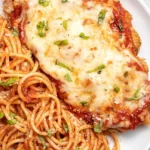
Healthy Oven-Baked Chicken Parmesan
- Total Time: 55 minutes
- Yield: 4 servings 1x
- Diet: General
Description
This Baked Chicken Parmesan recipe is so easy to make! Perfectly crispy, coated with a delicious sauce and cheese for a healthy dinner!
Ingredients
- 1.5 lbs boneless, skinless chicken breasts
- ½ cup whole wheat flour
- 3 large eggs
- 1.5 cup shredded mozzarella
- 1.5 cups marinara sauce
- 1 cup whole wheat bread crumbs (unseasoned)
- ½ cup grated Parmesan cheese
- ¼ teaspoon black pepper
- 2 teaspoons dried basil
- 2 teaspoons dried parsley
Instructions
- Step 1: Butterfly and pound chicken breasts.
- Step 2: Preheat your oven to 425 and prepare a parchment lined baking sheet.
- Step 3: Set out 3 large shallow bowls.
- Step 4: In the first bowl add whole wheat flour.
- Step 5: In the second bowl, crack and whisk eggs.
- Step 6: In the third bowl mix together bread crumbs, parmesan cheese, pepper, dried basil and dried parsley.
- Step 7: Form an assembly line with your bowls. Take your chicken cutlet and cover in flour, then dip in egg, then dip in the bread crumb mixture.
- Step 8: Place breaded cutlets on a baking sheet. Bake at 425 for 15 minutes, flip the cutlets and bake for another 15 minutes.
- Step 9: Top each cutlet with about ¼ cup tomato sauce and ¼ cup shredded mozzarella. Return to the oven and set to broil for about 2 minutes until the cheese is melted.
- Step 10: Serve over pasta or a salad.
Notes
Best eaten fresh and hot; stores for up to 3 days in the refrigerator. Reheat in a toaster oven for best results.
- Prep Time: 20 minutes
- Cook Time: 35 minutes
- Category: Main Course
- Method: Baking
- Cuisine: Italian
Nutrition
- Serving Size: 1 chicken cutlet
- Calories: 572 kcal
- Sugar: 6 g
- Sodium: 676 mg
- Fat: 22 g
- Saturated Fat: 10 g
- Unsaturated Fat: 8 g
- Trans Fat: 1 g
- Carbohydrates: 39 g
- Fiber: 6 g
- Protein: 60 g
- Cholesterol: 273 mg