
This nutritious one-pan meal combines lean protein with a variety of colorful vegetables in under 20 minutes. It is an ideal choice for busy weeknights when you want a balanced dinner with minimal cleanup. The balsamic glaze adds a tangy depth that ties the fresh ingredients together perfectly.

List of ingredients
- 1 pound chicken breast – cut into bite sized pieces for quick cooking.
- 2 Tbsp extra virgin olive oil, avocado oil, or unrefined coconut oil – used for sautéing and searing.
- 4 fresh garlic cloves – minced finely to release aromatic oils.
- 8 oz fresh button mushrooms – cleaned and sliced.
- 2 red bell pepper – chopped into medium pieces.
- 1 bunch asparagus – ends trimmed and cut in halves.
- 1 medium zucchini – sliced into rounds or half-moons.
- 1 Tbsp dry Italian seasoning – a blend of herbs for authentic flavor.
- 2 Tbsps high quality balsamic vinegar – provides acidity and a touch of sweetness.
- Sea salt and black pepper – added to taste for seasoning.
step-by-step instructions
- Sauté Aromatics: Heat the chosen oil over medium-high heat in a large skillet. Add the button mushrooms and minced garlic, then sauté for approximately 5 minutes until the mushrooms soften.
- Brown the Chicken: Add the bite-sized chicken pieces to the skillet. Cook for another 5 minutes, stirring occasionally, until the chicken is browned on all sides.
- Season the Base: Stir in the dry Italian seasoning and balsamic vinegar. Season the mixture with sea salt and black pepper according to your personal preference.
- Cook the Vegetables: Add the chopped red bell pepper, halved asparagus, and sliced zucchini to the pan. Cook for an additional 10 minutes or until the vegetables are tender and the chicken is fully cooked through.
- Final Touch: Once everything is cooked, remove from heat. Squeeze a bit of fresh lemon juice over the skillet for a bright, citrusy finish.
Pro Cooking Techniques for Better Results
Cut Chicken into Uniform Cubes
Slicing the chicken breast into consistent one-inch pieces ensures that every piece cooks at the same rate. This prevents smaller fragments from becoming overcooked and dry while larger chunks remain underdone. Consistent sizing allows for a uniform golden-brown sear across the entire batch.
Use a Wide High-Sided Skillet
A large 12-inch skillet is recommended to prevent the ingredients from overcrowding the pan. When the pan is too full, vegetables will steam in their own moisture rather than sautéing. Using a wider surface area allows for better browning and a more concentrated flavor profile.
Manage Mushroom Moisture First
Mushrooms have a high water content that can make a dish soggy if not handled correctly. Sautéing them first allows the water to evaporate and the natural sugars to caramelize. This process creates a deeper umami flavor and prevents the chicken from boiling in liquid.
Optimize Heat for Vegetable Texture
Maintain a medium-high heat throughout the process to ensure the vegetables sear quickly. This preserves the vibrant colors of the bell peppers and the snap of the asparagus. If the heat is too low, the vegetables will release too much water and lose their structure.
Select the Right Cooking Oil
Avocado oil is an excellent choice due to its high smoke point, which prevents the oil from burning at higher temperatures. If using extra virgin olive oil, keep a close eye on the pan to ensure it does not smoke. Coconut oil provides a subtle richness that pairs well with the balsamic glaze.
Smart Ingredient Substitutions
Swap Chicken Breasts for Thighs
Boneless, skinless chicken thighs are a great alternative if you prefer a juicier, more tender texture. Thighs are more forgiving and less likely to dry out during the cooking process. Note that they may require an extra two to three minutes of browning time compared to breasts.
Alternative Vegetable Options
If zucchini is unavailable, yellow summer squash is a perfect direct replacement. For a more earthy flavor, you can substitute the asparagus with sliced carrots or snap peas. Just ensure that harder vegetables are cut smaller so they cook in the same timeframe.
Different Pepper Varieties
While red bell peppers are traditional, orange or yellow peppers provide a similar sweetness and a different visual appeal. For those who prefer a bit of heat, you can replace one red pepper with a mild Anaheim pepper or a few diced jalapeños.
Vinegar Alternatives for Tanginess
Apple cider vinegar can be used as a substitute for balsamic vinegar for a fruitier, sharper taste. Red wine vinegar is another excellent option that maintains the Italian profile of the dish. Keep the quantity at two tablespoons to maintain the proper sauce consistency.
Mushroom Varieties for Extra Flavor
Cremini mushrooms, also known as baby bellas, offer a more intense flavor and darker color than white button mushrooms. Shiitake mushrooms provide a chewier texture and a stronger savory note. Simply slice them to the same thickness as the original recipe.
Creative Flavor Variations
Incorporate Fresh Finishing Herbs
Adding a handful of chopped fresh parsley or basil leaves just before serving enhances the freshness of the dish. These herbs should be added at the very end to prevent them from wilting or losing their bright color. This adds a professional, restaurant-style finish to the skillet.
Add a Hint of Spicy Heat
For a spicy kick, stir in half a teaspoon of crushed red pepper flakes during the seasoning step. The heat balances well with the sweetness of the balsamic vinegar and the richness of the chicken. Adjust the amount based on your personal heat tolerance.
Introduce a Creamy Element
To make the dish more indulgent, stir in a tablespoon of goat cheese or a dollop of ricotta at the end. The cheese will melt slightly, creating a creamy sauce that coats the vegetables. This variation pairs particularly well with the acidity of the lemon squeeze.
Boost the Aromatic Profile
Increasing the garlic from four cloves to six can provide a bolder, more pungent flavor. For an even deeper aromatic base, add a small amount of minced shallot along with the garlic. This adds a subtle sweetness and complexity to the overall dish.
Enhance with Lemon Zest
While the recipe suggests a squeeze of lemon juice, adding fresh lemon zest provides a more concentrated citrus aroma. Zest the lemon before juicing it and sprinkle the yellow skin over the finished meal. This highlights the brightness of the asparagus and zucchini.
Recommended Serving Ideas
Pair with Hearty Whole Grains
Serving this skillet over a bed of quinoa or brown rice makes the meal more filling and adds fiber. The grains soak up the remaining balsamic sauce from the pan, ensuring no flavor is wasted. Farro is another great option for a nuttier taste and chewier texture.
Combine with Pasta Options
For a more traditional Italian feel, toss the chicken and vegetables with whole wheat or chickpea pasta. Use a small amount of reserved pasta water to help the balsamic glaze adhere to the noodles. This turns the skillet into a complete pasta primavera style dish.
Low-Carb and Keto Bases
To keep the meal low-carb, serve the chicken and vegetables over cauliflower rice or roasted spaghetti squash. These options maintain the lightness of the meal while adding volume. This is an ideal choice for those monitoring their glucose or carbohydrate intake.
Add a Savory Cheese Topping
A sprinkle of freshly grated Parmesan or Pecorino Romano cheese adds a salty, nutty dimension to the dish. Add the cheese while the skillet is still hot so it slightly melts into the vegetables. This complements the balsamic vinegar perfectly.
Side Salad Pairings
A simple side salad of baby arugula tossed in a light lemon-olive oil vinaigrette provides a peppery contrast. Alternatively, a spinach salad with toasted walnuts adds a crunch that complements the tenderness of the sautéed vegetables. Keep the side salad simple to let the skillet shine.
Storage and Reheating Guide
Refrigeration Best Practices
Store any leftover chicken and vegetables in an airtight glass container to maintain freshness. The meal will stay safe and tasty in the refrigerator for up to three to four days. Ensure the food has cooled slightly before sealing the lid to prevent excess condensation.
Freezing Guidelines
While the chicken freezes well, the vegetables—especially the zucchini and asparagus—may lose their texture upon thawing. If you choose to freeze the meal, do so in single-serving portions for convenience. Thaw overnight in the refrigerator before reheating.
Best Reheating Method
For the best results, reheat the leftovers in a skillet over medium heat with a teaspoon of water or olive oil. This helps restore the moisture and prevents the chicken from becoming rubbery. Stir gently to avoid breaking the softened vegetables.
Microwave Reheating Tips
If using a microwave, place the food in a microwave-safe dish and cover it with a damp paper towel. Heat in short 45-second intervals, stirring in between, to ensure even heating. This prevents the edges from drying out while the center remains cold.
Avoiding Sogginess After Storage
Vegetables naturally release more water as they sit in the fridge. When reheating, use a higher heat setting for a short time to evaporate any excess liquid. This helps regain some of the original sautéed texture rather than a stewed consistency.
Make-Ahead Preparation Advice
Prepping Vegetables in Advance
You can chop the bell peppers, zucchini, and asparagus up to 24 hours before cooking. Store them in separate containers or a divided prep tray to keep them organized. This reduces the actual cooking time to just the skillet process.
Chicken Portioning Strategy
Cut the chicken into bite-sized pieces and store them in a container with a drizzle of olive oil. This prevents the meat from oxidizing and keeps it moist until it hits the pan. Ensure the container is airtight to maintain food safety.
Pre-Mixing the Seasoning Blend
Combine the Italian seasoning, salt, and pepper in a small ramekin before you start heating the pan. Having your dry ingredients ready prevents the garlic or mushrooms from burning while you are searching for spice jars. This streamlines the entire 20-minute process.
Troubleshooting Common Issues
Vegetables Releasing Too Much Water
If your pan becomes watery, it is usually a sign that the heat is too low or the pan is overcrowded. Increase the heat to medium-high to evaporate the liquid quickly. Avoid adding more vegetables until the current batch has browned.
Chicken Becoming Too Dry
Overcooking lean chicken breast leads to a tough, dry texture. Use a meat thermometer to ensure the chicken reaches an internal temperature of 165°F (74°C). Once it hits this mark, move immediately to adding the vegetables to stop the cooking process.
Balsamic Vinegar Burning
Balsamic vinegar contains natural sugars that can burn if exposed to high heat for too long. Add the vinegar only after the chicken is browned and just before adding the vegetables. This ensures it glazes the meat without scorching the pan.
Garlic Burning and Bitterness
Garlic burns much faster than mushrooms, which can result in a bitter taste. If the pan is too hot, add the garlic during the last minute of the mushroom sauté. This allows the garlic to soften and become fragrant without turning brown.
Frequently Asked Questions
Can I use frozen vegetables instead of fresh?
Yes, you can use frozen mixed vegetables, but pat them dry thoroughly before adding them to the pan. Frozen vegetables release more water, so you may need to increase the cooking time by a few minutes to evaporate the extra moisture.
Is this recipe completely dairy-free?
As written, this recipe is entirely dairy-free and relies on olive oil and balsamic vinegar for richness. If you choose to add Parmesan or ricotta as suggested in the variations, it will no longer be dairy-free.
How do I tell when the chicken is fully cooked?
The chicken is done when the center is no longer pink and the juices run clear. For precision, use a digital meat thermometer to verify an internal temperature of 165°F. Avoid overcooking to maintain tenderness.
Can I add other proteins like shrimp?
Shrimp is a great addition and cooks even faster than chicken. If using shrimp, add them at the same time as the vegetables or during the last 5 minutes of cooking to prevent them from becoming rubbery.
What if I don’t have store-bought Italian seasoning?
You can easily make your own blend by mixing equal parts dried oregano, dried basil, and dried thyme. Add a pinch of dried rosemary and garlic powder to further enhance the traditional Italian flavor profile.
Print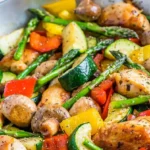
Healthy One Pan Italian Chicken and Vegetable Skillet
- Total Time: 30 minutes
- Yield: 4 servings 1x
- Diet: Low Carb
Description
A quick and healthy one-pan meal featuring tender chicken breast, fresh garden vegetables, and a tangy balsamic glaze.
Ingredients
- 1 pound chicken breast, cut into bite sized pieces
- 2 Tbsp extra virgin olive oil, avocado oil, or unrefined coconut oil
- 4 fresh garlic cloves, minced
- 8 oz fresh button mushrooms
- 2 red bell peppers, chopped
- 1 bunch asparagus, ends trimmed and cut in halves
- 1 medium zucchini, sliced
- 1 Tbsp dry Italian seasoning
- 2 Tbsps balsamic vinegar
- sea salt and black pepper, to taste
Instructions
- Heat: Heat oil over med-high heat in a large skillet.
- Sauté: Add mushrooms and garlic, and sauté for 5 minutes.
- Brown: Add chicken and cook for another 5 minutes until browned.
- Season: Add Italian seasoning, balsamic vinegar and season with salt and pepper to your taste.
- Cook: Add in bell pepper, asparagus and zucchini, and cook for an additional 10 minutes or until veggies are tender and everything is cooked through.
Notes
Squeeze a bit of fresh lemon on top before serving for extra brightness.
- Prep Time: 10 minutes
- Cook Time: 20 minutes
- Category: Main Course
- Method: Sautéing
- Cuisine: Italian
Nutrition
- Serving Size: 1 serving
- Calories: 320 kcal
- Sugar: 6 g
- Sodium: 450 mg
- Fat: 14 g
- Saturated Fat: 2 g
- Unsaturated Fat: 12 g
- Trans Fat: 0 g
- Carbohydrates: 15 g
- Fiber: 4 g
- Protein: 32 g
- Cholesterol: 95 mg