
Transport yourself to the vibrant streets of Thailand with this incredibly flavorful Golden Thai Yellow Curry! This recipe delivers all the warmth and aromatic complexity you crave, with a beautiful golden hue and a creamy, comforting texture. Whether you’re a seasoned Thai food enthusiast or a curious beginner, this recipe is surprisingly easy to make at home. We’ll guide you through each step to create a truly authentic and satisfying curry experience. Get ready to impress your family and friends with this delightful dish!

What You’ll Need
- 2 tbsp (30 ml) Vegetable Oil: We’re using a neutral-flavored oil like canola or sunflower oil as the base for sautéing our aromatics. This ensures the delicate flavors of the curry paste and spices aren’t overshadowed.
- 1 large (200 g / 7 oz) Onion, finely diced: The foundation of many great curries, the onion provides a subtle sweetness and depth of flavor. Dicing it finely allows it to melt into the sauce and create a smooth texture.
- 3 cloves (15 g / 0.5 oz) Garlic, minced: Garlic is a cornerstone of Thai cuisine, adding a pungent and aromatic element. Mincing it releases its full flavor potential.
- 1 tbsp (15 g / 0.5 oz) Fresh Ginger, grated: Fresh ginger brings a bright, zesty bite that complements the warmth of the curry spices. Grating it ensures it disperses evenly throughout the dish.
- 2 tbsp (30 g / 1 oz) Yellow Curry Paste (halal-certified): The heart and soul of this curry! Choose a high-quality yellow curry paste – look for one that’s halal-certified if needed – for the most authentic flavor. The paste is a blend of chilies, spices, and herbs that create the signature yellow curry taste.
- 1 tsp (5 g / 0.2 oz) Ground Turmeric: Beyond its vibrant golden color, turmeric adds a subtle earthy flavor and boasts incredible health benefits.
- 1 tsp (5 g / 0.2 oz) Ground Cumin: Cumin introduces a warm, earthy depth to the curry, enhancing the overall complexity of the flavor profile.
- 400 ml (13.5 fl oz) Coconut Milk: Full-fat coconut milk is essential for achieving the rich, creamy texture that defines Thai yellow curry. It adds a luxurious mouthfeel and balances the spice.
- 250 ml (1 cup) Water or Low-Sodium Vegetable Broth: This helps to adjust the consistency of the curry to your liking. Using broth adds an extra layer of savory flavor.
- 1 medium (150 g / 5 oz) Carrot, sliced into ½-inch rounds: Carrots provide a touch of sweetness and a pleasant textural contrast.
- 1 medium (150 g / 5 oz) Potato, diced 1-cm cubes: Potatoes add heartiness and absorb the flavorful curry sauce beautifully.
- 1 red bell pepper (150 g / 5 oz), sliced into strips: Red bell pepper contributes a vibrant color and a slightly sweet, crisp texture.
- 200 g (7 oz) Chicken Breast, cut into 2-cm cubes: Chicken breast is a lean protein source that cooks quickly and absorbs the flavors of the curry.
- 2 tbsp (30 ml) Soy Sauce or Halal-Certified Fish Sauce: Soy sauce or fish sauce (ensure it’s halal-certified if needed) provides a savory umami depth that balances the sweetness and spice.
- 1 tsp (5 g) Palm Sugar or Brown Sugar: A touch of sweetness is crucial for balancing the flavors in Thai cuisine. Palm sugar offers a more authentic flavor, but brown sugar is a readily available substitute.
- Juice of 1 lime (≈30 ml / 2 Tbsp): Fresh lime juice adds a bright, acidic finish that elevates the entire dish.
- ½ tsp (2.5 g) Salt: Essential for seasoning and enhancing the flavors.
- 1 tsp (5 ml) Toasted Sesame Oil: A finishing drizzle of toasted sesame oil adds a nutty aroma and a subtle depth of flavor.
- Fresh Cilantro Leaves, roughly chopped: Cilantro provides a fresh, herbaceous garnish that brightens the curry.
- 1 tsp (5 g) Sliced Red Chili (optional): For those who like a little extra heat, a sprinkle of sliced red chili adds a visual spark and a fiery kick.
Ingredient Substitutions
Don’t have everything on hand? Here are a few simple substitutions you can make:
- Chicken: Feel free to substitute chicken with tofu, shrimp, or beef. Adjust cooking times accordingly.
- Vegetables: Broccoli, cauliflower, peas, or green beans can be used in place of or in addition to the carrots, potatoes, and bell peppers.
- Palm Sugar: Brown sugar, maple syrup, or honey can be used as substitutes for palm sugar.
- Fish Sauce: If you prefer a vegetarian option, use extra soy sauce or a vegetarian fish sauce alternative.
Crafting the Perfect Golden Thai Yellow Curry: A Step-by-Step Guide
- Prepare the Ingredients: Begin by patting the chicken dry with paper towels. This ensures a good sear and prevents steaming. Simultaneously, peel and dice the carrot and potato into uniform sizes for even cooking. Slice the bell pepper into strips and finely dice the onion. Having everything prepped beforehand streamlines the cooking process.
- Sauté the Aromatics: Heat the vegetable oil in a wide, heavy-bottomed pot over medium heat. The pot’s width allows for even heat distribution and prevents overcrowding. Add the diced onion and sauté for 4-5 minutes, stirring frequently, until it becomes translucent. This builds a sweet and savory base for the curry.
- Bloom the Spices: Stir in the minced garlic and grated ginger, cooking for just 30 seconds until fragrant. Be careful not to brown them, as burnt garlic and ginger can impart a bitter taste. Next, add the yellow curry paste, ground turmeric, and ground cumin. Cook, stirring constantly, for 1-2 minutes. This process, known as ‘blooming’ the spices, releases their essential oils and intensifies their flavor.
- Build the Curry Sauce: Pour in the coconut milk and water (or broth). Use a wooden spoon to scrape the bottom of the pot, ensuring any stuck-on paste is dissolved. Increase the heat to bring the mixture to a gentle simmer. Simmer for 3 minutes, allowing the flavors to meld.
- Add Protein and Vegetables: Add the chicken cubes, carrot rounds, potato dice, and bell pepper strips to the simmering sauce. Reduce the heat to maintain a low simmer and cook for 8-10 minutes, or until the chicken is cooked through and the vegetables are fork-tender. Ensure the chicken reaches an internal temperature of 165°F (74°C).
- Season and Balance: Season the curry with soy sauce (or fish sauce), palm sugar, lime juice, and salt. Stir well and simmer for another 2 minutes to allow the flavors to harmonize. Taste and adjust seasoning as needed – a little more lime juice for brightness, or a pinch more salt to enhance the overall flavor.
- Finish and Infuse: Remove the pot from the heat. Drizzle the toasted sesame oil over the curry and stir gently. Let the curry rest for 5 minutes before serving. This allows the sesame oil to infuse its nutty aroma throughout the dish.
- Plate and Garnish: Warm a shallow white ceramic bowl. Spoon a thin swirl of coconut milk around the inner rim for visual appeal. Ladle the curry into the center of the bowl. Sprinkle generously with chopped cilantro and garnish with a few slices of red chili (optional). Finish with an extra drizzle of sesame oil and serve with a lime wedge on the side.
Understanding the Golden Hue: Turmeric’s Role
The vibrant golden color of this Thai yellow curry isn’t just aesthetically pleasing; it’s a direct result of turmeric. Beyond its color, turmeric boasts powerful anti-inflammatory properties and a subtly earthy flavor that complements the other spices beautifully. Using a good quality turmeric is key to achieving both the desired color and health benefits.
Choosing Your Protein: Beyond Chicken
While this recipe features chicken, Golden Thai Yellow Curry is incredibly versatile. Feel free to substitute with shrimp, tofu, beef, or lamb. Adjust cooking times accordingly to ensure your chosen protein is cooked through. For a vegetarian option, increase the amount of vegetables or add chickpeas for extra protein.
The Art of Curry Paste: Homemade vs. Store-Bought
This recipe calls for store-bought yellow curry paste for convenience. However, making your own curry paste allows for complete control over the ingredients and spice levels. If you’re feeling adventurous, explore recipes for homemade yellow curry paste online. Remember to adjust the amount used based on its potency.

Spice Level Adjustment: Tailoring to Your Palate
Yellow curry is generally milder than red or green curry. However, the heat level can vary depending on the curry paste used. If you prefer a spicier curry, add a pinch of cayenne pepper or a few more slices of red chili. Conversely, if you’re sensitive to spice, use a milder curry paste or reduce the amount used.
Serving Suggestions: Completing the Meal
Golden Thai Yellow Curry is traditionally served with steamed jasmine rice. The fluffy rice perfectly absorbs the flavorful sauce. Consider serving it with a side of Thai green papaya salad (Som Tum) for a refreshing contrast, or a simple cucumber salad for a cooling element.
Frequently Asked Questions
Can I make this curry ahead of time?
Yes, this curry can be made a day or two in advance. The flavors will actually deepen as it sits. Store it in an airtight container in the refrigerator.
Is fish sauce essential?
While fish sauce adds a unique umami flavor, it can be substituted with soy sauce for a vegetarian or vegan option.
What if I don’t have palm sugar?
Brown sugar is a readily available substitute for palm sugar. Use the same amount.
Enjoy this vibrant and flavorful Golden Thai Yellow Curry! It’s a comforting and satisfying meal that’s sure to become a family favorite. Don’t forget to save this recipe to Pinterest for easy access later!
Print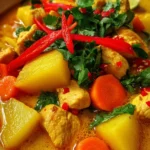
Golden Thai Yellow Curry
- Total Time: 50 minutes
- Yield: 4 servings 1x
- Diet: General
Description
Experience the authentic flavors of Thailand with this Golden Thai Yellow Curry! This recipe delivers a creamy, comforting, and aromatic curry that’s surprisingly easy to make at home.
Ingredients
- 2 tbsp (30 ml) Vegetable Oil: neutral-flavored oil for sautéing
- 1 large (200 g) Onion, diced: provides sweetness and depth
- 3 cloves (15 g) Garlic, minced: adds pungent aroma
- 1 tbsp (15 g) Ginger, grated: brings zesty bite
- 2 tbsp (30 g) Yellow Curry Paste: the heart of the curry
- 1 tsp (5 g) Turmeric: adds color and earthy flavor
- 1 tsp (5 g) Cumin: enhances flavor complexity
- 400 ml Coconut Milk: for rich, creamy texture
- 250 ml Water: adjusts consistency
- 1 medium (150 g) Carrot, sliced: adds sweetness and texture
- 1 medium (150 g) Potato, diced: adds heartiness
- 1 red bell pepper (150 g), sliced: contributes color and crispness
- 200 g Chicken Breast, cubed: lean protein source
- 2 tbsp Soy Sauce: provides umami depth
- 1 tsp Palm Sugar: balances flavors
- 1 lime, juiced: adds bright acidity
- ½ tsp Salt: essential seasoning
- 1 tsp Sesame Oil: adds nutty aroma
- Cilantro Leaves, chopped: fresh garnish
- Red Chili, sliced (optional): for extra heat
Instructions
- Prepare Ingredients: Dice vegetables and cube chicken for even cooking.
- Sauté Aromatics: Sauté onion until translucent, then add garlic and ginger.
- Bloom Spices: Stir in curry paste, turmeric, and cumin; cook for 1-2 minutes.
- Build Curry Sauce: Add coconut milk and water; simmer for 3 minutes.
- Add Protein & Vegetables: Add chicken, carrot, potato, and bell pepper; simmer until cooked through.
- Season & Balance: Season with soy sauce, palm sugar, lime juice, and salt.
- Finish & Infuse: Drizzle with sesame oil and let rest for 5 minutes.
- Plate & Garnish: Serve with rice, cilantro, and chili (optional).
Notes
For a spicier curry, add cayenne pepper or more chili. This curry can be made ahead of time; flavors deepen with time.
- Prep Time: 20 minutes
- Cook Time: 30 minutes
- Category: Main Course
- Method: Stovetop
- Cuisine: Thai
Nutrition
- Serving Size: 1 cup
- Calories: 450 kcal
- Sugar: 15 g
- Sodium: 600 mg
- Fat: 25 g
- Saturated Fat: 15 g
- Unsaturated Fat: 8 g
- Trans Fat: 0 g
- Carbohydrates: 40 g
- Fiber: 5 g
- Protein: 25 g
- Cholesterol: 75 mg