
This Garlic Ginger Chicken delivers a bold, caramelized flavor profile typical of high-quality Chinese takeout. It is a streamlined meal that balances sweet, salty, and tangy notes using fresh aromatics.

List of ingredients
- 1 lb. Chicken Thighs (boneless, skinless, cut into small chunks) – provides juiciness and flavor.
- 1 Egg – used as a binder for the coating.
- 3 tbsp Cornstarch – creates a crispy exterior.
- 3/4 cup Water – thins the sauce for simmering.
- 1 tbsp Fresh Ginger (very finely chopped) – adds a sharp, aromatic heat.
- 1 tbsp Fresh Garlic (very finely chopped) – provides a deep savory base.
- 1 tbsp Yellow/White Onion (very finely chopped) – adds subtle sweetness.
- 3 tbsp Soy Sauce – delivers the primary salty, umami flavor.
- 3 tbsp Brown Sugar – helps the sauce caramelize and adds sweetness.
- 1 tbsp Rice Vinegar – provides necessary acidity to balance the sugar.
- 1 tsp Sesame Oil – adds a toasted, nutty aroma.
- 2 tbsp Avocado Oil – used for high-heat frying.
- Green Onions – for fresh garnish and color.
- Sesame Seeds – for added texture and visual appeal.
step-by-step instructions
- Prepare the Sauce: In a small bowl, mix rice vinegar, sesame oil, ginger, garlic, onion, brown sugar, soy sauce, and water.
- Simmer and Reduce: Heat your skillet to medium heat and pour in the sauce. Bring it to a light simmer and let it cook for about 10 minutes until the sauce darkens. Carefully pour the sauce back into the bowl and set it aside.
- Coat the Chicken: In a large mixing bowl, add chicken and cornstarch. Toss until the chicken is fully coated; you may add an additional tablespoon or two of cornstarch if needed.
- Add the Egg Wash: In a small bowl, whisk the egg. Pour the egg over the cornstarch-coated chicken and gently mix to ensure every piece is evenly coated.
- Sear the Chicken: Heat avocado oil in the same skillet on medium-high heat. Carefully add chicken in an even layer and cook without stirring until the bottom is golden.
- Brown and Cook Through: Flip the chicken pieces, gently breaking them apart. Cook for another 5-7 minutes until the other side is golden, then reduce heat to low and cook for 10 more minutes, stirring occasionally.
- Glaze the Chicken: Drain any excess oil from the pan and turn the heat up to high. Pour the reserved sauce over the chicken and stir frequently for a few minutes until thickened and glossy.
- Garnish and Serve: Serve the chicken immediately, topped with a sprinkle of fresh chopped green onions and sesame seeds.
Mastering the Chicken Texture
The Role of Cornstarch Coating
Cornstarch acts as a thickening agent that creates a thin, crisp barrier around the meat. This layer protects the chicken from overcooking while providing a surface for the sauce to cling to.
Using an Egg Wash for Better Adhesion
The whisked egg serves as a glue between the cornstarch and the chicken. This ensures the coating does not slide off during the frying process and creates a richer, golden crust.
Maintaining High Pan Temperature
Using medium-high heat is critical for achieving a proper sear. If the oil is not hot enough, the chicken will steam rather than fry, resulting in a rubbery texture instead of a crisp one.
Achieving the Golden Brown Sear
Allowing the chicken to sit undisturbed for several minutes creates a Maillard reaction. This chemical process develops deep flavor and the characteristic golden color found in takeout chicken.
Preventing Chicken from Sticking
Ensure the oil is shimmering before adding the meat to the pan. Avoid stirring the chicken too frequently during the first few minutes to allow the crust to set firmly against the pan.
The Importance of Even Sizing
Cutting the chicken thighs into uniform small chunks ensures that every piece cooks at the same rate. This prevents smaller pieces from drying out while larger pieces remain undercooked.
Customizing the Sauce Profile
Reducing the Sugar Content
If you prefer a less sweet glaze, reduce the brown sugar by one tablespoon. The sauce will be less viscous, but it will still maintain the essential savory-tangy balance.
Increasing the Garlic Intensity
For those who enjoy a pungent flavor, add an extra clove of finely minced garlic. Adding a small portion of fresh garlic at the very end of the glazing step will enhance the raw aromatic punch.
Adding Heat with Red Pepper Flakes
Incorporate a half-teaspoon of dried red pepper flakes into the sauce mixture. This adds a subtle spicy kick that cuts through the sweetness of the caramelized sugar.
Using Low-Sodium Soy Sauce
Switching to low-sodium soy sauce reduces the overall saltiness of the dish. This allows the fresh ginger and garlic flavors to be more prominent without overpowering the palate.
Enhancing the Ginger Zing
Increase the amount of fresh ginger to two tablespoons for a more potent, peppery taste. Fresh ginger provides a brightness that dried ginger cannot replicate in this specific sauce.
Adjusting Sauce Thickness
If the sauce is too thin after simmering, let it reduce for another two minutes. Conversely, if it becomes too thick, whisk in a teaspoon of water or broth before pouring it over the chicken.
Recommended Side Dishes
Steamed Jasmine Rice
Fragrant jasmine rice is the traditional choice for this meal. Its light, floral aroma and neutral flavor soak up the excess soy-ginger glaze perfectly.
Brown Rice for Added Texture
For a nuttier flavor and more fiber, serve the chicken over steamed brown rice. The heartier grain provides a satisfying contrast to the tender, glazed chicken chunks.
Asian-Style Cucumber Salad
Pair this heavy main course with a cold cucumber salad dressed in rice vinegar and sesame oil. The coolness and acidity of the vegetables cleanse the palate between bites.
Stir-Fried Baby Bok Choy
Quickly sauté baby bok choy with a touch of garlic and soy sauce. The crisp stalks and tender leaves add essential nutrients and a fresh vegetable element to the plate.
Garlic Sautéed Spinach
Sauté fresh spinach in a pan with minced garlic and a splash of water. This provides a nutrient-dense side that complements the savory notes of the chicken glaze.
Steamed Broccoli Florets
Steam broccoli until tender-crisp and serve it alongside the chicken. The florets act as sponges, capturing the sauce and adding a healthy crunch to the meal.
Ingredient Substitution Options
Using Chicken Breast instead of Thighs
Boneless, skinless chicken breasts can be used as a leaner alternative. Note that breasts cook faster and can dry out, so reduce the final low-heat cooking time by a few minutes.
Substituting Avocado Oil with Grapeseed Oil
Grapeseed oil is an excellent substitute because it has a high smoke point similar to avocado oil. Avoid using butter or extra virgin olive oil, as they burn at the temperatures required for searing.
Honey as a Brown Sugar Alternative
Honey can replace brown sugar for a different kind of sweetness and a thicker glaze. Use an equal amount of honey, but monitor the pan closely as honey burns faster than sugar.
Using Rice Vinegar for Acidity
Rice vinegar is the ideal substitute for white wine vinegar in Asian dishes. It offers a milder, slightly sweeter acidity that blends seamlessly with the soy and sesame oil.
Coconut Aminos for a Soy-Free Option
Replace soy sauce with coconut aminos for a soy-free or gluten-free alternative. Coconut aminos are naturally sweeter, so you may want to slightly reduce the amount of brown sugar.
Dried Aromatics in a Pinch
If fresh ginger or garlic is unavailable, use ground versions. Use one-quarter teaspoon of dried powder for every tablespoon of fresh, though the flavor will be less vibrant.
Storage and Preservation Tips
Refrigeration Duration and Safety
Store leftovers in an airtight container in the refrigerator for up to three to four days. Ensure the chicken has cooled slightly before sealing to prevent excessive condensation.
Air-Tight Container Selection
Use glass containers with locking lids to maintain the freshness of the glaze. Glass is preferable over plastic to avoid flavor transfer and to make reheating in the microwave safer.
Freezing the Prepared Dish
The chicken can be frozen for up to two months. While the texture of the breading may soften during freezing, the flavor of the sauce remains intact.
Thawing Process for Best Results
Thaw frozen chicken slowly in the refrigerator overnight. This prevents the meat from becoming mushy and helps maintain the integrity of the sauce.
Microwave Reheating Instructions
Heat leftovers in 30-second intervals, stirring in between. This ensures the chicken heats evenly and the sauce redistributes across all the pieces.
Stovetop Reheating for Texture
To restore some of the crispness, reheat the chicken in a skillet over medium heat with a teaspoon of oil. Add a splash of water if the sauce has become too thick.
Troubleshooting Common Issues
Fixing a Sauce that is Too Thin
If the sauce doesn’t thicken during the final glaze step, mix a small amount of cornstarch with water. Stir this slurry into the pan and simmer for one minute until it reaches a glossy consistency.
Preventing Burnt Garlic
Ensure the garlic and ginger are finely chopped rather than crushed. This prevents small bits from burning during the initial sauce simmer and the final glazing process.
Managing Overcrowded Pans
Cooking too much chicken at once lowers the pan temperature and causes the meat to release moisture. Work in batches if your skillet is small to ensure a proper sear.
Solving Tough Chicken Texture
Toughness usually results from overcooking chicken breasts or overheating the pan. Stick to the suggested timings and use a meat thermometer to ensure chicken reaches 165°F.
Balancing Too Much Salt
If the sauce tastes overly salty, add a teaspoon of brown sugar or a squeeze of lime juice. The sweetness and acidity will neutralize the intensity of the soy sauce.
Correcting a Bitter Taste
Bitterness often comes from burning the garlic or using too much sesame oil. Balance this by adding a small amount of honey or maple syrup to the glaze.
Frequently Asked Questions
Can I use a different oil?
Yes, any oil with a high smoke point will work, such as canola, peanut, or grapeseed oil. Avoid oils with low smoke points like butter to prevent smoking in the kitchen.
How do I peel ginger efficiently?
Use the edge of a metal spoon to scrape the skin off the ginger root. This method removes the skin while preserving the maximum amount of the flavorful ginger flesh.
Can this recipe be made in a wok?
Absolutely, a wok is ideal for this recipe due to its shape and heat distribution. Use the same sequence of steps, but you may find the searing process happens even faster.
Is the cornstarch necessary for the taste?
While cornstarch doesn’t significantly change the flavor, it is essential for the texture. Without it, the chicken will not be crispy and the sauce will not adhere as well.
How do I store the leftover sauce?
If you make extra sauce, store it in a jar in the fridge for up to one week. It can be used as a marinade for other meats or as a stir-fry base for vegetables.
Can I use a different vinegar?
Apple cider vinegar is a suitable alternative if rice vinegar is unavailable. It provides a similar tang, though it has a slightly more fruity profile.
Print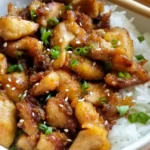
Garlic Ginger Chicken with Caramelized Soy Glaze
- Total Time: 45 minutes
- Yield: 2 servings 1x
- Diet: General
Description
Flavor packed Chinese takeout style chicken recipe made with fresh ginger and garlic in a soy sesame caramelized sauce.
Ingredients
- 1 lb. boneless, skinless chicken thighs, cut into small chunks
- 1 egg
- 3 tbsp cornstarch
- 3/4 cup water
- 1 tbsp fresh ginger, very finely chopped
- 1 tbsp fresh garlic, very finely chopped
- 1 tbsp yellow or white onion, very finely chopped
- 3 tbsp soy sauce
- 3 tbsp brown sugar
- 1 tbsp rice vinegar
- 1 tsp sesame oil
- 2 tbsp avocado oil
- green onions, chopped
- sesame seeds
Instructions
- Step 1: In a small bowl, mix rice vinegar, sesame oil, ginger, garlic, onion, brown sugar, soy sauce, and water.
- Step 2: Heat a skillet to medium heat, pour in the sauce, and simmer for about 10 minutes until the sauce darkens; set aside.
- Step 3: In a large mixing bowl, toss chicken with cornstarch until fully coated.
- Step 4: Whisk egg in a small bowl and pour over the chicken, mixing gently to coat.
- Step 5: Heat avocado oil in the skillet over medium-high heat and cook chicken in an even layer until the bottom is golden.
- Step 6: Flip chicken, break pieces apart, cook for 5-7 minutes, then lower heat and cook for another 10 minutes, stirring occasionally.
- Step 7: Drain excess oil, increase heat to high, pour the sauce over the chicken, and stir frequently for a few minutes.
- Step 8: Serve with a sprinkle of fresh chopped green onions and sesame seeds.
Notes
Using fresh ginger and garlic is highly recommended for the most authentic flavor. Serve over steamed rice for a complete meal.
- Prep Time: 15 minutes
- Cook Time: 30 minutes
- Category: Main Course
- Method: Stir-frying
- Cuisine: Asian
Nutrition
- Serving Size: 1 serving
- Calories: 585 kcal
- Sugar: 18 g
- Sodium: 1754 mg
- Fat: 27 g
- Saturated Fat: 5 g
- Unsaturated Fat: 20 g
- Trans Fat: 0.1 g
- Carbohydrates: 33 g
- Fiber: 1 g
- Protein: 50 g
- Cholesterol: 297 mg