
This recipe features spice-rubbed seared chicken served in a rich, creamy garlic broth with chewy ramen noodles. It is a hearty, bold meal that is easy to prepare at home for a restaurant-style experience.

List of ingredients
- 2 boneless, skinless chicken thighs or breasts – thighs provide more moisture and flavor.
- 1 teaspoon chili powder – adds the primary spicy kick.
- 1 teaspoon paprika – provides a smoky depth and rich color.
- ½ teaspoon salt – balances and enhances all other seasonings.
- ½ teaspoon black pepper – adds a subtle sharp heat.
- 1 tablespoon vegetable oil – used for searing the chicken at high heat.
- 3 cups chicken broth – the savory base for the ramen soup.
- 1 tablespoon soy sauce – adds saltiness and umami richness.
- 1 teaspoon sesame oil – provides a toasted, nutty aroma.
- 2 cloves garlic, minced – used for flavoring the broth.
- ¼ cup heavy cream – thickens the broth for a velvety texture.
- 1 tablespoon butter – the base for the creamy garlic drizzle.
- 2 cloves garlic, minced – used for the concentrated garlic sauce.
- ¼ cup heavy cream – creates the thickness in the drizzle.
- 2 packs ramen noodles – fresh or dried, according to preference.
- 1 green onion, chopped – used as a fresh, crisp garnish.
- 1 teaspoon chili oil – optional for those who want additional heat.
step-by-step instructions
- Marinate the chicken: In a small bowl, combine chili powder, paprika, salt, and black pepper. Coat the chicken pieces evenly in the spice mix and let them sit for 15 minutes to absorb the flavors.
- Sear the chicken: Heat vegetable oil in a pan over medium-high heat. Sear the chicken for 5-7 minutes per side until golden brown and fully cooked; let the meat rest before slicing into strips.
- Prepare the garlic sauce: Melt butter in a small saucepan over medium heat and sauté minced garlic until fragrant. Stir in the heavy cream and simmer gently until the sauce thickens slightly.
- Cook the noodles: Boil a pot of water and cook the ramen noodles following the package directions. Drain them immediately to prevent overcooking.
- Simmer the broth: Heat sesame oil in a pot and sauté minced garlic until aromatic. Stir in the chicken broth, soy sauce, and heavy cream, then simmer for 5-7 minutes to meld the flavors.
- Assemble the bowls: Divide the cooked noodles into serving bowls and pour the spicy broth over them. Top with the sliced seared chicken and drizzle with the prepared creamy garlic sauce.
- Add final touches: Garnish each bowl with chopped green onions and an optional drizzle of chili oil. Serve the dish while it is steaming hot.
Ways to Improve Your Ramen Quality
Using a Cast-Iron Skillet for Better Searing
A cast-iron pan retains heat more effectively than stainless steel or non-stick pans. This allows the chicken to develop a deep, caramelized crust that adds a smoky dimension to the dish. Ensure the pan is very hot before adding the oil.
Achieving the Perfect Noodle Texture
Ramen noodles should be al dente with a slight chew. To avoid mushiness, drain the noodles a minute before the package suggests and let the hot broth finish the cooking process. This prevents the noodles from absorbing too much liquid.
Adjusting the Heat Levels to Your Preference
If the recipe is too spicy, increase the amount of heavy cream in the broth to mellow out the heat. For those who crave more fire, add a pinch of cayenne pepper to the chicken rub or increase the chili oil garnish. The creamy garlic sauce also helps balance the spice.
Selecting the Best Quality Chicken Broth
Using a low-sodium chicken broth allows you to control the salt level more precisely with the soy sauce. For a deeper flavor, use a bone-broth variety which provides more collagen and a richer mouthfeel. Homemade broth is also a great alternative.
The Importance of Resting the Chicken
Allowing the chicken to rest for 5 minutes after searing prevents the juices from running out when you slice it. This ensures the meat remains moist and tender. Resting the meat also makes it easier to get clean, thin strips for presentation.
Avoiding Common Cooking Pitfalls
Preventing Dry Overcooked Chicken
Chicken breasts cook faster than thighs and can dry out quickly. Use a meat thermometer to ensure the internal temperature reaches 165°F (75°C) without going over. Slicing against the grain also helps maintain a tender texture.
Stopping the Broth from Boiling Over
Maintain a gentle simmer rather than a rolling boil when adding the heavy cream. High heat can cause the cream to separate or the broth to reduce too quickly. A low simmer keeps the emulsion stable and the texture smooth.
Preventing Mushy Noodles
Do not leave cooked noodles sitting in the pot after draining. Rinse them briefly with warm water if you are not serving them immediately to stop the cooking process. This ensures they maintain their structure when added to the broth.
Avoiding Burnt Garlic in the Sauce
Garlic burns quickly at medium-high temperatures, which can make the sauce bitter. Keep the heat at a steady medium and stir constantly when sautéing the garlic in butter. Remove from heat as soon as the garlic becomes fragrant.
Proper Seasoning of the Broth
Avoid adding extra salt until the very end of the process. The soy sauce and chicken broth already contain significant sodium, which concentrates as the liquid simmers. Taste the broth just before assembling the bowls to determine if more seasoning is needed.
Recommended Toppings and Accompaniments
Adding a Soft-Boiled Marinated Egg
A soft-boiled egg with a jammy yolk is a classic ramen addition. Boil the egg for 6.5 minutes, then shock it in ice water before peeling. Marinating it in a mixture of soy sauce and mirin for a few hours adds a savory depth.
Including Steamed Bok Choy for Freshness
Steamed or blanched bok choy provides a crisp, bitter contrast to the rich, creamy broth. Simply steam the greens for 2-3 minutes until bright green and tender. Place them on top of the noodles for added nutritional value.
Using Pickled Bamboo Shoots for Tang
Menma, or pickled bamboo shoots, add a fermented tanginess and a unique crunch. This acidity cuts through the richness of the heavy cream and butter. They are typically available in Japanese grocery stores.
Adding Nori Seaweed for Umami
A sheet of toasted nori tucked into the side of the bowl adds a salty, oceanic flavor. The seaweed provides a subtle umami note that complements the soy sauce in the broth. It also adds a professional visual touch to the presentation.
Toasting Sesame Seeds for Crunch
Lightly toast white or black sesame seeds in a dry pan until they are fragrant. Sprinkle them over the finished dish for a nutty aroma and a slight crunch. This is a simple way to add layers of texture to the soft noodles.
Serving with Spicy Kimchi on the Side
Korean kimchi serves as an excellent side dish due to its probiotic properties and sharp acidity. The fermented cabbage cleanses the palate between bites of the rich garlic sauce. It also enhances the fiery theme of the ramen.
Incorporating Crispy Garlic Chips
Thinly slice garlic cloves and fry them in oil until golden brown and crisp. These chips provide a concentrated burst of garlic flavor and a contrasting texture. Sprinkle them on top of the chicken for extra impact.
Pairing with Pan-Fried Gyoza
Japanese pork-free dumplings filled with vegetables or chicken make a perfect side. Pan-fry them until the bottoms are crispy and steam the tops. This turns the ramen bowl into a full, indulgent meal.
Storage and Preservation Tips
Storing the Seared Chicken
Place the sliced chicken in an airtight container and refrigerate it for up to three days. To maintain the quality, avoid storing the chicken inside the broth. This prevents the meat from becoming soggy and losing its seared edges.
Freezing and Refrigerating the Broth
The broth can be kept in the refrigerator for four days or frozen for up to three months. When freezing, allow the broth to cool completely before pouring it into freezer-safe bags. Leave a bit of room for expansion during the freezing process.
Proper Handling of Leftover Noodles
Ramen noodles do not store well once cooked as they absorb moisture and clump together. If you must store them, toss them in a small amount of sesame oil to prevent sticking. It is always recommended to cook fresh noodles for each serving.
Effective Reheating Methods
Warming the Broth on the Stovetop
Heat the stored broth in a small saucepan over medium heat. Stir gently to reintegrate the cream and soy sauce. Avoid boiling the broth aggressively to prevent the cream from breaking.
Reheating Chicken Without Drying It Out
Warm the seared chicken in a pan with a teaspoon of oil or in an oven at 350°F (175°C) for a few minutes. This restores the exterior crispness without overcooking the center. Avoid using the microwave, as it can make the chicken rubbery.
Refreshing Cooked Noodles
If using refrigerated noodles, briefly rinse them under hot running water to loosen them up. Alternatively, dip them in boiling water for 30 seconds. This restores their chewiness before they are added back into the hot broth.
Customizing the Recipe
Reducing the Sodium Content
Use an unsalted chicken stock and reduce the amount of soy sauce. You can replace some of the soy sauce with a splash of rice vinegar or lemon juice to maintain a bold flavor profile without the extra salt. This makes the dish more heart-healthy.
Adapting the Dish for Vegetarians
Replace the chicken with extra-firm tofu or thick slices of king oyster mushrooms. Use a high-quality vegetable broth instead of chicken broth. Ensure the tofu is pressed well before searing to achieve a similar crust to the chicken.
Using Different Types of Noodles
Udon noodles are a great substitute for a thicker, chewier experience. Soba noodles offer a nuttier flavor and a healthier profile. Adjust the boiling time based on the specific noodle type to ensure they are not overcooked.
Creating a Lighter Version of the Sauce
Substitute the heavy cream with a mixture of Greek yogurt and a splash of milk. This reduces the fat content while maintaining a creamy consistency. Add a squeeze of lime to brighten the flavor of the lighter sauce.
Common Questions and Answers
Can I make this ramen less spicy?
Yes, simply reduce the amount of chili powder in the spice rub and omit the chili oil drizzle at the end. Increasing the amount of creamy garlic sauce will also help neutralize the heat for those with lower spice tolerances.
Which chicken cut is best?
Boneless, skinless chicken thighs are the best choice because they remain juicy under high heat. Chicken breasts can be used for a leaner option, but they require more careful monitoring to avoid drying out during the searing process.
Can I use a different type of noodle?
Absolutely. Udon, soba, or even rice noodles work well. Just be sure to check the cooking times on the packaging, as these varieties vary significantly from standard ramen noodles.
How do I thicken the broth?
The heavy cream already provides a level of thickness, but for a richer consistency, you can add a small cornstarch slurry. Mix one teaspoon of cornstarch with a tablespoon of water and stir it into the simmering broth for a minute.
Can this be made vegetarian?
Yes, by substituting the chicken with tofu or mushrooms and replacing the chicken broth with vegetable broth. The creamy garlic sauce remains the same as it uses butter and cream.
What is the best way to get a crispy sear?
Use a heavy-bottomed pan or cast-iron skillet and ensure the oil is shimmering hot. Avoid moving the chicken too frequently; let it sit undisturbed for several minutes to allow a proper crust to form.
How can I make the broth even more flavorful?
Simmer the broth with a slice of fresh ginger, a few dried shiitake mushrooms, or a piece of kombu seaweed. These additions introduce deep earthy tones and increase the umami profile of the soup.
Can I prepare this ramen in advance?
You can prepare the broth, garlic sauce, and chicken in advance. However, store them in separate containers and only boil the noodles and assemble the bowl right before serving to ensure the best texture.
Print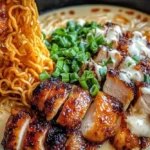
Fiery Chicken Ramen with Creamy Garlic Sauce
- Total Time: 40 minutes
- Yield: 2 servings 1x
- Diet: General
Description
This Fiery Chicken Ramen with Creamy Garlic Sauce is a bold and flavorful dish perfect for spice lovers. Juicy, spice-rubbed chicken is seared to perfection and served over a rich, creamy broth with chewy ramen noodles. A drizzle of garlicky sauce balances the heat, creating a comforting and satisfying meal.
Ingredients
- 2 boneless, skinless chicken thighs or breasts
- 1 teaspoon chili powder
- 1 teaspoon paprika
- ½ teaspoon salt
- ½ teaspoon black pepper
- 1 tablespoon vegetable oil
- 3 cups chicken broth
- 1 tablespoon soy sauce
- 1 teaspoon sesame oil
- 4 cloves garlic, minced (divided)
- ½ cup heavy cream (divided)
- 1 tablespoon butter
- 2 packs ramen noodles (fresh or dried)
- 1 green onion, chopped
- 1 teaspoon chili oil (optional)
Instructions
- Marinate the Chicken: In a bowl, mix chili powder, paprika, salt, and black pepper. Coat the chicken evenly and let it sit for 15 minutes.
- Cook the Chicken: Heat a pan over medium-high heat, add oil, and sear the chicken for 5-7 minutes per side until golden brown and cooked through. Let it rest before slicing.
- Prepare the Creamy Garlic Sauce: In a small saucepan, melt butter over medium heat. Add garlic and sauté until fragrant. Pour in heavy cream, stir, and let it thicken slightly. Set aside.
- Cook the Ramen Noodles: Boil water in a pot and cook the ramen noodles according to package instructions. Drain and set aside.
- Make the Spicy Broth: In a pot, heat sesame oil and sauté minced garlic until aromatic. Add chicken broth, soy sauce, and heavy cream. Simmer for 5-7 minutes.
- Assemble the Ramen Bowl: Divide the noodles into bowls. Pour the spicy broth over the noodles. Top with sliced chicken and drizzle with creamy garlic sauce.
- Garnish & Serve: Sprinkle chopped green onions and a drizzle of chili oil for extra spice. Serve hot and enjoy!
Notes
For extra texture, add toppings like sesame seeds, soft-boiled eggs, or chili oil. Leftovers can be stored in an airtight container in the fridge for up to 3 days. Reheat gently on the stovetop, adding a splash of broth or cream if needed.
- Prep Time: 15 minutes
- Cook Time: 25 minutes
- Category: Main Course
- Method: Stovetop
- Cuisine: Japanese-inspired
Nutrition
- Serving Size: 1 bowl
- Calories: 700 kcal
- Sugar: 8 g
- Sodium: 1200 mg
- Fat: 30 g
- Saturated Fat: 12 g
- Unsaturated Fat: 18 g
- Trans Fat: 0 g
- Carbohydrates: 65 g
- Fiber: 4 g
- Protein: 40 g
- Cholesterol: 110 mg