
This Korean beef bulgogi features thin slices of marinated beef seared over high heat for a savory and sweet finish. It is a practical meal that uses common pantry staples to create a restaurant-quality dish in under an hour.

List of ingredients
- 4 tbsp low sodium soy sauce – provides the essential salty base for the marinade.
- 3 tbsp brown sugar – adds sweetness and helps the meat caramelize in the pan.
- 2 tbsp rice vinegar mixed with 1 tsp honey – a non-alcoholic substitute for mirin that maintains the sweet-tart balance.
- 1 Asian pear – contains natural enzymes that tenderize the beef and add a subtle sweetness.
- 2 cloves garlic – adds an aromatic, pungent depth to the sauce.
- 1 tbsp sesame oil – provides a rich, nutty toasted flavor.
- 1 lb sliced beef – rib eye or top sirloin are recommended for the best texture.
- 1 small yellow onion, sliced – adds sweetness and texture to the stir-fry.
- 3 stalks green onions, sliced – used in both the marinade and as a final garnish.
- Sliced green onions and sesame seeds – optional garnishes for added color and flavor.
step-by-step instructions
- Prepare the marinade: Combine the soy sauce, brown sugar, rice vinegar with honey, Asian pear, garlic, and sesame oil in a food processor. Blend the ingredients until the mixture is completely smooth and well combined.
- Marinate the beef: Place the sliced beef, sliced yellow onion, and green onions in a large bowl. Pour the blended marinade over the meat and massage it in by hand to ensure every slice is coated, then let it marinate for at least 30 minutes.
- Sear the meat: Heat a large cast iron skillet over medium-high heat. Add only enough beef and onions to cover the pan without overcrowding to ensure the meat sears and browns instead of steaming.
- Stir-fry quickly: Allow the beef to cook untouched for a few seconds to develop a crust, then use chopsticks or tongs to stir-fry quickly. Because the slices are very thin, they will cook through rapidly.
- Finish and serve: Once the beef is no longer pink, transfer it to a plate. Garnish the cooked beef with additional sliced green onions and a sprinkle of sesame seeds if desired.
Meat Selection and Preparation
Choosing the Right Cut of Beef
Rib eye is highly recommended for bulgogi because its marbling ensures the meat remains juicy under high heat. Top sirloin is a leaner option that still provides a satisfying chew and takes the marinade well. Avoid overly lean cuts like eye of round unless you increase the marination time.
How to Slice Beef Thinly
To achieve paper-thin slices, place the beef in the freezer for approximately one hour before cutting. This firms up the muscle fibers, making it much easier to slice uniform, thin strips. Always cut across the grain of the meat to ensure maximum tenderness.
Preparing Pre-sliced Beef
If using store-bought pre-sliced beef, ensure the pieces are consistent in thickness to prevent some pieces from overcooking. Pat the meat dry with paper towels before adding the marinade if there is excess moisture. This helps the marinade adhere better to the surface of the beef.
Marinade Component Guide
The Role of Asian Pear
Asian pears contain calpain, a natural enzyme that breaks down tough protein fibers in the meat. This process tenderizes the beef and gives it a characteristic softness found in traditional Korean BBQ. The fruit also provides a refined sweetness that complements the salty soy sauce.
Substituting for Asian Pear
If Asian pears are unavailable, kiwi or fresh pineapple can be used as an alternative due to their similar enzymatic properties. Be cautious with these fruits as they are more potent and can make the meat mushy if marinated too long. Reduce the marination time to 15-20 minutes when using kiwi or pineapple.
Balancing the Sweet and Salty
The balance between the brown sugar and soy sauce is critical for an authentic taste. If you prefer a saltier profile, slightly reduce the brown sugar or add an extra teaspoon of soy sauce. For those who prefer a sweeter dish, a small amount of additional honey can be whisked in.
Alcohol-Free Mirin Alternatives
Mirin provides acidity and sweetness, which is replicated here using rice vinegar and honey. Rice vinegar offers the necessary tang, while honey mimics the syrupy consistency of traditional mirin. This substitution ensures the recipe remains alcohol-free without sacrificing the flavor profile.
Cooking Techniques for Best Results
The Importance of High Heat
Cooking bulgogi over medium-high to high heat is essential to trigger the Maillard reaction. This chemical reaction between amino acids and reducing sugars creates the browned, caramelized crust. Without sufficient heat, the meat will release juices and boil rather than sear.
Avoiding Pan Overcrowding
Adding too much meat to the skillet at once drops the surface temperature and traps steam. This results in grey, boiled meat instead of charred, flavorful beef. Cook the meat in small batches to maintain a consistent high temperature in the pan.
Using a Cast Iron Skillet
A cast iron skillet is ideal for this recipe because of its superior heat retention. It distributes heat evenly and stays hot even when cold meat is added to the surface. If you do not have cast iron, a heavy-bottomed stainless steel pan is the next best choice.
Managing Cooking Time
Because the beef is sliced so thinly, it can go from perfectly cooked to overdone in seconds. Stir-fry the meat quickly and remove it from the heat as soon as the pink color disappears. Overcooking will lead to a tough, dry texture.
Serving Suggestions
Traditional Rice Pairings
Serve bulgogi with steamed jasmine rice for a clean taste that balances the rich marinade. Purple rice or multi-grain rice is also a traditional Korean choice, adding a nuttier flavor and more texture. The rice absorbs the excess sauce from the beef perfectly.
Vegetable Side Dish Pairings
Pair the beef with blanched spinach seasoned with sesame oil and garlic to add freshness. Kimchi is another essential side, providing a fermented tang and spicy kick that cuts through the richness of the beef. Sliced cucumbers marinated in vinegar also provide a refreshing contrast.
Creating Korean Lettuce Wraps
Transform the dish into ‘ssam’ by serving the beef with large red leaf lettuce or perilla leaves. Place a piece of beef and a spoonful of rice inside a leaf, then fold it into a wrap. Adding a dollop of ssamjang or a slice of raw garlic enhances the experience.
Storage and Make-Ahead Advice
Refrigerating Cooked Bulgogi
Store cooked beef in an airtight container in the refrigerator for up to four days. Ensure the meat is completely cooled before sealing the lid to prevent excess condensation. This makes bulgogi an excellent option for weekly meal prep.
Freezing Raw Marinated Beef
You can marinate the beef and freeze it uncooked in freezer-safe bags for up to three months. Squeeze as much air out of the bag as possible to prevent freezer burn. Label the bag with the date and the required cooking instructions.
Thawing Procedures
Thaw frozen marinated beef slowly in the refrigerator overnight to maintain the meat’s texture. Avoid thawing at room temperature or using hot water, as this can compromise food safety. Once thawed, cook the beef immediately using the skillet method.
Marination Time Limits
While marinating for 30 minutes is the minimum, you can marinate the beef overnight for deeper flavor. Do not exceed 24 hours of marination, as the enzymes in the pear will over-tenderize the meat. Over-marinating can result in a mealy or mushy texture.
Reheating Instructions
Stovetop Reheating Method
The best way to reheat bulgogi is in a skillet over medium heat. Add a teaspoon of water or beef broth to the pan to restore moisture and prevent the sugar from burning. Stir-fry for 2-3 minutes until heated through.
Microwave Reheating Method
Place the beef in a microwave-safe dish and cover it with a damp paper towel to trap steam. Heat in short 30-second bursts, stirring in between, to avoid overcooking the thin slices. This method is faster but may not preserve the sear as well as the stovetop.
Troubleshooting Common Issues
Why is the Meat Tough?
Tough meat is usually caused by slicing with the grain rather than against it. If the meat is still tough, ensure you are using a tenderizing agent like Asian pear and allowing enough marination time. Check that you haven’t overcooked the meat in the pan.
How to Fix a Thin Sauce
If the sauce seems too watery in the pan, increase the heat and let the liquid reduce for a minute before adding more meat. This concentrates the sugars and soy sauce, creating a glazy coating. Do not over-reduce or the sauce may become too salty.
Preventing Burnt Sugar
Since the marinade contains brown sugar, it can burn if the pan is too hot or the meat is left untouched for too long. Keep the meat moving constantly once the initial sear is achieved. Use a medium-high heat rather than the highest setting on your stove.
Frequently Asked Questions
Can I use a different sugar?
Yes, honey or maple syrup can be used as a substitute for brown sugar. Honey will result in a glossier finish, while maple syrup adds a slight woody sweetness. Keep the quantity the same to maintain the flavor balance.
How long can I marinate the beef?
The beef can be marinated for anywhere from 30 minutes up to 24 hours. Marinating overnight allows the flavors to penetrate deeper into the meat. However, exceeding 24 hours may break down the muscle fibers too much due to the fruit enzymes.
Can I use a grill instead of a skillet?
Yes, this recipe works very well on a charcoal or gas grill. Use high heat and a grill grate to get a charred exterior similar to traditional Korean BBQ restaurants. Be careful as the sugar in the marinade can cause flare-ups on an open flame.
Print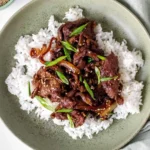
Easy Korean Beef Bulgogi
- Total Time: 55 minutes
- Yield: 4 servings 1x
- Diet: General
Description
One of the most popular Korean recipes, Bulgogi, a Korean Grilled BBQ Beef recipe, comes together easily with a few simple ingredients from the pantry. Made from marinated thin slices of beef then cooked over high heat, this homemade bulgogi recipe is sweet, salty, and savoury.
Ingredients
- 4 tbsp low sodium soy sauce
- 3 tbsp brown sugar
- 2 tbsp rice vinegar with extra honey
- 1 Asian pear
- 2 cloves garlic
- 1 tbsp sesame oil
- 1 lb sliced beef
- 1 small yellow onion, sliced
- 3 stalks green onions
- Green onions, sliced
- Sesame seeds
Instructions
- Step: In a food processor, add the soy sauce, brown sugar, rice vinegar with honey, pear, garlic, and sesame oil; blend until fully combined.
- Step: In a large bowl, combine the sliced beef, sliced onions, green onions, and the marinade, then set aside to marinate for a minimum of 30 minutes.
- Step: In a large cast iron skillet over medium-high heat, stir-fry the meat and onions in batches to avoid overcrowding the pan.
- Step: Cook until the beef is no longer pink and transfer to a plate.
- Step: Serve with sliced scallions on top and a sprinkle of sesame seeds.
Notes
If Asian pear is unavailable, try kiwi or pineapple, but reduce marination time. If you do not have a food processor, grate the pear using a box grater. Beef can be marinated overnight in the fridge, but do not exceed this as the tenderizing agents may change the meat texture.
- Prep Time: 40 minutes
- Cook Time: 15 minutes
- Category: Main Course
- Method: Stir-fry
- Cuisine: Korean
Nutrition
- Serving Size: 1 serving
- Calories: 277 kcal
- Sugar: 16 g
- Sodium: 668 mg
- Fat: 9 g
- Saturated Fat: 2 g
- Unsaturated Fat: 6 g
- Trans Fat: 0 g
- Carbohydrates: 23 g
- Fiber: 2 g
- Protein: 26 g
- Cholesterol: 69 mg