
Craving a light, refreshing, and incredibly flavorful meal? Look no further than this Easy Healthy Greek Salad! Packed with juicy tomatoes, crisp cucumber, briny olives, and creamy feta, this salad is a Mediterranean delight that comes together in minutes. It’s perfect as a light lunch, a vibrant side dish, or even a satisfying vegetarian main course. We’ll show you how to create a truly authentic Greek salad experience, bursting with fresh flavors and simple ingredients. Get ready to transport your taste buds to the sunny shores of Greece!

What You’ll Need: The Ingredient Lineup
- 2 large tomatoes (≈300 g / 10.5 oz): Choose ripe, flavorful tomatoes – Roma, beefsteak, or heirloom varieties work beautifully. Cut into wedges for easy eating and maximum surface area to soak up the delicious dressing. A pinch of sumac adds a lovely citrusy tang that complements the tomatoes perfectly.
- 1 cucumber (≈200 g / 7 oz): English cucumbers (also known as seedless cucumbers) are ideal as they have thinner skin and fewer seeds. Halve lengthwise, then slice into half-moons. A few fresh dill fronds tossed in with the cucumber add a bright, herbaceous note.
- 1 small red onion (≈80 g / 3 oz): Red onion provides a sharp, slightly sweet bite. Thinly sliced, it adds a beautiful color contrast to the salad. A dash of toasted cumin seeds sprinkled over the onion introduces a warm, earthy depth of flavor.
- 150 g (5 oz) Kalamata olives, pitted: Kalamata olives are the star of any good Greek salad! Their rich, fruity flavor and firm texture are essential. Pitted olives are convenient, but feel free to use whole olives and pit them yourself. Keep a few whole olives for a beautiful garnish.
- 100 g (3.5 oz) halal‑certified feta cheese, crumbled: Authentic Greek feta is made from sheep’s milk (or a blend of sheep and goat’s milk) and has a salty, tangy flavor. Look for halal-certified feta if you require it. Crumble generously – and save a little extra for topping!
- 2 tbsp (30 ml / 2 fl oz) extra‑virgin olive oil: Use a high-quality extra-virgin olive oil for the best flavor. It forms the base of the dressing and adds a luxurious richness to the salad. A drizzle of lemon-infused olive oil at the finish elevates the flavor profile.
- 1 tbsp (15 ml / 1 fl oz) freshly squeezed lemon juice: Freshly squeezed lemon juice is crucial for brightness and acidity. It balances the richness of the olive oil and enhances the flavors of the vegetables. A hint of orange zest can add a subtle, unexpected layer of complexity.
- 1 tsp (5 g / 0.2 oz) dried oregano: Dried oregano is a classic Greek herb. It provides a warm, earthy aroma and flavor. Combine it with a pinch of dried thyme for a more nuanced herbal experience.
- Salt and freshly ground black pepper to taste: Season generously with salt and freshly ground black pepper. A pinch of flaky sea salt sprinkled over the top adds a delightful textural element.
- Optional garnish: a few sprigs of fresh mint and a lemon wedge: Fresh mint adds a cool, refreshing touch. A lemon wedge on the side allows diners to add an extra burst of citrus if desired.
Step-by-Step Instructions for the Perfect Greek Salad
- Prepare the Vegetables: Begin by thoroughly rinsing all your vegetables – tomatoes, cucumber, and red onion – under cold water. This removes any dirt or residue. Pat them dry with a clean kitchen towel. Cutting the tomatoes into wedges provides a good balance of texture and surface area for the dressing. Halve the cucumber lengthwise and then slice it into half-moons for a pleasing shape and easy eating. Thinly slicing the red onion is crucial; thick slices can be overpowering.
- Combine the Base Ingredients: In a large mixing bowl, gently combine the cut tomatoes, cucumber, and sliced red onion. Add the pitted Kalamata olives and the crumbled feta cheese. Reserving a few whole olives for garnish adds a visual appeal. Be gentle when tossing to avoid bruising the tomatoes.
- Make the Dressing: In a separate small bowl, whisk together the extra-virgin olive oil, freshly squeezed lemon juice, dried oregano, thyme, salt, and pepper. Whisk vigorously until the dressing emulsifies – meaning it comes together and appears slightly thickened. Emulsification helps the oil and lemon juice combine, creating a more flavorful and cohesive dressing.
- Dress the Salad: Pour the prepared dressing over the vegetables and feta. Toss lightly to ensure every piece is lightly coated. Avoid over-mixing, as this can make the salad soggy. Allow the salad to rest for 5 minutes. This resting period is vital; it allows the flavors to meld and the vegetables to slightly soften, enhancing the overall taste.
- Taste and Adjust Seasoning: After the resting period, taste the salad. Adjust the seasoning with additional salt, pepper, or lemon juice as needed. Remember that feta cheese is already salty, so start with a small amount of salt and add more gradually.
- Plate and Garnish: Arrange the salad on a wide, shallow serving plate. Forming a slightly heaped mound adds visual height and makes the salad more appealing.
- Final Touches: Drizzle a thin zig-zag of lemon-infused olive oil across the top of the salad. This adds a glossy contrast and a subtle lemon aroma. Scatter extra feta crumble and whole olives over the top. Garnish with fresh mint sprigs and a lemon wedge on the side.
- Serve Immediately: Serve the Greek salad immediately at room temperature. While it can stay crisp and fresh for up to 30 minutes, it’s best enjoyed right away for optimal flavor and texture.
The Importance of Quality Ingredients
A truly exceptional Greek salad hinges on the quality of its ingredients. Using ripe, in-season tomatoes is paramount – their sweetness provides a beautiful counterpoint to the salty feta and briny olives. Similarly, good quality extra virgin olive oil is non-negotiable. Look for an oil with a fruity aroma and a slightly peppery finish. Don’t skimp on the feta either; authentic Greek feta, made from sheep’s milk, has a distinct tangy flavor that elevates the entire salad.
Variations and Additions
While this recipe provides a classic foundation, feel free to experiment with variations. Adding bell peppers (green, red, or yellow) provides a satisfying crunch and sweetness. Some people enjoy including capers for an extra burst of salty flavor. For a heartier salad, consider adding cooked chickpeas or grilled chicken or shrimp. A sprinkle of red pepper flakes can add a touch of heat.

Why This Greek Salad Recipe Works
This recipe isn’t just about throwing ingredients together; it’s about balance. The acidity of the lemon juice cuts through the richness of the olive oil and feta, while the oregano and thyme provide an herbaceous depth. The slight bitterness of the red onion is balanced by the sweetness of the tomatoes. The resting period is key, allowing the flavors to marry and create a harmonious whole. The use of sumac on the tomatoes adds a unique citrusy note that brightens the entire dish.
Tips for Keeping Your Salad Crisp
Nobody likes a soggy Greek salad! To maintain its crispness, ensure all vegetables are thoroughly dried after washing. Don’t add the dressing until just before serving. If you’re preparing the salad ahead of time, keep the vegetables and dressing separate and combine them at the last minute. Avoid using iceberg lettuce, as it wilts quickly. The cucumber is the most prone to releasing water, so consider salting the cucumber slices lightly and letting them sit for 10-15 minutes before adding them to the salad; this draws out some of the excess moisture.
Frequently Asked Questions (FAQ)
- Can I use other types of olives? While Kalamata olives are traditional, you can substitute with other Greek olives if needed.
- Is it okay to use pre-crumbled feta? While convenient, pre-crumbled feta often has a coating to prevent clumping, which can affect the texture. Crumbing your own feta is always preferable.
- Can I make this salad vegan? Yes! Simply omit the feta cheese or substitute with a vegan feta alternative.
Enjoy this vibrant and refreshing Easy Healthy Greek Salad! It’s the perfect side dish for grilled meats, fish, or simply enjoyed on its own. Don’t forget to save this recipe to Pinterest for later!
Print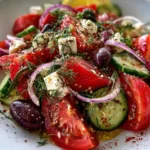
Easy Healthy Greek Salad
- Total Time: 10 minutes
- Yield: 4 servings 1x
- Diet: Vegetarian
Description
This Easy Healthy Greek Salad is a refreshing Mediterranean delight packed with juicy tomatoes, crisp cucumber, briny olives, and creamy feta. It’s perfect as a light lunch or vibrant side dish.
Ingredients
- 2 tomatoes (300g): Cut into wedges, with a pinch of sumac.
- 1 cucumber (200g): Halved and sliced into half-moons, with fresh dill.
- 1 red onion (80g): Thinly sliced, with toasted cumin seeds.
- 150g Kalamata olives: Pitted, with some reserved for garnish.
- 100g feta cheese: Crumbled halal-certified feta.
- 2 tbsp olive oil (30ml): High-quality extra-virgin olive oil.
- 1 tbsp lemon juice (15ml): Freshly squeezed.
- 1 tsp dried oregano (5g): Combined with dried thyme.
- Salt and pepper: To taste, with flaky sea salt.
- Optional: Fresh mint and a lemon wedge.
Instructions
- Prepare Vegetables: Rinse and dry tomatoes, cucumber, and red onion; cut tomatoes into wedges, cucumber into half-moons, and onion thinly.
- Combine Base: Gently combine tomatoes, cucumber, red onion, olives, and feta in a bowl.
- Make Dressing: Whisk olive oil, lemon juice, oregano, thyme, salt, and pepper until emulsified.
- Dress Salad: Pour dressing over vegetables and feta; toss lightly and let rest for 5 minutes.
- Taste & Adjust: Adjust seasoning with salt, pepper, or lemon juice as needed.
- Plate & Garnish: Arrange salad on a plate, drizzle with olive oil, and garnish with feta, olives, and mint.
- Serve Immediately: Serve at room temperature for optimal flavor and texture.
Notes
Allowing the salad to rest for 5 minutes allows the flavors to meld and the vegetables to soften. Ensure vegetables are thoroughly dried to prevent sogginess.
- Prep Time: 10 minutes
- Cook Time: 0 minutes
- Category: Salad
- Method: Mixing
- Cuisine: Greek
Nutrition
- Serving Size: 1 cup
- Calories: 250 kcal
- Sugar: 8 g
- Sodium: 400 mg
- Fat: 20 g
- Saturated Fat: 10 g
- Unsaturated Fat: 8 g
- Trans Fat: 0 g
- Carbohydrates: 15 g
- Fiber: 3 g
- Protein: 10 g
- Cholesterol: 25 mg