
Experience the perfect balance of sweet and spicy with this easy homemade version of a takeout favorite. This recipe delivers crispy chicken coated in a thick, glossy glaze that rivals any restaurant version. It is a quick meal that brings authentic bold flavors to your kitchen.

List of ingredients
- 2 lb chicken thighs, trimmed and cut into 1-inch pieces – provides maximum juiciness.
- 1/2 cup corn starch – used for dredging to create a crisp exterior.
- 1/4 cup extra light olive oil – for frying, with more as needed for batches.
- 2 tbsp minced ginger – freshly grated from a 2-inch piece for zest.
- 3 cloves garlic – finely minced or grated for aromatic depth.
- 1/2 tsp red pepper flakes – adjust based on your spice preference.
- 1 tsp sesame seeds – optional for a traditional garnish.
- 1/2 cup cold water – the liquid base for the sauce.
- 5 tbsp low sodium soy sauce – provides saltiness and umami.
- 3 tbsp rice vinegar – adds a tangy acidity.
- 1 1/2 tbsp hoisin sauce – adds sweetness and a thick consistency.
- 4 tbsp granulated sugar – balances the vinegar and soy sauce.
- 1 1/2 tbsp corn starch – thickens the sauce into a glaze.
step-by-step instructions
- Prepare the chicken: Cut chicken into 1-inch cubes and toss in batches with cornstarch, tapping off any excess before placing on a platter.
- Mix the sauce: In a separate bowl, combine the cold water, soy sauce, rice vinegar, hoisin sauce, sugar, and cornstarch, whisking until smooth.
- Fry the chicken: Preheat a non-stick skillet with oil and cook chicken in 2 to 3 batches until golden on all sides and cooked through. Transfer cooked pieces to a bowl, leaving about 1 tablespoon of oil in the pan.
- Sauté aromatics: Add the minced garlic, ginger, and red pepper flakes to the skillet, sautéing for 30 seconds until fragrant.
- Simmer the glaze: Pour the sauce mixture into the skillet and stir constantly while bringing it to a simmer. Let it cook for 1 minute to reduce the vinegar sharpness.
- Combine and finish: Add the cooked chicken back into the pan and toss thoroughly to coat every piece. Garnish with sesame seeds if desired and serve immediately.
Cooking Techniques for Maximum Crunch
Use a Non-Stick Skillet to Prevent Tearing
A non-stick pan is essential for this recipe because the cornstarch coating is delicate. It prevents the breading from sticking to the bottom and tearing off when you flip the chicken. This ensures every piece remains whole and crispy.
Avoid Overcrowding the Frying Pan
Cooking the chicken in small batches prevents the oil temperature from dropping too low. When the pan is too full, the chicken steams instead of searing, which leads to a soggy texture. Fry in 2-3 separate batches for the best results.
Shake Off Excess Cornstarch
Tapping off the extra cornstarch before frying prevents the oil from becoming gummy. Too much powder can create a thick, doughy layer rather than a thin, crisp shell. A light coating is all you need for that professional finish.
Maintain High Oil Heat
Ensure the oil is shimmering and hot before adding the chicken to the pan. High heat creates an immediate sear that locks in moisture and browns the exterior quickly. This prevents the chicken from absorbing too much oil.
Ingredient Substitutions and Modifications
Replacing Chicken Thighs with Breast
You can use chicken breasts if you prefer a leaner meat option. Be cautious not to overcook them, as breasts dry out faster than thighs. Cut the breast meat into slightly larger chunks to help them stay juicy.
Low-Sugar Glaze Alternatives
To reduce the sugar content, you can replace granulated sugar with a small amount of honey or maple syrup. These natural sweeteners provide a similar viscosity and sweetness. Note that honey may brown faster, so keep a close eye on the simmer.
Gluten-Free Soy Sauce Options
For a gluten-free version, replace low-sodium soy sauce with Tamari or coconut aminos. Both offer the salty, savory profile required for this Chinese-style sauce. Tamari is generally closer in taste to traditional soy sauce.
Adjusting the Spice Intensity
The red pepper flakes provide a mild heat, but this can be easily customized. Increase the amount to a full teaspoon for a spicier kick or omit them entirely for a kid-friendly version. Freshly sliced chilies can also be added for a different heat profile.
Substituting Rice Vinegar
If you do not have rice vinegar, apple cider vinegar is a suitable alternative. It provides a similar tang, although it has a slightly fruitier profile. Avoid using white distilled vinegar as it can be too harsh for this recipe.
Serving Suggestions and Side Dish Pairings
Pairing with Steamed Jasmine Rice
Serving the chicken over a bed of fluffy jasmine rice is the most traditional choice. The neutral flavor of the rice perfectly balances the intense sweetness and spice of the glaze. It also helps soak up any extra sauce from the pan.
Adding Steamed Broccoli Florets
Steamed broccoli adds a bright green color and a fresh, earthy contrast to the rich chicken. You can steam the broccoli separately or toss it directly into the sauce at the end. This adds a healthy vegetable component to the meal.
Serving with Korean Carrot Salad
A chilled, vinegary carrot salad provides a refreshing crunch that cuts through the fried nature of the dish. The acidity in the salad cleanses the palate between bites of the savory chicken. It is a great way to add texture to the plate.
Including Stir-Fried Noodles
For a more filling meal, serve the chicken alongside chow mein or lo mein noodles. Toss the noodles with a bit of soy sauce and sesame oil to complement the chicken. This creates a complete takeout-style feast at home.
Storage and Reheating Guide
Proper Refrigeration Method
Store any leftover chicken in an airtight container in the refrigerator for up to 3 to 4 days. Keep the chicken and any extra sauce together to maintain moisture. Ensure the food has cooled slightly before sealing the lid to prevent excess condensation.
Using an Air Fryer for Reheating
An air fryer is the best tool for restoring the original crispiness of the chicken. Heat at 350 degrees Fahrenheit for 3 to 5 minutes until the edges are crisp again. This avoids the sogginess associated with other reheating methods.
Oven Reheating Technique
If you do not have an air fryer, use an oven preheated to 375 degrees Fahrenheit. Spread the chicken on a baking sheet and heat for about 10 minutes. This method is better than microwaving for maintaining the texture of the breading.
Microwave Reheating Precautions
The microwave is the fastest option but often results in a rubbery texture. Heat on medium power in short intervals and avoid overcooking. It is best used for reheating the rice or vegetables rather than the fried chicken.
Make-Ahead Preparation Tips
Preparing the Sauce in Advance
You can whisk together the sauce ingredients up to 24 hours before you plan to cook. Store the mixture in a sealed jar or airtight container in the fridge. Give it a good shake or whisk before pouring it into the skillet to redistribute the cornstarch.
Pre-Cutting and Prepping Chicken
Cut the chicken thighs into cubes and store them in a container for the next day. This saves significant time during the actual cooking process. Keep the chicken chilled until the moment you are ready to dredge it in cornstarch.
Pre-Mincing Aromatics
Mince your garlic and ginger ahead of time and store them in small containers. Since these are sautéed very quickly, having them ready prevents them from burning while you search for tools. Freshly minced aromatics provide the best flavor.
Batch-Dredging the Chicken
You can toss the chicken in cornstarch and keep it on a platter in the fridge for an hour before frying. This can actually help the coating adhere better to the meat. Just make sure to shake off any clumps before they hit the oil.
Common Troubleshooting Solutions
Sauce is Too Thin
If the sauce does not thicken enough during the simmer, mix one teaspoon of cornstarch with a tablespoon of water. Stir this slurry into the simmering sauce and cook for another minute. The heat will activate the starch and create a thick glaze.
Sauce is Too Thick
If the glaze becomes too sticky or thick, stir in a tablespoon of water or chicken broth. Continue stirring over low heat until the desired consistency is reached. This happens if the sauce simmers for too long.
Chicken is Not Crispy
Soggy chicken usually happens because the oil wasn’t hot enough or the pan was overcrowded. Ensure your oil is shimmering before adding the meat. If using a non-stick pan, check that it is clean and the surface is evenly heated.
Sauce Tastes Too Sour
A sauce that is too tangy usually needs more balance from the sugar. Stir in an extra teaspoon of granulated sugar or honey while the sauce is simmering. Taste frequently to find the right equilibrium between acid and sweet.
Protein Alternatives
Using Firm Tofu
For a vegetarian version, use extra-firm tofu pressed to remove excess water. Cut the tofu into cubes and dredge them in cornstarch exactly like the chicken. Fry until all sides are golden brown before tossing in the glaze.
Substituting with Shrimp
Shrimp is a fantastic alternative that cooks much faster than chicken. Sear the cornstarch-coated shrimp for only 2 minutes per side. Toss them in the sauce at the very end to prevent them from becoming overcooked and rubbery.
Using Beef Strips
Beef flank steak or sirloin cut into small pieces works well with this flavor profile. Sear the beef quickly on high heat to keep it tender. The bold sauce complements the richness of the beef perfectly.
Cauliflower Florets
Cauliflower provides a great plant-based option that absorbs the sauce well. Coat the florets in cornstarch and fry or roast until edges are browned. Toss them in the General Tso’s sauce for a savory vegetable dish.
Flavor Profile Analysis
The Role of Umami
The soy sauce and hoisin sauce provide the essential umami depth. This savory quality anchors the dish and prevents the sugar from making it taste like a dessert. It creates the characteristic complexity of Chinese-American cuisine.
Balancing Acidity and Sweetness
The rice vinegar provides the sharp acidity that cuts through the fried oil. This is balanced by the granulated sugar and hoisin, creating a tangy-sweet contrast. This push-and-pull of flavors is what makes the sauce addictive.
The Importance of Aromatics
Fresh ginger and garlic provide the top notes of the dish. Sautéing them briefly in oil releases their essential oils, creating a fragrant base. Without these, the sauce would taste flat and one-dimensional.
Equipment Guide
The Ideal Skillet
A large, heavy-bottomed non-stick skillet is the best choice for this recipe. It allows for even heat distribution and prevents the cornstarch from sticking. A wider pan also means less overcrowding during the frying stage.
Essential Whisking Tools
Use a balloon whisk to combine the sauce ingredients. This ensures the cornstarch is completely dissolved and there are no lumps. A smooth sauce is key to achieving a professional, glossy glaze.
Prep Containers
Using separate bowls for the dredged chicken and the whisked sauce keeps your workspace organized. This allows you to move quickly through the cooking steps. It prevents cross-contamination and keeps the process stress-free.
Frequently Asked Questions
Can I bake the chicken instead of frying?
Yes, you can toss the coated chicken in oil and bake at 400 degrees Fahrenheit for 15-20 minutes. However, the texture will be less crispy than the pan-fried version. It is a healthier alternative but changes the mouthfeel.
Which type of oil is best for this recipe?
Use a neutral oil with a high smoke point, such as canola, vegetable, or extra-light olive oil. Avoid using extra-virgin olive oil or butter, as they can burn at the temperatures needed for frying. Neutral oils let the sauce flavors shine.
Why use cornstarch instead of flour?
Cornstarch creates a crispier, thinner crust that stays crunchy longer when tossed in sauce. Flour tends to create a heavier, more bready coating that can become soggy quickly. Cornstarch also gives the sauce a glossier appearance.
How do I store leftovers safely?
Keep leftovers in an airtight container in the refrigerator for no more than 4 days. Ensure the chicken is cooled to room temperature before sealing to avoid moisture buildup. Always reheat thoroughly before consuming.
Can I use honey instead of sugar?
Yes, honey is a great substitute for granulated sugar. It adds a slightly different floral sweetness and a thicker texture to the glaze. Just be mindful that honey can burn more easily, so keep the heat moderate.
Print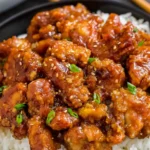
Crispy Homemade General Tso’s Chicken
- Total Time: 30 minutes
- Yield: 8 servings 1x
- Diet: General
Description
General Tso’s Chicken is a Chinese takeout go-to. Make it all in one dish in the comfort of your home for a sweet and spicy treat!
Ingredients
- 2 lb chicken thighs, trimmed and cut into 1-inch pieces
- 1/2 cup corn starch
- 1/4 cup extra light olive oil, for frying, plus more as needed
- 2 tbsp minced ginger
- 3 cloves garlic
- 1/2 tsp red pepper flakes
- 1 tsp sesame seeds, optional for garnish
- 1/2 cup cold water
- 5 tbsp low sodium soy sauce
- 3 tbsp rice vinegar
- 1 1/2 tbsp hoisin sauce
- 4 tbsp granulated sugar
- 1 1/2 tbsp corn starch
Instructions
- Step 1: Cut chicken into 1-inch cubes. Toss chicken in batches with cornstarch, tapping off the excess. Set dredged chicken on a platter and set aside.
- Step 2: In a separate dish, combine all the ingredients for your sauce and whisk to combine.
- Step 3: Preheat a non-stick skillet with oil. Cook chicken in 2 to 3 batches, sauteeing until golden on both sides and cooked through then remove the chicken from the pan and transfer to a bowl. Repeat with the remaining chicken, adding more oil as needed. Leave at least 1 Tbsp oil in the pan.
- Step 4: Add the garlic, ginger and pepper flakes. Sautee for about 30 seconds or until fragrant.
- Step 5: Add the sauce to the skillet and bring it to a simmer while stirring. Let it simmer for 1 minute to cook off the vinegar a little. Taste the sauce and add more soy sauce or rice vinegar to taste if desired. Add the chicken and toss to coat. Serve garnished with sesame seeds if desired.
Notes
Prepare ingredients ahead of time for efficiency. Use chicken thighs for the juiciest results and a non-stick pan to keep the coating intact. Adjust red pepper flakes to control the spice level.
- Prep Time: 15 minutes
- Cook Time: 15 minutes
- Category: Main Course
- Method: Stir-fry
- Cuisine: Asian
Nutrition
- Serving Size: 1 serving
- Calories: 386 kcal
- Sugar: 7 g
- Sodium: 502 mg
- Fat: 26 g
- Saturated Fat: 6 g
- Unsaturated Fat: 20 g
- Trans Fat: 0.1 g
- Carbohydrates: 18 g
- Fiber: 0.4 g
- Protein: 20 g
- Cholesterol: 111 mg