
This one-pan chicken dish combines bright lemon and briny capers with a rich garlic cream sauce. It is an efficient way to prepare succulent, bone-in chicken thighs for a weeknight dinner.

List of ingredients
- 6 bone-in & skin-on chicken thighs, excess skin removed – ensures tender meat and a rich pan sauce.
- 3 tablespoons olive oil, divided – used for marinating and searing.
- 2 tablespoons lemon pepper seasoning – adds a zesty, peppery base.
- 1 tablespoon garlic powder – provides an underlying layer of savory flavor.
- 1 tablespoon dried parsley – adds an herbal note to the crust.
- 2 tablespoons unsalted butter – used for browning the chicken and sautéing garlic.
- 10-12 cloves of garlic – whole cloves provide a mellow, caramelized taste.
- 1/2 cup chicken broth – used to deglaze the pan and build the sauce.
- 1 cup heavy whipping cream – creates the thick, creamy consistency.
- 1/4 cup fresh-squeezed lemon juice – provides acidity to balance the cream.
- 1/4 cup nonpareil capers – adds a sharp, salty punch to the finish.
step-by-step instructions
- Marinate the chicken: Pat the chicken dry with a paper towel. Place the chicken into a large resealable bag or bowl and add 2 tablespoons of olive oil, lemon pepper seasoning, garlic powder, and dried parsley. Use your hand to massage the spices into the chicken until thoroughly coated. Seal the bag or cover the bowl with plastic wrap and transfer to the refrigerator to marinate for at least 1 hour and up to overnight.
- Sear the thighs: In a large skillet over medium heat, add the butter and 1 tablespoon of olive oil. When hot, working in batches (about 3 at a time), place the chicken thighs skin-side down into the skillet. Let the chicken brown, undisturbed, until golden brown, about 3-4 minutes. Flip the chicken onto the other side and cook for 2-3 minutes. Transfer the browned chicken thighs to a clean plate. Note: the chicken will not be cooked through at this stage.
- Sauté the garlic: Add the garlic cloves into the skillet. Sauté, stirring often, until the cloves soften and achieve a golden brown color, which takes about 2-3 minutes.
- Build the pan sauce: Add the chicken broth to deglaze and use a wooden utensil to scrape up any brown bits (fond) from the bottom of the skillet. Let it simmer for 1-2 minutes. Add the cream and lemon juice, stirring well to combine. Let the mixture come to a slight boil while stirring occasionally. Stir in the capers until well combined.
- Simmer and finish: Place the browned chicken thighs back into the skillet and spoon the sauce over the thighs. Reduce the heat to medium-low. Let the chicken cook in the pan sauce for 15-20 minutes until the sauce thickens and the chicken registers 165°F on an internal thermometer.
- Final plating: Spoon the remaining creamy lemon garlic caper sauce over the chicken thighs and serve alongside your chosen side dishes.
Expert Techniques for Perfect Chicken
Pat Dry the Chicken Skin
Always use paper towels to remove all surface moisture from the chicken skin before marinating. Moisture creates steam in the pan, which prevents the skin from achieving a crisp, golden-brown sear. A dry surface ensures the Maillard reaction occurs efficiently.
Manage Pan Temperature for Searing
Heat your butter and oil until the butter is foaming and the oil is shimmering. If the pan is too cold, the chicken will stick and the skin will be rubbery. If it is too hot, the butter will burn before the chicken browns.
Use a Digital Meat Thermometer
Relying on visual cues for doneness can lead to overcooked or undercooked meat. Use an instant-read thermometer to ensure the thickest part of the thigh reaches exactly 165°F. This guarantees the chicken is safe to eat while remaining juicy.
Searing in Batches
Avoid adding all six thighs to the pan at once, as this lowers the temperature of the skillet significantly. Searing in batches of three maintains the heat necessary for a proper crust. This prevents the chicken from releasing too much liquid and boiling in its own juices.
Ingredient Modifications and Substitutions
Alternative Dairy Options
If heavy whipping cream is unavailable, you can use full-fat coconut milk for a dairy-free alternative, though the flavor profile will change. Half-and-half can be used, but you may need to simmer the sauce longer to achieve the same thickness.
Replacing Fresh Lemon Juice
While fresh lemon juice is preferred for its brightness, bottled lemon juice can be used in a pinch. Use slightly less bottled juice as it often has a more concentrated, acidic taste than fresh-squeezed juice.
Substituting Capers
If you do not have capers, chopped green olives provide a similar briny and salty flavor. Ensure you drain the olives well to avoid introducing too much brine into the cream sauce.
Using Different Garlic Forms
If you prefer a more intense garlic flavor, you can mince the 10-12 cloves instead of leaving them whole. Be careful to sauté them for a shorter period, as minced garlic burns much faster than whole cloves.
Recommended Serving Pairs
Best Starchy Accompaniments
Mashed potatoes are ideal for soaking up the thick cream sauce. Alternatively, serve the chicken over steamed jasmine rice or wide egg noodles to balance the acidity of the lemon and capers.
Fresh Vegetable Pairings
Steam some asparagus or sauté spinach with a touch of garlic to add color and nutrition to the plate. Roasted carrots or honey-glazed parsnips also complement the savory-tart flavor of the sauce.
Light Salad Options
A crisp Caesar salad or a simple arugula salad with a vinaigrette provides a refreshing contrast to the richness of the cream. The bitterness of arugula pairs particularly well with the lemon elements of the dish.
Storage and Reheating Guidelines
Refrigeration Methods
Store leftover chicken and sauce in an airtight container in the refrigerator for up to three to four days. Keep the chicken submerged in the sauce to prevent the meat from drying out during storage.
Best Reheating Practices
Avoid using a microwave on high heat, as this can cause the cream sauce to separate or break. Instead, reheat the chicken in a skillet over low heat, adding a tablespoon of water or chicken broth to loosen the sauce.
Freezing the Dish
While the chicken freezes well, the cream-based sauce may change texture upon thawing. If freezing, it is recommended to freeze the cooked chicken separately and make a fresh batch of sauce when serving.
Make-Ahead Strategies
Advanced Marinating
You can marinate the chicken thighs up to 24 hours in advance. This allows the lemon pepper and garlic powder to penetrate deeper into the meat, enhancing the overall flavor profile.
Pre-Browning the Meat
Brown the chicken thighs a few hours before your planned dinner time and store them on a plate in the fridge. When ready to eat, proceed directly to sautéing the garlic and building the sauce in the same pan.
Common Cooking Troubleshooting
Fixing a Separated Sauce
If the sauce breaks and looks oily, whisk in a small amount of cold heavy cream or a teaspoon of cornstarch slurry over low heat. This helps re-emulsify the fats and liquids into a smooth consistency.
Adjusting Sauce Thickness
If the sauce is too thin after 20 minutes, increase the heat slightly to simmer and reduce. If it becomes too thick, stir in a tablespoon of chicken broth or water to reach your desired consistency.
Preventing Burnt Garlic
Whole garlic cloves can burn if the heat is too high. If you notice the cloves turning dark brown too quickly, add a splash of chicken broth immediately to lower the pan temperature.
Frequently Asked Questions
Can I use boneless chicken thighs?
Yes, you can use boneless thighs, but you will need to reduce the final simmering time. Boneless meat cooks faster than bone-in, so check the internal temperature after 10-12 minutes of simmering.
How do I keep the sauce from curdling?
Ensure the lemon juice is stirred in after the cream has warmed through, and avoid boiling the sauce vigorously once the lemon is added. Keeping the heat at a medium-low simmer prevents the acid from curdling the dairy.
Should I remove the skin before cooking?
The recipe calls for removing excess skin but keeping the main layer for searing. Removing the excess skin prevents too much grease from accumulating in the pan while still providing the flavor benefits of the sear.
Can I use a different seasoning instead of lemon pepper?
You can substitute lemon pepper with a mix of salt, black pepper, and lemon zest. Ensure you maintain a balance of salt, as the capers already contribute a significant amount of sodium to the dish.
Print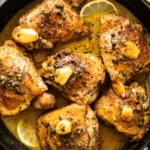
Creamy Lemon Garlic Chicken Thighs with Capers
- Total Time: 40 minutes
- Yield: 3 servings 1x
- Diet: General
Description
This Creamy Lemon Garlic Chicken Thighs with Capers dish is irresistibly delicious! It’s a 1-pan wonder that’s loaded with flavor and so easy to make. You’ll love this garlicky, bright, and succulent chicken for weeknight dinners and beyond.
Ingredients
- 6 bone-in & skin-on chicken thighs, excess skin removed
- 3 tablespoons olive oil, divided
- 2 tablespoons lemon pepper seasoning
- 1 tablespoon garlic powder
- 1 tablespoon dried parsley
- 2 tablespoons unsalted butter
- 10–12 cloves of garlic
- ½ cup chicken broth
- 1 cup heavy whipping cream
- ¼ cup fresh-squeezed lemon juice
- ¼ cup nonpareil capers
Instructions
- Season chicken & marinate: Pat the chicken dry with a paper towel. Place the chicken into a large resealable bag or bowl and add 2 tablespoons of olive oil, lemon pepper seasoning, garlic powder, and dried parsley. Use your hand to massage the spices into the chicken until thoroughly coated. Then seal the bag or cover the bowl with plastic wrap and transfer to the refrigerator to marinate for at least 1 hour and up to overnight.
- Brown the chicken: In a large skillet over medium heat, add the butter and 1 tablespoon of olive oil. When hot, working in batches (about 3 at a time), place the chicken thighs skin-side down into the skillet. Let the chicken brown, undisturbed, until golden brown- about 3-4 minutes. Then flip the chicken onto the other side to continue cooking for 2-3 minutes. Then transfer the browned chicken thighs to a clean plate/vessel and repeat the process with the remaining batch of chicken thighs.
- Caramelize the garlic cloves: Add the garlic cloves into the skillet and sauté, stirring often, until the cloves soften and achieve a golden brown color, about 2-3 minutes.
- Build the creamy sauce: Add the chicken broth to deglaze and use a wooden utensil to scrape up any bits along the bottom of the skillet, let simmer for 1-2 minutes. Then add the cream and lemon juice, and stir well to combine. Let the mixture come up to a slight boil while stirring every so often. Then add the capers into the sauce and stir well to combine.
- Finish the creamy chicken thighs: Place the browned chicken thighs into the skillet and spoon the sauce over the thighs. Reduce the heat to medium-low and let the chicken cook with the pan sauce for 15-20 minutes or until the sauce thickens some AND the chicken registers 165°F when checked with an internal thermometer for doneness.
- Serve: Spoon the creamy lemon garlic caper sauce over the chicken thighs and serve alongside your favorite sides.
Notes
This is a one-pan meal. The combination of garlic powder and whole garlic cloves provides a layered garlic flavor without being overwhelming.
- Prep Time: 5 minutes
- Cook Time: 35 minutes
- Category: Main Dishes
- Method: Stovetop
- Cuisine: American
Nutrition
- Serving Size: 2 chicken thighs with sauce
- Calories: 680 kcal
- Sugar: 6 g
- Sodium: 920 mg
- Fat: 52 g
- Saturated Fat: 24 g
- Unsaturated Fat: 22 g
- Trans Fat: 0 g
- Carbohydrates: 14 g
- Fiber: 2 g
- Protein: 44 g
- Cholesterol: 195 mg