
This chicken scampi pasta combines tender chicken with a vibrant lemon garlic butter sauce for a satisfying meal. It is an efficient 30-minute dinner that balances rich butter with bright citrus notes.

List of ingredients
- 12 oz spaghetti – use a high-quality durum wheat pasta.
- 1 1/2 lbs chicken tenders – provides quick and even cooking.
- 1 1/2 tsp fine sea salt – for seasoning the meat.
- 1/2 tsp black pepper – adds a subtle spicy bite.
- 1/2 cup all-purpose flour – used for dredging the chicken to create a crust.
- 2 Tbsp olive oil (divided) – prevents butter from burning during searing.
- 6 Tbsp unsalted butter (divided) – the base for the rich scampi sauce.
- 3/4 cup vegetable broth – a savory, alcohol-free alternative for deglazing.
- 4 garlic cloves (1 Tbsp minced) – provides the characteristic aromatic flavor.
- 1 tsp lemon zest (from 1 lemon) – adds concentrated citrus oils.
- 1/4 cup lemon juice (from 2 lemons) – provides the essential acidity.
- 1/3 cup parsley (finely chopped) – adds freshness and color.
- Parmesan (freshly shredded to serve) – used as a salty, nutty garnish.
step-by-step instructions
- Preparation: Chop, zest, juice, and mince all ingredients before starting. Season the chicken tenders with salt and pepper, then dredge each piece in flour, shaking off any excess.
- Cook Pasta: Bring a large pot of water to a boil and stir in 2 Tbsp of salt. Cook the spaghetti according to the package directions until al dente. Reserve 1/2 cup of the cooking water, then drain the pasta and return it to the pot, covering it partially to keep warm.
- Saute Chicken: Heat a large skillet over medium-high heat. Add 1 Tbsp of olive oil and 1 Tbsp of butter, then sauté the chicken for 2 minutes per side or until the internal temperature reaches 165°F. Move the cooked chicken to a plate. Repeat the process with another 1 Tbsp of oil and 1 Tbsp of butter for the second batch, then cover the chicken to keep it warm.
- Make Sauce: Carefully pour 3/4 cup of vegetable broth into the skillet over medium-high heat. Scrape the bottom of the pan to deglaze and simmer for about 5 minutes until the liquid reduces to 1/4 cup. Stir in 4 Tbsp of butter until melted, then add the minced garlic and simmer for 30 seconds. Remove the pan from the heat and stir in the lemon juice, lemon zest, and chopped parsley. Season with 1/2 tsp of salt or to taste.
- Combine: Return the cooked chicken to the pan and toss to coat thoroughly in the sauce. Transfer the drained pasta to a large serving bowl, then spoon the extra sauce from the pan over the spaghetti. Toss the pasta lightly, top with the chicken, and drizzle any remaining sauce over the top. Garnish with additional parsley and freshly shredded parmesan cheese.
Protein Selection and Searing Techniques
Selecting Tenderloins for Even Cooking
Chicken tenders are ideal for scampi because they are naturally uniform in size. This ensures that every piece cooks at the same rate, preventing some pieces from drying out while others remain raw. They also require less trimming than full chicken breasts.
Mastering the Flour Dredge
Dredging the chicken in flour creates a thin barrier that helps the meat brown more effectively. This process also allows the flour to act as a light thickening agent when the sauce is added later. Always shake off excess flour to avoid a gummy texture in the pan.
Maintaining Optimal Pan Temperature
Heat the skillet until the oil shimmers before adding the chicken. This creates an immediate sear, which locks in juices and develops a golden-brown crust. If the pan is too cool, the chicken will steam rather than sauté, resulting in a pale color.
Avoiding Overcrowding the Skillet
Cooking the chicken in two batches prevents the pan temperature from dropping too sharply. Overcrowding releases too much moisture at once, which leads to boiling the meat in its own juices. Working in batches ensures a crisp exterior on every piece.
Pasta Cooking Essentials
Salting the Boiling Water
Adding salt to the pasta water is the only chance to season the noodles from the inside out. Use about 2 tablespoons of salt for a large pot to enhance the overall flavor of the dish. This prevents the pasta from tasting bland once mixed with the sauce.
Testing for Al Dente Texture
Begin tasting the pasta a minute before the package directions suggest. Al dente pasta should have a slight firmness in the center, which prevents it from becoming mushy during the final tossing stage. This texture provides a better contrast to the rich butter sauce.
The Role of Starchy Pasta Water
Reserving a small amount of pasta water is a professional technique for sauce emulsification. The starch in the water helps the butter and lemon juice bind together more effectively. If the final dish seems too dry, adding a splash of this water creates a silky glaze.
Crafting the Garlic Butter Sauce
Deglazing for Maximum Flavor
After searing the chicken, small browned bits called fond remain on the pan. Pouring in the vegetable broth and scraping the bottom lifts these caramelized proteins into the sauce. This step adds a deep, savory dimension that cannot be achieved otherwise.
Reducing the Liquid to Concentrate Taste
Simmering the broth until it reduces by two-thirds concentrates the flavors and thickens the consistency. This prevents the sauce from being too watery and allows it to cling to the pasta. Reduction is key to achieving a restaurant-quality glaze.
Emulsifying Butter into the Sauce
Adding cold butter to the reduced liquid creates a creamy emulsion. Stirring continuously as the butter melts ensures the sauce stays smooth and does not separate into oil. This process gives the scampi its signature velvety mouthfeel.
Preventing Garlic from Burning
Garlic should only be simmered for about 30 seconds before removing the pan from the heat. If garlic cooks for too long, it becomes bitter and loses its aromatic quality. Adding it at the very end preserves its pungent, sweet flavor.
Balancing Citrus Acidity
The combination of lemon zest and lemon juice provides two different types of citrus flavor. Zest provides the floral aroma of the lemon oils, while the juice provides the sharp acidity. This balance cuts through the richness of the butter and oil.
Ingredient Modifications
Using Chicken Breasts instead of Tenders
If you only have chicken breasts, trim the excess fat and slice them into 1-inch thick strips. Ensure the strips are uniform in size so they cook evenly in the skillet. You may need to adjust the sauté time slightly depending on the thickness of the cuts.
Gluten-Free Flour Alternatives
To make this recipe gluten-free, replace all-purpose flour with a 1:1 gluten-free flour blend or cornstarch. Cornstarch creates a very crisp exterior but should be used sparingly to avoid a thick coating. Ensure the substitute is seasoned well with salt and pepper.
Substituting Pasta Shapes
While spaghetti is traditional, linguine or fettuccine work excellently due to their wider surface area. For a different experience, try using penne or farfalle to capture more sauce inside the pasta. Adjust the boiling time according to the specific pasta shape used.
Using Dried Parsley in a Pinch
Fresh parsley is preferred for its bright color and clean taste, but dried parsley can be used as a substitute. Use approximately one-third of the amount of dried parsley compared to the fresh version. Add dried parsley during the sauce reduction stage rather than at the end.
Serving and Plating Suggestions
Pairing with Roasted Asparagus
Roasted asparagus provides a crisp, earthy contrast to the rich butter sauce of the scampi. Toss the spears in olive oil, salt, and pepper, then roast at 400°F until tender. The slight bitterness of the asparagus complements the lemon juice perfectly.
Adding Fresh Greens for Balance
A side of sautéed spinach or a fresh Caesar salad can lighten the overall meal. The acidity of a vinaigrette or the freshness of raw greens cuts through the creaminess of the Parmesan and butter. This creates a more balanced nutritional profile for the dinner.
Choosing the Right Pasta Bowl
Use large, shallow bowls to plate the pasta to prevent the noodles from clumping together. Twirl the pasta into a nest in the center of the bowl before placing the chicken on top. This presentation allows the sauce to pool slightly at the bottom for dipping.
Storage and Reheating Guidelines
Airtight Container Storage
Store leftover chicken scampi pasta in a sealed airtight container in the refrigerator for up to three days. To keep the chicken from drying out, ensure the pasta is well-coated in the remaining sauce before storing. Keep the extra Parmesan cheese in a separate container.
The Best Stovetop Reheating Method
Reheating on the stove over low heat is the best way to maintain the texture of the pasta. Add a small knob of butter or a splash of water to the pan to loosen the sauce. Heat gently until the chicken is warmed through to avoid overcooking the meat.
Adding Moisture during Reheating
Pasta often absorbs the sauce while sitting in the refrigerator, making it seem dry. Adding a teaspoon of water or a squeeze of fresh lemon juice during reheating restores the original consistency. This refreshes the flavors and brings back the vibrancy of the sauce.
Common Cooking Challenges
Fixing a Separated Sauce
If the butter separates from the broth, whisk in a tablespoon of reserved pasta water over low heat. The starch acts as an emulsifier to bind the fats and liquids back together. Stir rapidly to create a smooth, unified sauce.
Correcting Over-Salted Pasta
If the dish tastes too salty, increase the amount of lemon juice or add a splash of unsalted vegetable broth. The acidity of the lemon helps mask the saltiness. Alternatively, adding more unsalted butter can mellow out the flavor profile.
Handling Flour Clumps in the Pan
If the flour from the chicken creates clumps in the sauce, use a whisk to break them up during the reduction process. These clumps usually dissolve as the sauce simmers and reduces. If they persist, you can strain the sauce through a fine-mesh sieve before adding the pasta.
Frequently Asked Questions
Can I use a different oil?
Yes, you can use avocado oil or grapeseed oil if you prefer a higher smoke point. These oils are neutral in flavor and will not affect the taste of the scampi. Avoid using extra-virgin olive oil for very high-heat searing as it may smoke.
How do I keep the chicken moist?
Avoid overcooking the chicken by using a meat thermometer to hit exactly 165°F. Once the chicken is removed from the pan, cover it with a lid or foil to let it rest. Resting allows the juices to redistribute, ensuring the meat stays tender.
What is the best type of Parmesan?
Use a wedge of Parmesan Reggiano and shred it yourself for the best melting properties. Pre-shredded cheeses often contain anti-clumping agents that prevent them from melting smoothly into the sauce. Freshly grated cheese provides a sharper, more authentic flavor.
Print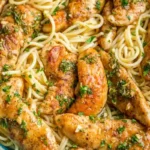
Creamy Lemon Garlic Chicken Scampi Pasta
- Total Time: 30 minutes
- Yield: 6 servings 1x
- Diet: General
Description
Chicken Scampi Pasta has a lemon butter sauce that is light, vibrant, and so satisfying.
Ingredients
- 12 oz spaghetti
- 1 1/2 lbs chicken tenders
- 1 1/2 tsp fine sea salt
- 1/2 tsp black pepper
- 1/2 cup all-purpose flour
- 2 Tbsp olive oil, divided
- 6 Tbsp unsalted butter, divided
- 3/4 cup chicken broth
- 4 garlic cloves (1 Tbsp minced)
- 1 tsp lemon zest
- 1/4 cup lemon juice
- 1/3 cup parsley, finely chopped
- Parmesan, freshly shredded to serve
Instructions
- Prep: chop, zest, juice, and mince all of your ingredients before you start cooking. Season chicken tenders with salt and pepper then dredge in flour.
- Cook pasta: Bring a large pot of water to a boil and add 2 Tbsp salt. Cook pasta according to package instructions until al dente. Reserve 1/2 cup pasta cooking water then drain the pasta and return pasta to the pot. Partially cover to keep warm.
- Sautee chicken: While pasta is cooking, cook the chicken. Heat a large skillet over medium/high heat. Add 1 Tbsp oil and swirl in 1 Tbsp butter. Sauté chicken 2 minutes per side or until golden and cooked through to 165˚F on a thermometer. Remove to a plate. Add another Tbsp of oil and 1 Tbsp butter and sauté the second batch of chicken then transfer to a plate and cover to keep warm.
- Make sauce: Carefully add 3/4 cup chicken broth. Return to medium/high heat and scrape the bottom of the pan to deglaze. Cook about 5 minutes or until reduced to about 1/4 cup liquid. Add 4 Tbsp butter and stir to melt. Add garlic and simmer 30 seconds until fragrant. Remove from heat and add 1/4 cup lemon juice, 1 tsp lemon zest, and 1/4 cup parsley. Stir to combine and season with 1/2 tsp salt or to taste.
- Combine: Return chicken to the pan and turn to coat in sauce. Transfer drained pasta to a large serving bowl then tilt the pan and spoon extra sauce over cooked spaghetti. Toss spaghetti lightly with sauce then top with chicken and drizzle remaining sauce over the pasta. Serve garnished with more parsley and freshly shredded parmesan.
Notes
For a saucier pasta, deglaze your pan with some of the reserved pasta water then drizzle over the pasta to get all of the pan flavorings in your dish.
- Prep Time: 15 minutes
- Cook Time: 15 minutes
- Category: Main Course
- Method: Sautéing
- Cuisine: Italian
Nutrition
- Serving Size: 1 serving
- Calories: 551 kcal
- Sugar: 2 g
- Sodium: 722 mg
- Fat: 20 g
- Saturated Fat: 9 g
- Unsaturated Fat: 11 g
- Trans Fat: 1 g
- Carbohydrates: 53 g
- Fiber: 2 g
- Protein: 33 g
- Cholesterol: 103 mg