
This Creamy Chicken Pesto Pasta is a rich and satisfying dinner that comes together in under 30 minutes. It features tender chicken and pasta tossed in a velvety, cheesy pesto cream sauce perfect for weeknight meals.

List of ingredients
- 1 pound boneless skinless chicken breast – diced into bite-sized pieces
- 1 tablespoon olive oil – for searing chicken
- 1 teaspoon Italian seasoning – for savory depth
- 2 garlic cloves – minced
- Salt and pepper – to taste
- 1/2 pound penne pasta – or use farfalle or rotini
- 2 tablespoons butter – for the roux
- 3 tablespoons all-purpose flour – for thickening
- 1 cup chicken broth – base for the sauce
- 1 cup half and half – for creaminess
- 1/2 cup basil pesto – fresh or jarred
- 1/2 cup freshly grated parmesan cheese – for salty richness
- 1 cup freshly shredded mozzarella cheese – for a stretchy texture
- Salt and pepper – to taste for final seasoning
- Fresh basil – chopped for garnish
- Extra parmesan – for topping
step-by-step instructions
- Cook the pasta: Bring a large pot of salted water to a boil. Cook pasta to al dente according to package directions. Reserve ¼ cup pasta water before draining. Drain and set aside.
- Cook the chicken: Heat olive oil in a large skillet over medium heat. Add chicken in a single layer and season with Italian seasoning, garlic, salt, and pepper. Cook, stirring occasionally, until cooked through and lightly golden, about 6-8 minutes. Transfer to a plate.
- Make the roux: In the same skillet, melt butter over medium heat. Stir in flour and cook for about 1 minute, stirring constantly, until the mixture is light golden.
- Build the sauce: Slowly whisk in chicken broth, then half and half. Bring to a gentle simmer and cook for 3-4 minutes, whisking often, until the sauce thickens.
- Add pesto and cheese: Remove the pan from the heat. Stir in pesto, then add parmesan and mozzarella a little at a time, stirring well after each addition until fully melted and smooth. If the sauce is too thick, add a splash of reserved pasta water to loosen.
- Combine and serve: Return chicken and pasta to the skillet. Toss to coat everything evenly. Taste and adjust seasoning. Serve topped with fresh basil and extra parmesan.
Sauce Texture and Consistency Secrets
Use Freshly Grated Cheese for Better Melting
Pre-shredded cheeses are coated in potato starch or cellulose to prevent clumping in the bag. This coating prevents the cheese from melting smoothly into the sauce, often resulting in a grainy texture. Grating your own parmesan and mozzarella ensures a silky, emulsified finish.
Manage Heat to Prevent Cheese Clumping
High heat can cause mozzarella to seize and clump together rather than melting into the liquid. It can also dull the vibrant green color and fresh taste of the basil pesto. Always remove the skillet from the heat source before stirring in your cheeses and pesto.
Utilize Reserved Pasta Water for Smoothness
Pasta water contains starch released during the boiling process. If your sauce becomes too thick after adding the cheese, whisking in a tablespoon of this starchy water helps loosen the sauce without diluting the flavor. It also helps the sauce cling better to the pasta noodles.
Choosing the Best Pasta Shapes
Penne for Classic Texture
Penne is an excellent choice because the hollow center and ridges hold onto the thick cream sauce. It provides a substantial bite that balances the tenderness of the diced chicken. This is the standard choice for most creamy pesto dishes.
Farfalle for Sauce Trapping
Farfalle, or bow-tie pasta, has a unique shape with a pinched center that creates small pockets. These pockets trap the pesto and melted cheese, ensuring every bite is flavorful. Use this shape for a more decorative presentation.
Rotini for Maximum Coverage
Rotini’s spiral shape provides the maximum surface area for the sauce to adhere to. The twists capture small bits of minced garlic and pesto, making it a great option for those who prefer a sauce-heavy dish. It is particularly effective when using a thicker roux.
Fusilli for Heavy Cream Sauces
Fusilli is similar to rotini but often has a tighter twist. This shape is highly efficient at carrying heavy cream and cheese sauces without sliding off the noodle. It works well if you increase the amount of mozzarella for a stretchier result.
Vegetable Enhancements and Mix-ins
Adding Fresh Baby Spinach
Fresh baby spinach can be stirred into the sauce immediately before adding the pasta back into the skillet. The residual heat from the cream sauce will wilt the spinach in about 60 seconds. This adds color and iron without requiring extra cooking time.
Incorporating Roasted Broccoli
Roasted broccoli florets add a charred flavor and a firm texture that complements the creaminess. Toss pre-roasted broccoli in at the final step when combining the chicken and pasta. This prevents the broccoli from becoming mushy during the simmering process.
Adding Sautéed Mushrooms
Sautéed mushrooms like cremini or button mushrooms provide an earthy depth to the pesto. Cook the mushrooms in the skillet after the chicken but before starting the roux. Use the same olive oil to pick up the browned chicken bits for extra flavor.
Mixing in Sun-Dried Tomatoes
Sun-dried tomatoes in oil provide a tart, concentrated sweetness that cuts through the richness of the half and half. Slice them into thin strips and stir them in with the pesto. The acidity of the tomatoes balances the fat from the cheese and butter.
Using Sautéed Asparagus Tips
Asparagus tips pair naturally with basil pesto and chicken. Sauté them quickly in a separate pan or with the chicken until tender-crisp. Fold them into the pasta at the end to maintain their bright green color and snap.
Protein Variations and Shortcuts
Using Pre-Cooked Rotisserie Chicken
To save time, use shredded rotisserie chicken instead of raw breasts. Place the shredded meat in the skillet with a small amount of garlic and Italian seasoning. Warm it for 2-3 minutes before removing it to make room for the roux.
Substituting Chicken Breast with Turkey
Boneless turkey breast can be used as a leaner alternative to chicken. Dice it into the same bite-sized pieces and season it identically. Because turkey can be drier, ensure you do not overcook it during the searing phase.
Adjusting for Leaner Protein Options
If using a very lean protein, you may want to add a teaspoon of extra butter during the searing process. This prevents the meat from sticking to the pan and adds a layer of flavor that blends into the final pesto sauce.
Professional Storage and Preservation
Proper Refrigeration Techniques
Store leftover pasta in a shallow, airtight container to ensure even cooling. This prevents the center of the dish from staying warm too long, which can affect food safety. Refrigerate immediately after the dish has stopped steaming, for up to 4 days.
Freezer-Safe Storage Methods
For long-term storage, freeze the pasta in freezer-safe bags or airtight containers for up to 4 months. Press as much air out of the bag as possible to prevent freezer burn. Label the container with the date of preparation.
Safe Thawing Processes
Thaw frozen pasta overnight in the refrigerator rather than on the counter. This gradual warming process helps maintain the integrity of the cream sauce. Avoid thawing in the microwave to prevent the sauce from breaking or separating.
Optimal Reheating Methods
Stovetop Reheating for Best Texture
Place the leftovers in a skillet over low to medium-low heat. Stir frequently to avoid burning the bottom of the sauce. This method allows you to control the temperature and ensures the cheese remelts evenly.
Microwave Reheating Guidelines
Heat the pasta in 60-90 second intervals on medium power. Stir the pasta thoroughly between each interval to redistribute the heat. This prevents hot spots and keeps the cheese from becoming rubbery.
Restoring Sauce Emulsion with Milk
Cream sauces often thicken or separate during cooling. Add a splash of milk or half and half during the reheating process to bring the sauce back to its original consistency. Stir vigorously as the sauce warms to re-emulsify the fats.
Sauce Troubleshooting Guide
Fixing a Sauce That is Too Thick
If the sauce becomes a paste after adding the cheese, whisk in reserved pasta water one tablespoon at a time. If you didn’t save pasta water, a small amount of chicken broth or milk will work. Continue whisking over low heat until the desired fluidity is reached.
Resolving a Grainy Cheese Texture
Graininess usually happens if the cheese was added to a boiling sauce. To fix this, remove the pan from the heat and whisk in a small amount of warm milk or cream. Stir rapidly to smooth out the protein clumps in the cheese.
Balancing Overly Salty Pesto
Some jarred pestos are significantly saltier than others. If the final dish is too salty, add a squeeze of fresh lemon juice or a pinch of sugar. The acidity or sweetness helps neutralize the excess salt without changing the core flavor profile.
Frequently Asked Questions
Can I use jarred pesto instead of homemade?
Yes, jarred pesto is a convenient and effective shortcut. Look for brands that use olive oil and avoid those with excessive fillers. While homemade pesto is brighter, high-quality jarred options provide consistent results for weeknight dinners.
When should you add pesto to the pasta?
The pesto should be stirred into the cream sauce after the pan is removed from the heat, but before the pasta is added. Adding it off-heat preserves the volatile oils in the basil, keeping the flavor fresh and the color vibrant.
What can I add to chicken pesto pasta?
You can add various vegetables such as spinach, kale, sun-dried tomatoes, or sautéed mushrooms. These ingredients add nutritional value and texture. Keep the additions simple so the primary flavor of the basil pesto remains the star of the dish.
Print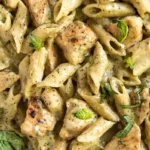
Creamy Chicken Pesto Pasta
- Total Time: 30 minutes
- Yield: 4 servings 1x
- Diet: General
Description
Tender chicken and pasta in a rich, cheesy pesto cream sauce. Ready in under 30 minutes and easy enough for any weeknight dinner.
Ingredients
- 1 pound boneless skinless chicken breast (diced into bite-sized pieces)
- 1 tablespoon olive oil
- 1 teaspoon Italian seasoning
- 2 garlic cloves (minced)
- Salt and pepper (to taste)
- 1/2 pound penne pasta (or farfalle, rotini)
- 2 tablespoons butter
- 3 tablespoons all-purpose flour
- 1 cup chicken broth
- 1 cup half and half
- 1/2 cup basil pesto (fresh or jarred)
- 1/2 cup freshly grated parmesan cheese
- 1 cup freshly shredded mozzarella cheese
- Fresh basil (chopped)
- Extra parmesan (for garnish)
Instructions
- Step: Cook the pasta. Bring a large pot of salted water to a boil. Cook pasta to al dente according to package directions. Reserve ¼ cup pasta water before draining. Drain and set aside.
- Step: Cook the chicken. Heat olive oil in a large skillet over medium heat. Add chicken in a single layer and season with Italian seasoning, garlic, salt, and pepper. Cook, stirring occasionally, until cooked through and lightly golden, about 6-8 minutes. Transfer to a plate.
- Step: Make the roux. In the same skillet, melt butter over medium heat. Stir in flour and cook for about 1 minute, stirring constantly, until the mixture is light golden.
- Step: Build the sauce. Slowly whisk in chicken broth, then half and half. Bring to a gentle simmer and cook for 3-4 minutes, whisking often, until the sauce thickens.
- Step: Add pesto and cheese. Remove the pan from the heat. Stir in pesto, then add parmesan and mozzarella a little at a time, stirring well after each addition until fully melted and smooth. If the sauce is too thick, add a splash of reserved pasta water to loosen.
- Step: Combine and serve. Return chicken and pasta to the skillet. Toss to coat everything evenly. Taste and adjust seasoning. Serve topped with fresh basil and extra parmesan.
Notes
Use chicken breasts for a cleaner result. Remove the pan from heat before adding pesto and cheese to prevent the mozzarella from seizing and to keep the pesto flavor bright. Grate your own cheese for a silkier, creamier sauce.
- Prep Time: 10 minutes
- Cook Time: 20 minutes
- Category: Main Course
- Method: Stovetop
- Cuisine: American, Italian
Nutrition
- Serving Size: 1 serving
- Calories: 784 kcal
- Sugar: 3 g
- Sodium: 1082 mg
- Fat: 41 g
- Saturated Fat: 17 g
- Unsaturated Fat: 24 g
- Trans Fat: 0 g
- Carbohydrates: 54 g
- Fiber: 3 g
- Protein: 47 g
- Cholesterol: 146 mg