
This refreshing and tangy dip is a perfect accompaniment to grilled meats and fresh vegetables. It comes together in just ten minutes using simple, healthy ingredients for a light yet creamy result.

List of ingredients
- 1 cup plain Greek Yogurt – use nonfat for a lighter version or full-fat for richness.
- 1/2 English cucumber (about 2/3 cup) – remove seeds and dice into small pieces.
- 2 teaspoons olive oil – adds a fruity depth and smooth texture.
- 3 tablespoons fresh lemon juice – provides a bright, zesty acidity.
- 1 tablespoon fresh lemon zest – enhances the citrus aroma.
- 1 tablespoon minced garlic – approximately one large clove for a pungent kick.
- 1/4 cup fresh chopped dill – provides the characteristic herbal Greek flavor.
- 1/2 teaspoon kosher salt – used for both seasoning and draining the cucumber.
- 1/4 teaspoon ground black pepper – adds a subtle warmth and spice.
step-by-step instructions
- Prepare the cucumber: Place the diced cucumber in a strainer over a bowl and sprinkle with salt. Let it sit for a few minutes to extract excess moisture, then pat lightly with a clean paper towel or squeeze in a kitchen towel.
- Combine ingredients: Add the Greek yogurt, drained cucumber, olive oil, lemon juice, lemon zest, minced garlic, chopped dill, salt, and pepper to a medium-sized bowl. Mix thoroughly until the sauce is combined and creamy.
- Garnish the dip: Top the finished sauce with a few extra sprigs of fresh dill, a pinch of ground black pepper, and a light drizzle of olive oil for presentation.
- Serve: Serve the sauce chilled alongside pita chips, warm naan, or fresh chopped vegetables.
Understanding the Yogurt Base
Choosing Full-Fat Greek Yogurt for Richness
Full-fat Greek yogurt creates a luxurious and velvety mouthfeel that balances the sharp acidity of the lemon. This option is ideal for those who prefer a more indulgent dip or are serving it as a rich appetizer. The higher fat content also helps carry the flavors of the garlic and dill more effectively.
Using Nonfat Yogurt for a Lighter Version
Nonfat plain Greek yogurt is an excellent choice for those monitoring their calorie intake while maintaining high protein levels. While it is slightly less creamy than the full-fat version, the fresh herbs and lemon juice ensure the flavor remains bold. It provides a cleaner, sharper taste that highlights the cucumber’s freshness.
Straining Yogurt for Maximum Thickness
If your yogurt seems too thin, you can strain it through a cheesecloth-lined sieve over a bowl in the refrigerator for a few hours. This process removes excess whey and results in a thicker, labneh-style consistency. A thicker base prevents the sauce from becoming runny as the cucumber releases moisture over time.
Mastering Cucumber Preparation
Using English Seedless Cucumbers
English cucumbers are the preferred choice because their skins are thinner and more tender than standard garden cucumbers. They contain significantly fewer seeds, which reduces the amount of prep work and prevents the sauce from becoming overly seedy. Their consistent moisture level also makes the draining process more predictable.
Removing Excess Moisture with Salt
Salting the diced cucumber draws out internal water through osmosis, which is crucial for the texture of the dip. If you skip this step, the salt in the final sauce will pull water from the cucumber, leading to a watery consistency. This technique ensures the dip remains thick and creamy even after several days of storage.
Dicing for Optimal Texture
Cutting the cucumber into small, uniform cubes provides a consistent crunch in every single bite. Avoid grating the cucumber unless you prefer a more integrated, jam-like texture that blends into the yogurt. Small dices maintain the structural integrity of the vegetable, offering a pleasing contrast to the smooth yogurt.
Enhancing the Flavor Profile
Using Fresh Dill versus Dried Dill
Fresh dill offers a bright, grassy, and aromatic note that is essential for an authentic Greek flavor. If you must use dried dill, reduce the quantity by half because dried herbs are more concentrated in flavor. However, fresh dill provides a visual pop of green that makes the dish more appealing.
Maximizing Lemon Zest Flavor
The zest of the lemon contains essential oils that provide a deeper, more complex citrus aroma than the juice alone. Always zest your lemon before juicing it to make the process easier and to ensure you get the most out of the fruit. This adds a layer of brightness that cuts through the creaminess of the yogurt.
Adjusting Garlic Intensity
Freshly minced raw garlic provides a sharp, pungent bite that is traditional for tzatziki. For a milder flavor, you can use garlic powder or lightly sauté the minced garlic before adding it to the mix. Adjust the amount of garlic based on your preference, as some find a single clove too strong.
Versatile Serving Ideas
Pairing with Grilled Chicken Skewers
Tzatziki acts as a cooling contrast to the smoky and charred flavors of seasoned grilled chicken. You can spoon it generously over chicken souvlaki or use it as a dipping sauce for grilled breasts. The acidity of the lemon helps tenderize the perception of the meat on the palate.
Serving as a Fresh Vegetable Dip
Sliced cucumbers, red bell peppers, baby carrots, and radishes provide a crisp and healthy vehicle for the sauce. This turns simple raw vegetables into a satisfying and nutritious snack. It is an excellent alternative to heavy mayo-based dips for afternoon appetizers.
Using Tzatziki in Wraps and Pitas
Spread a thick layer of tzatziki on warm pita bread or naan before adding fillings like falafel or gyro-style meat. This adds necessary moisture and a tang that prevents the wrap from feeling dry. It also binds the other ingredients together, making the wrap easier to eat.
Topping Roasted Fish and Seafood
The cool temperature and citrus notes of tzatziki complement the richness of roasted salmon or grilled white fish. Drizzle the sauce over the fillet just before serving to maintain the contrast between the hot fish and the cold sauce. This combination is particularly refreshing during summer months.
Storage and Preservation
Airtight Container Storage
Store your tzatziki in glass jars or BPA-free plastic containers with tight-sealing lids. This prevents the sauce from absorbing other odors from the refrigerator and keeps the fresh dill from oxidizing too quickly. Glass is preferred as it does not retain flavors from previous foods.
Maximum Refrigeration Time
The sauce is best consumed within three to four days of preparation. Over time, the cucumbers may release additional water, and the fresh herbs may lose some of their vibrant color and taste. Stir the sauce well before serving to reintegrate any separated ingredients.
Why You Should Not Freeze Tzatziki
Freezing is not recommended because the water content in the cucumber and yogurt expands and breaks down the cellular structure. Upon thawing, the sauce will likely separate into a watery liquid and grainy solids. To maintain the creamy texture, always keep the sauce refrigerated and make it in small batches.
Creative Variations
Adding Heat with Chili Powder
A small pinch of cayenne pepper or a teaspoon of chili powder adds a subtle warmth that complements the cool yogurt. This creates a fusion flavor profile that appeals to those who enjoy a bit of spice with their savory dips. It pairs exceptionally well with spicy grilled meats.
Incorporating Mint for Extra Freshness
Adding a teaspoon of finely chopped fresh mint alongside the dill creates a more aromatic and cooling effect. This variation is common in certain regional styles of yogurt dips across the Mediterranean. Mint adds a sweet, peppery note that enhances the refreshing quality of the cucumber.
Creating an Oil-Free Version
Simply omit the olive oil to reduce the overall calorie count of the recipe. The natural fats present in the Greek yogurt are usually sufficient to carry the flavors of the garlic and lemon. This makes the dip even lighter and suitable for strict dietary requirements.
Troubleshooting and Fixes
Fixing a Watery Sauce
If your sauce is too thin, stir in an extra tablespoon of thick Greek yogurt or a small amount of crumbled feta cheese. Ensure that you have properly drained the cucumbers in the future to prevent this issue. You can also let the sauce sit in the fridge for an hour to thicken slightly.
Balancing Overly Tart Flavors
If the lemon juice makes the sauce too tart, balance the acidity by adding a tiny pinch of sugar or a drop of honey. This neutralizes the sharp edges of the citrus without making the dip taste sweet. Stir slowly and taste after each addition to find the right balance.
Reducing Strong Garlic Overtones
If the garlic flavor is too overpowering, whisk in more plain Greek yogurt to dilute the intensity. Letting the sauce sit in the refrigerator for several hours can also help the garlic flavors mellow and meld with the other ingredients. For next time, consider using a smaller clove of garlic.
Nutrition and Health Benefits
High Protein Content
Using Greek yogurt as the base provides a significant amount of protein, making this dip more filling than traditional cream-based sauces. This helps maintain satiety when serving it as a snack. It is a great way to incorporate more protein into a vegetarian appetizer platter.
Probiotic Advantages
Plain Greek yogurt contains live active cultures and probiotics that support digestive health. By keeping the sauce raw and chilled, you preserve these beneficial bacteria. This makes the tzatziki not only tasty but also supportive of a healthy gut microbiome.
Low Calorie and Nutrient Dense
Because it relies on vegetables and yogurt rather than oils or creams, tzatziki is naturally low in calories. It provides essential vitamins from the lemon and dill, as well as hydration from the cucumber. It is a nutrient-dense choice for those seeking healthy alternatives to processed dips.
Professional Plating Tips
The Art of the Olive Oil Drizzle
To achieve a restaurant-style look, use a small spoon to drizzle olive oil in a circular motion over the top of the dip. The gold oil contrasting against the white yogurt creates a visually appealing effect. This also adds a final burst of fresh flavor to the first few bites.
Garnishing with Fresh Herbs
Place a small sprig of whole dill or a few thin slices of fresh cucumber in the center of the bowl. Dusting the top with a sprinkle of smoked paprika or cracked black pepper adds a professional color contrast. Using a shallow bowl rather than a deep jar makes the dip easier to access.
Serving with a Side of Citrus
Place a few fresh lemon wedges on the side of the serving platter. This allows guests to add an extra squeeze of fresh juice if they prefer a more acidic taste. The bright yellow wedges also add a pop of color to the overall presentation.
Frequently Asked Questions
Do you have to use cucumber in this tzatziki sauce recipe?
While cucumber is a signature ingredient that provides the essential crunch and freshness, you can omit it if you prefer. Without the cucumber, you will have a creamy garlic-lemon yogurt sauce that still tastes delicious and works well as a topping.
Is Tzatziki healthier than hummus?
Both are healthy, but they offer different benefits. Tzatziki is generally lower in calories and carbohydrates, while hummus provides more healthy fats from tahini and fiber from chickpeas. The best choice depends on your specific nutritional goals for the meal.
Can I use regular yogurt instead of Greek yogurt?
You can use regular plain yogurt, but it is much thinner than Greek yogurt. To get the correct consistency, you must strain the regular yogurt through a coffee filter or cheesecloth for several hours to remove the excess liquid.
How do I prevent the sauce from separating?
Separation is common with homemade dips; simply stir the sauce vigorously before serving. Keep the dip refrigerated at all times and avoid leaving it at room temperature for extended periods, as this can cause the yogurt to break down.
Print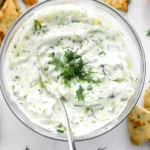
Creamy Homemade Greek Tzatziki Sauce
- Total Time: 10 minutes
- Yield: 2 cups 1x
- Diet: Low Fat
Description
This healthy tzatziki sauce is wonderfully creamy and tangy and makes the best healthy dip with chips or veggies. You can make it ahead and store it for days so it is also great for meal prep!
Ingredients
- 1 cup plain nonfat Greek yogurt
- 1/2 English cucumber, seeds removed and diced
- 2 teaspoons olive oil
- 3 tablespoons fresh lemon juice
- 1 tablespoon fresh lemon zest
- 1 tablespoon minced garlic
- 1/4 cup fresh chopped dill
- 1/2 teaspoon kosher salt
- 1/4 teaspoon ground black pepper
Instructions
- Step 1: Place the diced cucumber in a strainer over a bowl and sprinkle it with some salt. Let it sit for a few minutes to extract any excess moisture, then pat it lightly with a clean paper towel.
- Step 2: Add the greek yogurt, cucumber, and the rest of the ingredients to a medium-sized bowl and mix it all together until it is combined into a creamy sauce.
- Step 3: Top with more fresh dill, some ground black pepper, and a drizzle of olive oil.
- Step 4: Serve cold with pita chips, naan, or fresh chopped veggies.
Notes
You can use full-fat, reduced fat or fat-free plain Greek Yogurt. Use an English seedless cucumber if available. Do not skip the cucumber prepping step to avoid a runny sauce. Store in an airtight container in the refrigerator for up to 4 days.
- Prep Time: 10 minutes
- Cook Time: 0 minutes
- Category: Healthy snacks and appetizers
- Method: No cook
- Cuisine: Greek
Nutrition
- Serving Size: 1/2 cup
- Calories: 62 kcal
- Sugar: 2 g
- Sodium: 200 mg
- Fat: 2.3 g
- Saturated Fat: 0.3 g
- Unsaturated Fat: 2 g
- Trans Fat: 0 g
- Carbohydrates: 3 g
- Fiber: 0.5 g
- Protein: 6 g
- Cholesterol: 5 mg