
These Korean Beef Rice Bowls are a fast and flavorful meal perfect for busy weeknights. This recipe combines seasoned ground beef with crisp cucumbers and a zesty gochujang sauce for a complete dinner in under 30 minutes.

List of ingredients
- 1/4 cup low sodium soy sauce – provides the salty, savory base.
- 2 teaspoons light brown sugar – adds a balanced sweetness to the sauce.
- 1 teaspoon sesame oil – contributes a distinct nutty aroma.
- 1/2 teaspoon crushed red pepper flakes – adds a touch of warmth.
- cooking spray – used to prevent sticking in the skillet.
- 1 pound 93% lean ground beef – the primary protein source.
- 1/4 cup chopped yellow onion – adds aromatic depth.
- 2 garlic cloves (crushed) – provides a pungent, savory flavor.
- 1 teaspoon fresh grated ginger – adds a zesty, fresh kick.
- 3 cups cooked brown rice – serves as the hearty base.
- 1 small sliced cucumber (skin on) – adds a cooling, fresh contrast.
- 2 tablespoons Gochujang Sauce (or more if desired) – the signature spicy Korean condiment.
- 1/2 tablespoon sesame seeds – used for a decorative and nutty finish.
- 2 sliced scallions (white and green parts) – provides a fresh, oniony garnish.
step-by-step instructions
- Prepare the Sauce: In a small mixing bowl, combine the soy sauce, 2 tablespoons of water, light brown sugar, sesame oil, and crushed red pepper flakes. Stir well until the sugar is fully dissolved.
- Brown the Beef: Heat a large, deep nonstick skillet over high heat and spray it with cooking oil. Add the ground beef and cook for about 5 minutes, using a wooden spoon to break the meat into small crumbles until fully cooked.
- Sauté Aromatics: Stir in the chopped yellow onion, crushed garlic, and fresh grated ginger. Cook for an additional 1 minute until the vegetables are fragrant.
- Simmer the Mixture: Pour the prepared sauce over the beef mixture. Cover the skillet and simmer on low heat for 10 minutes to allow the beef to absorb the flavors.
- Assemble the Bowls: Divide 3/4 cup of cooked brown rice into four bowls. Top each with a scant 2/3 cup of the beef mixture, fresh cucumber slices, a dollop of gochujang sauce, sesame seeds, and sliced scallions.
Professional Cooking Techniques
Searing Beef at High Heat
Using high heat when browning the ground beef is essential for achieving a good sear. This process creates a deeper flavor through the Maillard reaction, preventing the meat from simply steaming in its own juices. Ensure the pan is hot before adding the beef for the best results.
Using Freshly Grated Ginger
Always opt for fresh ginger rather than dried powder for this recipe. The volatile oils in fresh ginger provide a bright, zesty contrast to the rich beef and sweet soy sauce. You can easily grate it using a microplane or a small hand grater.
Managing the Simmering Process
Covering the pan during the final 10 minutes of cooking traps the steam and helps the sauce reduce and glaze the beef. This ensures the liquid doesn’t evaporate too quickly while the meat remains tender. Keep the heat on low to prevent the sugar in the sauce from burning.
Preparing Fluffy Brown Rice
To avoid clumping, rinse your brown rice thoroughly under cold water before cooking to remove excess starch. Using a rice cooker or a heavy-bottomed pot with a tight lid ensures the grains are tender but distinct. Let the rice rest for five minutes after cooking before fluffing it with a fork.
Slicing Cucumbers for Texture
Use a very sharp knife or a mandoline to slice the cucumbers into thin, uniform rounds. Keeping the skin on provides a nice pop of color and adds a bit of extra fiber. Thin slices allow the cucumber to act as a refreshing palate cleanser between bites of savory beef.
Integrating the Gochujang Sauce
Gochujang can vary in intensity depending on the brand, so it is best to add it as a finishing touch. Placing it on top of the bowl allows each person to mix in as much as they prefer. This prevents the overall dish from becoming overly spicy for those with a lower heat tolerance.
Ingredient Substitutions
Using Lean Ground Turkey or Chicken
If you prefer a lighter meat, lean ground turkey or ground chicken works excellently in this recipe. Since these meats are leaner than beef, you may need to add a small amount of extra oil to the pan to prevent sticking. The sauce flavors remain equally delicious regardless of the protein choice.
Swapping Soy Sauce for Tamari
For those avoiding gluten, tamari is a direct and effective substitute for traditional soy sauce. Tamari offers a similar salty profile and deep color without the wheat content. Coconut aminos are another option, though they are slightly sweeter and less salty.
Using Cauliflower Rice for Low Carbs
To reduce the carbohydrate content, replace the brown rice with steamed cauliflower rice. Sauté the cauliflower rice briefly in a pan with a drop of sesame oil to enhance its flavor. This provides a light, nutrient-dense base that pairs perfectly with the savory beef.
Replacing Brown Sugar with Maple Syrup
Maple syrup is a great alternative to light brown sugar if you prefer a different kind of sweetness. It blends easily into the sauce and adds a subtle, earthy depth. Use an equal measurement to maintain the balance of the glaze.
Using Dried Ginger in a Pinch
If fresh ginger is unavailable, you can use ground ginger powder as a substitute. Use about 1/4 teaspoon of dried powder for every 1 teaspoon of fresh ginger. While it lacks the same brightness, it still provides the necessary aromatic warmth.
Substituting Sesame Oil for Vegetable Oil
If you are allergic to sesame or simply don’t have sesame oil, use a neutral vegetable oil. To compensate for the lost nutty flavor, you can add a tiny pinch of toasted sesame seeds to the beef during the cooking process. However, the flavor profile will be slightly less traditional.
Creative Flavor Variations
Adding Sautéed Mushrooms
Incorporate sliced shiitake or button mushrooms by sautéing them along with the onions. Mushrooms add an extra layer of umami and a meaty texture that complements the ground beef. Cook them until they are browned and have released their moisture.
Including Shredded Carrots
Add matchstick carrots to the bowls for an extra crunch and a burst of color. You can use raw carrots for a fresh snap or lightly sauté them with the beef for a softer texture. They add a natural sweetness that balances the spicy gochujang.
Topping with a Fried Egg
Place a sunny-side-up or over-easy egg on top of the assembled beef bowl. When the yolk breaks, it creates a rich, creamy sauce that coats the rice and beef. This addition increases the protein content and makes the meal feel more indulgent.
Mixing in Fermented Kimchi
Adding a side of well-fermented kimchi introduces a tangy, sour element to the dish. The acidity of the kimchi cuts through the richness of the beef and sesame oil. It is a classic Korean pairing that enhances the overall complexity of the meal.
Serving as Lettuce Wraps
For a fresh twist, skip the rice and spoon the beef mixture into large butter lettuce or romaine leaves. This turns the meal into a handheld wrap that is light and refreshing. Top the wraps with cucumbers and scallions just as you would the bowl.
Adding Edamame for Extra Protein
Shelled edamame adds a vibrant green color and a boost of plant-based protein. Stir them into the beef during the final simmering stage or scatter them raw over the top of the bowl. They provide a satisfying pop of texture in every bite.
Storage and Meal Prep
Refrigerator Storage Guidelines
Store the cooked beef and rice in an airtight container in the refrigerator for up to four days. To maintain the best quality, store the fresh cucumbers and scallions in a separate container. This prevents the vegetables from wilting or absorbing the flavors of the beef.
Freezing the Beef Mixture
The seasoned beef can be frozen for up to three months in a freezer-safe bag or container. Thaw the beef overnight in the refrigerator before reheating. Avoid freezing the cooked rice or fresh vegetables, as their texture will degrade significantly.
Reheating for Optimal Texture
Reheat the beef and rice in the microwave by adding a splash of water to the rice to keep it moist. Cover the dish with a damp paper towel to steam the grains. Heat in 1-minute intervals, stirring in between, until the beef is warmed through.
Packing for Work Lunches
When packing these bowls for lunch, place the rice and beef at the bottom and the cold toppings on top. Keep the gochujang sauce in a small separate condiment container. Heat the base before adding the cold cucumbers and fresh greens to ensure a contrast in temperatures.
Troubleshooting Common Issues
Fixing a Sauce That Is Too Salty
If the sauce tastes too salty, add a small amount of water or a teaspoon of extra brown sugar to balance the sodium. A squeeze of fresh lime juice can also brighten the flavor and mask excess saltiness. Always taste the sauce before the final simmer.
Managing Excessive Heat
If the dish is too spicy, omit the red pepper flakes from the beef sauce and serve the gochujang on the side. You can also add more plain rice or additional cucumbers to dilute the heat. A dollop of Greek yogurt or sour cream can also neutralize the spice.
Preventing Beef from Becoming Dry
To keep the beef moist, ensure you do not overcook it during the initial browning stage. The 10-minute simmer under a lid is crucial for reintroducing moisture and infusing the meat with the sauce. If the beef looks dry, add a tablespoon of beef broth.
Dealing with Mushy Rice
If your rice turns out too soft, it may be due to too much water during the cooking process. To fix this, spread the rice on a baking sheet and let it air dry for a few minutes before serving. Next time, reduce the water ratio slightly.
Frequently Asked Questions
What does gochujang taste like?
Gochujang is a savory, sweet, and spicy fermented condiment made from chili powder, glutinous rice, and fermented soybeans. It has a deep, complex flavor with a slight funkiness similar to miso but with a noticeable heat. It provides the essential ‘umami’ characteristic of many Korean dishes.
Is gochujang gluten-free?
Many traditional gochujang brands contain wheat or barley as a fermenting agent, meaning they are not naturally gluten-free. If you require a gluten-free option, carefully check the ingredient label or look for brands specifically labeled as gluten-free. Some brands use only rice flour for thickening.
What is a good substitute for gochujang?
Sriracha is the most common substitute, although it is more acidic and less sweet than gochujang. To get closer to the original taste, mix Sriracha with a small amount of honey or brown sugar and a dash of miso paste. While not an exact match, it provides a similar spice profile.
How do I make these bowls mild?
To make the bowls mild, leave out the crushed red pepper flakes and use a very small amount of gochujang. You can also replace the gochujang with a mixture of hoisin sauce and a tiny bit of sriracha. Serving the spicy elements on the side allows guests to control their own heat levels.
Print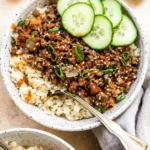
Savory Korean Beef Rice Bowls
- Total Time: 30 minutes
- Yield: 4 servings 1x
- Diet: Dairy-Free
Description
If you have a package of ground beef and need a 30-minute dinner, make this easy Korean Beef Bowl made with cucumbers, rice and gochujang sauce.
Ingredients
- 1/4 cup low sodium soy sauce
- 2 teaspoons light brown sugar
- 1 teaspoon sesame oil
- 1/2 teaspoon crushed red pepper flakes
- cooking spray
- 1 pound 93% lean ground beef
- 1/4 cup chopped yellow onion
- 2 garlic cloves, crushed
- 1 teaspoon fresh grated ginger
- 3 cups cooked brown rice
- 1 small sliced cucumber, skin on
- 2 tablespoons Gochujang Sauce
- 1/2 tablespoon sesame seeds
- 2 sliced scallions, white and green parts
Instructions
- Step: Combine the soy sauce, 2 tablespoons water, brown sugar, sesame oil and red pepper flakes in a small bowl.
- Step: Heat a large deep nonstick skillet over high heat, spray with oil and add the ground beef. Cook, breaking the meat up with a wooden spoon until cooked through, about 5 minutes.
- Step: Add the onion, garlic and ginger and cook 1 minute.
- Step: Pour the sauce over the beef, cover and simmer on low heat 10 minutes.
- Step: To assemble the bowls, place 3/4 cup rice in each bowl, top with scant 2/3 cup beef, cucumbers, Gochujong, sesame seeds and scallions.
Notes
For a gluten-free version, substitute tamari or coconut aminos for soy sauce. You can swap beef for lean ground turkey or chicken. To make it mild, omit red pepper flakes and serve gochujang on the side.
- Prep Time: 15 minutes
- Cook Time: 15 minutes
- Category: Dinner
- Method: Stir-fry
- Cuisine: Korean
Nutrition
- Serving Size: 1 bowl
- Calories: 394 kcal
- Sugar: 7 g
- Sodium: 807 mg
- Fat: 9 g
- Saturated Fat: 3 g
- Unsaturated Fat: 6 g
- Trans Fat: 0 g
- Carbohydrates: 47 g
- Fiber: 4 g
- Protein: 30 g
- Cholesterol: 70 mg