
This quick pickled peach recipe balances sweetness and spice for a versatile condiment. It is an excellent way to preserve the peak flavor of summer fruit for later use in savory or sweet dishes.

List of ingredients
- 2 cups water – serves as the base for the pickling brine.
- 1/2 cup red wine vinegar – provides the necessary acidity and tartness.
- 1/4 cup white grape juice – replaces wine to add fruity depth and sweetness.
- 2 tablespoons (42 grams) honey – adds a natural, floral sweetness to balance the vinegar.
- 1/2 teaspoon black peppercorns – introduces a subtle heat and pungent flavor.
- 6 whole cloves – provides warm, aromatic notes.
- 4 allspice berries – adds a complex, peppery and cinnamon-like flavor.
- 1 cinnamon stick – adds a woody, sweet aroma.
- 2 fresh bay leaves – adds a subtle herbal layer to the brine.
- 3 large peaches, peeled and halved or quartered – the primary fruit for pickling.
step-by-step instructions
- Boil the Brine: Combine all ingredients except the peaches in a heavy-bottomed pot, cover, and bring to a boil.
- Simmer for Flavor: Remove the lid and simmer for 5 minutes to allow the spices to infuse.
- Poach the Fruit: Add the peaches to the pot, making sure they are fully covered by the liquid. You may need to flip them halfway through for even cooking.
- Test for Tenderness: Cook for about 5 more minutes. Use a paring knife to check that the peaches are soft all the way through.
- Transfer to Jars: Carefully remove the peaches with a spoon or ladle and place them into a 1-quart heat-proof jar that seals tightly.
- Add the Liquid: Let the liquid cool slightly, then ladle it over the peaches until the jar is full.
- Cool and Set: Close the jar, let it cool to room temperature, and then place it in the refrigerator.
- Store Properly: Keep the peaches refrigerated and consume them within one to two weeks for the best quality.
Best Ways to Serve Pickled Peaches
Pairing with Soft Cheeses
These pickled peaches pair beautifully with creamy cheeses like goat cheese, brie, or ricotta. The acidity of the brine cuts through the richness of the cheese, creating a balanced bite. Serve them as an appetizer on small toasted crostini.
Using as a Garnish for Grilled Salmon
The sweet and tart profile of the peaches complements the fatty nature of grilled salmon or white fish. Dice the peaches and spoon them over the fillet just before serving. This adds a bright, fresh contrast to the charred flavor of the grill.
Enhancing Fresh Summer Salads
Add sliced pickled peaches to a salad featuring arugula, walnuts, and feta cheese. The brine can even be used as a base for the salad dressing. This combination offers a mix of salty, peppery, and sweet elements.
Topping for Frozen Desserts
Spoon the peaches and a bit of the syrup over a scoop of lemon sorbet or vanilla bean ice cream. The warm spices in the pickling liquid enhance the creaminess of the dessert. It transforms a simple scoop of ice cream into a gourmet treat.
Building a Savory Charcuterie Board
Place the pickled peaches alongside cured beef, olives, and a variety of crackers. They act as a palate cleanser between the salty meats and rich cheeses. This adds a colorful and unexpected element to your appetizer spread.
Ingredient Substitutions and Variations
Using Different Stone Fruits
While peaches are traditional, you can substitute them with nectarines, apricots, or plums. Ensure the fruit is slightly firm to prevent it from disintegrating during the poaching process. Adjust the honey amount based on the natural sweetness of the chosen fruit.
Alternative Natural Sweeteners
If you prefer not to use honey, maple syrup or agave nectar are excellent alternatives. Brown sugar can also be used for a deeper, more caramelized flavor. Keep the quantity the same to maintain the proper balance of acidity.
Adjusting the Vinegar Base
Apple cider vinegar can be used instead of red wine vinegar for a milder, fruitier taste. White distilled vinegar provides a sharper, cleaner acidity. Red wine vinegar is recommended for the most complex flavor profile.
Adding a Spicy Element
For those who enjoy a kick, add a sliced fresh jalapeño or a pinch of red pepper flakes to the brine. The heat contrasts well with the honey and cinnamon. This version works particularly well when served with grilled chicken.
Modifying the Spice Blend
If you do not have allspice berries, a pinch of ground allspice can work, though whole berries are preferred for clarity. You can also add a star anise pod for a slight licorice note. Fresh thyme sprigs can replace bay leaves for a more floral aroma.
Expert Tips for Perfect Pickling
Selecting the Ideal Peach Ripeness
Choose peaches that are ripe but still firm to the touch. Overripe peaches will turn into mush during the simmering process and lose their shape. Firm peaches hold their structure and absorb the brine more effectively.
The Blanching Method for Easy Peeling
To peel peaches quickly, score a small X on the bottom and blanch them in boiling water for 30 seconds. Immediately plunge them into an ice bath to stop the cooking. The skins will slip off effortlessly without removing too much fruit.
Preventing Overcooking for Better Texture
Avoid boiling the peaches vigorously. A gentle simmer is enough to soften them without breaking down the cell walls. Always check for tenderness with a knife every minute toward the end of the cooking time.
Ensuring Even Brine Coverage
If your pot is too wide, the peaches might not be fully submerged. Use a narrower pot or gently press the fruit down with a lid. Flipping the halves halfway through ensures every side is infused with flavor.
Selecting the Appropriate Glassware
Use a glass jar with a tight-fitting lid to prevent oxidation and odors from the fridge. Ensure the jar is heat-proof to avoid cracking when you add the hot brine. A quart-sized mason jar is ideal for this quantity.
Storage and Preservation Guide
Understanding the Refrigeration Timeline
These are refrigerator pickles, meaning they are not processed for shelf-stability. They will stay fresh and flavorful for about one to two weeks when kept chilled. The texture will gradually soften over time.
Recognizing Signs of Spoilage
Discard the peaches if you notice any mold on the surface or a fermented, sour smell. If the brine becomes excessively cloudy or the fruit disintegrates completely, it is time to toss them. Always use a clean spoon when removing fruit from the jar.
Repurposing the Leftover Brine
The leftover pickling liquid is a flavorful syrup that should not be wasted. Use it as a marinade for grilled chicken or as a base for a fruit-based vinaigrette. It can also be drizzled over yogurt or cottage cheese.
Avoiding Water-Bath Canning for this Recipe
This specific recipe is designed for quick consumption and does not have enough acidity for safe long-term room temperature storage. Do not attempt to water-bath can these without adjusting the vinegar ratio. Stick to refrigeration for safety.
Troubleshooting Common Issues
Correcting Mushy Fruit Texture
If your peaches are too soft, you may have used fruit that was too ripe or cooked them for too long. To prevent this next time, reduce the poaching time by one or two minutes. Using colder peaches from the fridge can also help them hold their shape.
Balancing Excess Tartness
If the final result is too tart, you can stir in an extra teaspoon of honey while the liquid is still warm. Let the peaches sit in the adjusted brine for a few hours before chilling. This will mellow out the acidity of the vinegar.
Improving Flavor Infusion
If the peaches taste bland, ensure you are simmering the brine for the full 5 minutes before adding the fruit. This concentrates the spices and allows the flavors to penetrate the fruit more deeply. Let the peaches cure in the fridge for 24 hours before eating.
Managing Cloudy Brine Appearance
Cloudiness in the brine is often caused by the natural pectins in the peaches or temperature fluctuations. It is generally not a sign of spoilage as long as the smell is fresh. Straining the brine through a fine-mesh sieve before bottling can result in a clearer liquid.
Frequently Asked Questions
Can I use frozen peaches?
Yes, you can use frozen peaches, but they tend to be softer than fresh ones. Do not thaw them before adding them to the brine to prevent them from becoming mushy. Reduce the poaching time slightly as frozen fruit often softens faster.
Do I have to peel the peaches?
Peeling is recommended for a smoother texture and a cleaner appearance. However, keeping the skins on provides more color and a bit of additional chew. If you keep the skins, ensure you scrub the fruit well first.
Can I make this without honey?
Yes, you can replace the honey with maple syrup, agave, or granulated sugar. If using sugar, ensure it is completely dissolved in the brine before adding the fruit. The type of sweetener will slightly change the flavor profile from floral to rich.
How do I store the leftover brine?
Store any leftover brine in a separate glass jar in the refrigerator for up to two weeks. It is excellent for glazing meats or mixing into a salad dressing. Ensure the lid is tight to prevent it from absorbing other fridge odors.
Print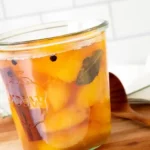
Easy Quick Pickled Peaches
- Total Time: 25 minutes
- Yield: 1 quart 1x
- Diet: Vegetarian
Description
Pickled peaches are sweet, aromatic, and spicy, and pair well with desserts, cheese, or main dishes like grilled fish.
Ingredients
- 2 cups water
- 1/2 cup red wine vinegar
- 1/4 cup white grape juice
- 2 tablespoons (42 grams) honey
- 1/2 teaspoon black peppercorns
- 6 whole cloves
- 4 allspice berries
- 1 cinnamon stick
- 2 fresh bay leaves
- 3 large peaches, peeled and halved or quartered
Instructions
- Boil: Combine all ingredients except the peaches in a heavy-bottomed pot, cover, and bring to a boil.
- Simmer: Remove the lid and simmer for 5 minutes.
- Add Peaches: Add the peaches, making sure they are covered by the liquid.
- Cook: Cook until tender, about 5 minutes more, checking with a paring knife to make sure they are soft the whole way through.
- Jar: Remove the peaches with a spoon or ladle and fill 1 quart-sized canning jar or other large heat-proof jar that seals well.
- Pour: Let the liquid cool slightly and then ladle over the peaches until the jar is full.
- Chill: Close, cool to room temperature, and refrigerate.
Notes
The peaches will keep for a week or two in the fridge but will eventually start to look feathery and disintegrate.
- Prep Time: 15 minutes
- Cook Time: 10 minutes
- Category: Pickles, Jams & Spreads
- Method: Poaching
- Cuisine: American
Nutrition
- Serving Size: 1 serving
- Calories: 107 kcal
- Sugar: 19 g
- Sodium: 10 mg
- Fat: 0 g
- Saturated Fat: 0 g
- Unsaturated Fat: 0 g
- Trans Fat: 0 g
- Carbohydrates: 23 g
- Fiber: 3 g
- Protein: 1 g
- Cholesterol: 0 mg