
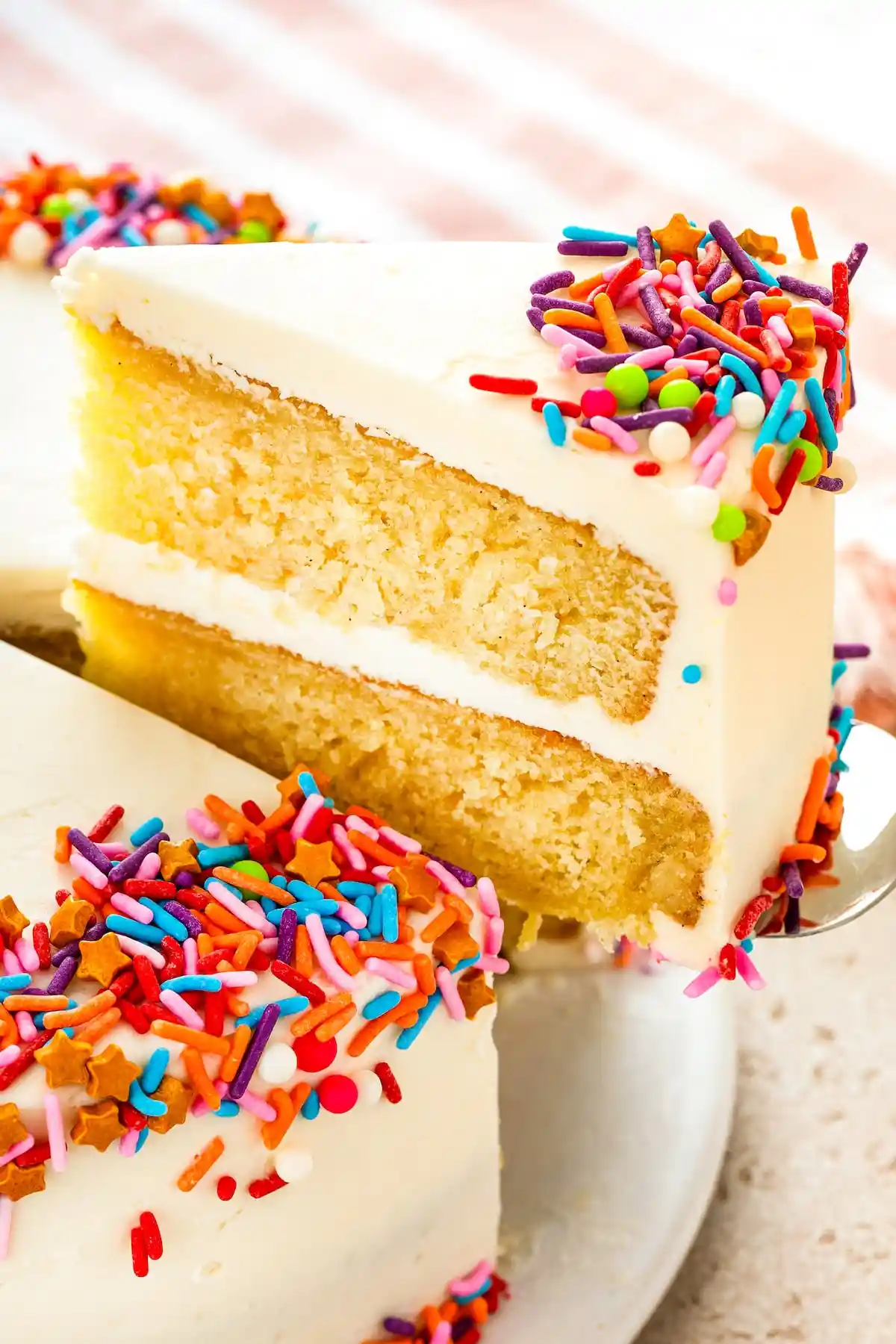
Finding the perfect vanilla cake recipe can feel like a lifelong quest. Many scratch-made cakes turn out dry, crumbly, or lacking in that deep, classic vanilla aroma. This recipe solves all of those common baking pitfalls. By using a unique liquid-emulsion technique where sugar and water are simmered together before the fat is introduced, this cake guarantees an incredibly moist crumb and a melt-in-your-mouth texture. Finished with a velvety, whipped vanilla buttercream and festive sprinkles, this double-vanilla masterpiece is suitable for birthdays, anniversaries, or any occasion that calls for a sweet celebration.
Why This Vanilla Cake Recipe Stands Out
Unlike standard creaming methods where butter and sugar are beaten together to trap air, this recipe leverages a warm liquid method. Simmering the water and sugar together ensures that the sugar is completely dissolved before it ever touches the dry ingredients. This unique process yields a batter that is thinner than typical cake batters, but it bakes up into a remarkably uniform, dense, and moist crumb structure that resists drying out, even after days in the refrigerator.
Furthermore, this recipe utilizes a dual-fat system. We use unsalted butter to provide that rich, nostalgic bakery flavor, and a touch of vegetable oil to guarantee long-lasting tenderness. This combination ensures you do not have to choose between a cake that tastes delicious and a cake that stays soft.
Understanding the Chemistry of the Warm Liquid Method
Many home bakers are surprised to see a cake recipe that begins on the stovetop. However, there is a fascinating scientific reason behind this technique. When sugar is dissolved in hot water, it forms a simple syrup. This syrup coats the flour particles more efficiently than crystalline sugar can. By coating the flour proteins, it significantly limits gluten development once the liquid is mixed with the dry ingredients. Less gluten development means a cake that is exceptionally tender and soft, rather than tough or bready.
Additionally, melting the butter into this warm syrup ensures that the fat is evenly dispersed throughout the entire batter. When the cake enters the oven, this micro-dispersion of fat and dissolved sugar creates tiny, uniform pockets of steam, resulting in an incredibly tight, velvety crumb that holds moisture beautifully.
Ingredient Breakdown: Choosing Your Components
To achieve the best results, it is important to understand the role each ingredient plays and how to select the highest-quality components for your bake:
- All-Purpose Flour: Provides the perfect structural foundation. You can substitute cake flour if you prefer an even lighter, more delicate crumb, but all-purpose flour gives this cake the ideal density to hold up to layers of rich buttercream.
- Baking Powder & Baking Soda: A dual leavening system is used to lift the liquid-heavy batter. Ensure both are fresh for the best rise.
- Granulated Sugar: Beyond adding sweetness, sugar keeps the cake tender by locking in moisture. Do not reduce the sugar quantity, as it is vital for the cake's moist texture.
- Unsalted Butter & Vegetable Oil: Using both fats gives you the flavor benefits of butter and the moisture-retaining qualities of oil.
- Double Vanilla Punch: We use both alcohol-free pure vanilla extract and the scraped seeds of a whole vanilla bean (or vanilla bean paste). This dual-approach infuses the cake with a deep, complex, and highly aromatic vanilla profile, dotted with beautiful dark specks.
- Large Eggs: Act as binders and provide structure. Make sure they are at room temperature before adding them to the batter to prevent the chilled butter mixture from seizing.
- Heavy Cream: Used in the buttercream to create a luxurious, spreadable texture. You can also use half-and-half or whole milk if needed.
Step-by-Step Baker's Guide
Follow these detailed steps to create your own vanilla masterpiece from scratch. Take your time, especially when chilling the syrup mixture, to ensure a perfect bake.
Phase 1: Prepping the Pans and Dry Mix
Begin by preheating your oven to 350°F (175°C). Properly preparing your baking pans is essential for a clean release. Butter two 8-inch round cake pans thoroughly. For extra security, you can dust the inside of the buttered pans with a light coating of flour or line the bottoms with round parchment paper circles.
In a medium-sized mixing bowl, combine 2 1/4 cups of all-purpose flour, 2 teaspoons of baking powder, 2 teaspoons of baking soda, and 1/2 teaspoon of salt. Whisk these dry ingredients together thoroughly to ensure the leavening agents are evenly distributed, then set the bowl aside.
Phase 2: Preparing the Warm Liquid Base
In a medium saucepan set over medium-high heat, combine 2 cups of water and 2 cups of granulated sugar. Bring the mixture to a gentle simmer, stirring constantly, until the sugar is fully dissolved. This should take about 1 minute once the simmer is reached. Remove the saucepan from the heat immediately.
Add 6 tablespoons of unsalted butter to the hot sugar-water, stirring gently until the butter is completely melted. Once melted, transfer the saucepan to the refrigerator and allow the mixture to chill for approximately 20 minutes. It is crucial that this mixture cools until it is no longer warm to the touch before proceeding; otherwise, it will scramble the eggs in the next step.
Phase 3: Mixing the Batter
Once the butter and sugar mixture has cooled completely, remove it from the refrigerator. Whisk in 2 tablespoons of vegetable oil, 1 tablespoon of alcohol-free vanilla extract, and the scraped seeds from 1 whole vanilla bean (or 1 tablespoon of vanilla bean paste). Whisk until these ingredients are fully integrated.
Next, beat in 2 large room-temperature eggs one at a time, ensuring each is fully incorporated. Finally, add the dry ingredient mixture. Whisk steadily until the batter is completely smooth and free of lumps. The batter will be relatively thin and runny; this is exactly how it should look.
Phase 4: Baking to Perfection
Divide the cake batter evenly between your two prepared 8-inch cake pans. Place the pans in the preheated oven and bake for 25 to 30 minutes. To check for doneness, insert a toothpick into the center of the cakes. If it comes out clean or with just a few moist crumbs attached, the cakes are done. Remove them from the oven and let them cool completely in their pans on a wire rack before attempting to frost them.
Phase 5: Whipping the Buttercream
While the cake layers are cooling, prepare the buttercream frosting. In the bowl of a stand mixer fitted with the paddle attachment, beat 1 cup (2 sticks) of room-temperature unsalted butter until it is light, pale, and exceptionally fluffy. This should take about 2 to 3 minutes of high-speed mixing.
Reduce the mixer speed to low and begin adding 4 cups of powdered sugar, one cup at a time. Mix thoroughly after each addition to prevent the sugar from flying out of the bowl. Once all the sugar is incorporated, increase the speed to medium and add 1 tablespoon of alcohol-free vanilla extract and 2 tablespoons of heavy cream. Beat the mixture for 3 full minutes until it is incredibly light and airy. If the frosting feels too thick to spread easily, beat in the remaining 1 tablespoon of heavy cream.
Phase 6: Assembly and the Crumb Coat
Place your first cooled cake layer onto a cake stand or serving plate. Spread a generous, even layer of the prepared vanilla buttercream over the top. Place the second cake layer gently on top of the frosting, ensuring it is centered and level.
To achieve a professional, bakery-smooth finish, apply a crumb coat. This is a very thin layer of frosting spread over the entire top and sides of the cake, designed to lock in any loose cake crumbs. Once applied, place the cake in the freezer for about 10 minutes (or the refrigerator for 20 minutes) to allow this base layer of frosting to firm up. Once chilled, apply the remaining thick layer of buttercream smoothly over the outside of the cake. Decorate with 1/2 cup of colorful rainbow sprinkles, slice, and enjoy!
Expert Tips for Bakery-Quality Results
- Spoon and Level the Flour: Never scoop flour directly from the bag with a measuring cup, as this packs the flour down and adds too much dry material to your batter. Instead, fluff the flour with a fork, spoon it gently into your measuring cup, and sweep a flat knife across the top to level it off.
- Do Not Rush the Cool Down: Be absolutely sure that the simmered sugar-butter mixture is completely cool before adding the eggs. If it is even slightly warm, it can partially cook the eggs, leading to an unwanted eggy taste or texture in your finished cake layers.
- Use Cake Strips: For perfectly flat cake layers that do not require leveling, wrap damp cake pan strips around the outside of your pans before baking. This helps the cake bake evenly from the edges to the center.
- Prevent Excess Browning: If you notice the edges or tops of your cakes browning too quickly before the center is fully baked, loosely tent a sheet of aluminum foil over the pans for the final 10 minutes of baking.
Creative Flavor Variations
This versatile recipe serves as an excellent blank canvas for a wide variety of delightful flavor adaptations:
- Citrus Burst: Omit the vanilla bean and fold 2 tablespoons of freshly grated lemon, orange, or lime zest directly into the cake batter along with the dry ingredients. You can also substitute 1/2 cup of the water for fresh citrus juice.
- Almond Layer Cake: Swap the vanilla extract in both the cake and the buttercream for high-quality almond extract. Layer the center of the cake with a thick spread of raspberry jam for a classic bakery pairing.
- Chocolate Chip Joy: Gently fold 1 cup of mini semi-sweet chocolate chips into the batter just before pouring it into the pans. Decorate the finished buttercream with mini chocolate chips instead of sprinkles.
- Fruit-Filled Center: Pipe a thick ring of buttercream around the top edge of the bottom cake layer to act as a dam. Fill the center with homemade lemon curd, fresh sliced strawberries, or raspberry compote before stacking the second layer.
Make-Ahead and Storage Guidelines
This cake is incredibly forgiving and actually tastes even better the day after it is baked, making it a fantastic candidate for make-ahead preparation:
To Store: Keep the frosted cake in an airtight cake keeper at room temperature for up to 3 days, or in the refrigerator for up to 1 week. If you have already sliced the cake, cover the exposed cake faces with plastic wrap to prevent them from drying out.
To Make Ahead: You can bake the cake layers up to 2 days in advance. Once the baked layers are completely cool, wrap them tightly in a double layer of plastic wrap and store them in the refrigerator. Assemble and frost the cake on the day you plan to serve it.
To Freeze: Wrap the cooled, unfrosted cake layers tightly in plastic wrap, followed by a layer of heavy-duty aluminum foil. Freeze for up to 3 months. Thaw the layers overnight in the refrigerator or on the kitchen counter for 1 to 2 hours before assembling and frosting.
PrintThe Ultimate Moist Vanilla Cake Recipe From Scratch
- Total Time: 1 hour 20 minutes
- Yield: 12 servings 1x
Description
This rich and moist vanilla cake with fluffy vanilla buttercream and colorful sprinkles is the perfect layered cake for every occasion. So soft and decadent, this homemade vanilla cake made from scratch will take your guests to a vanilla-flavored cloud 9!
Ingredients
- 2 1/4 cups all-purpose flour
- 2 teaspoons baking powder
- 2 teaspoons baking soda
- 1/2 teaspoon salt
- 2 cups water
- 2 cups granulated sugar
- 6 tablespoons unsalted butter
- 2 tablespoons vegetable oil
- 1 tablespoon alcohol-free vanilla extract
- 1 vanilla bean (scraped, or 1 tablespoon vanilla bean paste)
- 2 large eggs
- 1 cup (2 sticks) unsalted butter (room temperature)
- 4 cups powdered sugar
- 1 tablespoon alcohol-free vanilla extract
- 2 to 3 tablespoons heavy cream (half and half, or milk)
- 1/2 cup rainbow sprinkles
Instructions
- Prep: Preheat oven to 350°F. Butter two 8-inch round cake pans. Set aside.
- Dry Ingredients: In a medium bowl, whisk together flour, baking powder, baking soda, and salt. Set aside.
- Simmer Liquid: In a medium saucepan over medium-high heat, combine water and sugar. Bring to a simmer and stir until sugar dissolves, about 1 minute. Remove from heat and add 6 tablespoons of butter, stirring until completely melted.
- Chill: Chill the butter-sugar mixture in the fridge for about 20 minutes, until it is no longer warm to the touch.
- Combine: Once chilled, whisk the vegetable oil, 1 tablespoon of alcohol-free vanilla extract, and the scrapings from the vanilla bean into the butter mixture. Beat in the eggs. Whisk in the dry ingredients until smooth.
- Bake: Divide batter evenly between prepared pans and bake for 25 to 30 minutes, or until a toothpick inserted in the center comes out clean.
- Cool: Let cakes cool in pans completely until cool to the touch.
- Make Buttercream: In a stand mixer with the paddle attachment, cream 1 cup of butter until light and fluffy. Add in the powdered sugar 1 cup at a time, mixing thoroughly after each addition. Increase speed to medium and add 1 tablespoon of alcohol-free vanilla extract. Add 2 tablespoons of heavy cream and beat for 3 minutes. If frosting is too thick, add the remaining 1 tablespoon of cream.
- Assemble: Assemble the 2 layers with a thick layer of frosting in between.
- Crumb Coat: Apply a thin crumb coat on the top and sides of the cake. Place the cake into the freezer to harden the crumb coat for about 10 minutes.
- Finish: Apply one final thick and even layer of frosting around the outside of the cake, decorate with sprinkles, and serve.
Notes
Store the cake in an airtight container at room temperature for up to 3 days or in the fridge for up to a week. To freeze, wrap the unfrosted layers in plastic wrap and foil for up to 3 months. Make sure to use spoon-and-level measurement for the flour to avoid a dense cake.
- Prep Time: 25 minutes
- Cook Time: 25 minutes
- Category: Cake
- Method: Bake
- Cuisine: American
Nutrition
- Serving Size: 1 slice
- Calories: 637 kcal
- Sugar: 79 g
- Sodium: 369 mg
- Fat: 26 g
- Saturated Fat: 15 g
- Unsaturated Fat: 9 g
- Trans Fat: 1 g
- Carbohydrates: 98 g
- Fiber: 1 g
- Protein: 4 g
- Cholesterol: 91 mg