
Finding a reliable oatmeal cookies recipe that balances simplicity with great texture can sometimes feel like a daunting task. Many traditional recipes require creaming butter, measuring out multiple flours, and keeping track of complex leavening agents. If you are looking for a straightforward, wholesome, and incredibly satisfying alternative, these healthy peanut butter oatmeal cookies are the ultimate solution. Requiring only four basic pantry staples—creamy peanut butter, a fresh egg, pure maple syrup, and rolled oats—this recipe delivers a chewy, rich, and naturally sweet cookie in under twenty minutes. It is an ideal option for busy weekday mornings, quick afternoon snacks, or a wholesome dessert that pairs beautifully with a warm cup of tea or a cold glass of milk.
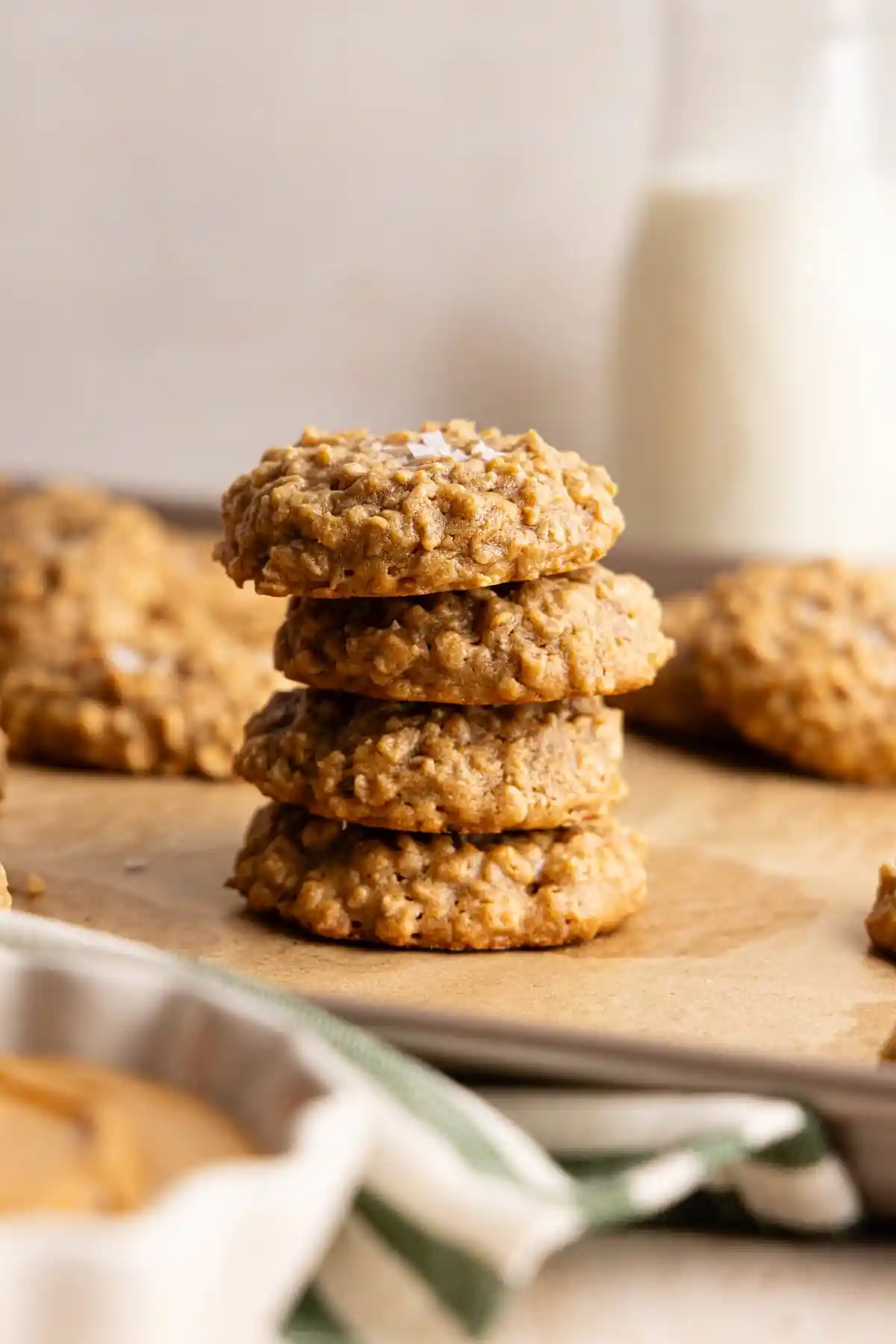
By stripping away refined sugars and processed flours, this flourless oatmeal cookies recipe highlights the rich, nutty notes of peanut butter and the hearty texture of whole grain oats. Because these cookies rely on the natural binding power of an egg and the sticky consistency of maple syrup, they retain a pleasant moisture that prevents them from becoming dry or crumbly. Whether you are baking for your family, prepping snacks for the upcoming week, or simply satisfying a sudden craving for a wholesome sweet treat, this method yields consistently perfect results with minimal cleanup. Read on to discover the science behind this simple bake, a detailed step-by-step walkthrough, and essential tips for customizing your batch.
The Magic of 4-Ingredient Baking
It is often surprising to home bakers how just four simple ingredients can combine to create a cookie with such a satisfying chew and structure. In traditional baking, gluten from wheat flour provides the framework, while butter and white sugar create pockets of air and crisp edges. In this minimalist oatmeal cookies recipe, the ingredients work in harmony to perform these exact same structural roles without any of the processed additions.
Creamy peanut butter acts as the primary fat source in this recipe, providing richness, moisture, and a solid structural base. Because peanut butter is naturally dense and packed with unsaturated fats, it ensures that the cookies remain tender and do not dry out in the oven. The egg serves as the ultimate binder and leavening helper, trapping tiny air bubbles and setting as it bakes to hold the oats together. Pure maple syrup introduces a natural, liquid sweetness that caramelizes beautifully around the edges of the cookies under heat. Finally, the rolled oats absorb the liquid elements, swelling slightly as the dough rests to create that signature, hearty chew that every great oatmeal cookie needs.
Ingredient Deep Dive and Substitutions
To ensure your cookies turn out perfectly every single time, it helps to understand the ingredients you are working with and how to select the best options at the grocery store.
- Creamy Peanut Butter: For the best texture, use a smooth, creamy peanut butter. Both conventional (homogenized) and natural (the kind with oil separation) peanut butters will work in this recipe. However, keep in mind that natural peanut butter can sometimes be runnier, which might require a slight adjustment in the amount of oats you add. If you have a peanut allergy, you can easily substitute this with almond butter, cashew butter, or sunflower seed butter at a strict 1:1 ratio.
- Large Egg: One large egg is the key binder for this dough. It is best to use an egg at room temperature, as it incorporates much more smoothly into the cold peanut butter and maple syrup. If you are looking for a plant-based alternative, a flax egg (1 tablespoon of ground flaxseed mixed with 2.5 tablespoons of water, left to gel for 10 minutes) can be used, though the final cookie will be slightly more delicate and crumbly.
- Pure Maple Syrup: This liquid sweetener adds a distinct, warm caramel flavor that complements the peanut butter perfectly. If you do not have maple syrup on hand, pure liquid honey is an excellent 1:1 substitute. Avoid using dry granulated sugars, as the recipe relies on the moisture of the liquid sweetener to hydrate the oats and bind the dough.
- Rolled Oats: Old-fashioned rolled oats are the star of this oatmeal cookies recipe, offering a robust texture and high fiber content. If you prefer a softer, less textured cookie, quick-cooking oats will also work beautifully. Avoid using steel-cut oats, as they are far too dense and will not soften sufficiently during the brief baking window, resulting in an unpleasant, gritty texture.
Step-by-Step Instructions
Follow these detailed steps to mix, shape, and bake your healthy peanut butter oatmeal cookies to perfection.
Step 1: Prep and Preheat
Before mixing your ingredients, preheat your oven to 350°F (175°C). Preparing your oven ahead of time ensures that the cookies start baking immediately upon entering, which is crucial for achieving the proper rise and setting the egg binder. Line a large baking sheet with parchment paper or grease it lightly with a neutral cooking spray to prevent the cookies from sticking.
Step 2: Combine the Wet Ingredients
In a large mixing bowl, measure out 1 cup of creamy peanut butter, 1 large egg, and 1/2 cup of pure maple syrup. Using a sturdy spatula or a wooden spoon, mix the ingredients vigorously. At first, the mixture may look separated or oily, but continue stirring until it transforms into a completely smooth, emulsified, and thick paste. Ensuring this base is thoroughly combined is essential for an even bake.
Step 3: Fold in the Oats
Add 1 1/4 cups of rolled oats to the peanut butter mixture. Gently fold the oats into the wet base until they are completely coated and no dry patches remain. The final consistency should resemble a thick, sticky cookie dough. If your peanut butter was exceptionally runny and the dough feels more like a batter than a moldable dough, you can add an extra tablespoon or two of oats to achieve the correct sticky consistency.
Step 4: Portion and Shape
Because these cookies do not contain traditional flour or leavening agents like baking soda, they will not spread significantly while baking. Therefore, you must shape them before they go into the oven. Using a small cookie scoop or a heaping tablespoon, portion out the dough into 10 to 12 equal-sized mounds on your prepared baking sheet. Lightly dampen your hands with water to prevent sticking, then gently roll each portion into a smooth ball and press down slightly to flatten them into thick cookie rounds.
Step 5: Bake and Cool
Place the baking sheet on the middle rack of your preheated oven and bake for 10 to 12 minutes. You will know they are ready when the edges are lightly golden and the tops feel dry to the touch, though they will still feel quite soft in the center. Remove them from the oven and let them rest on the hot baking sheet for 5 minutes; this resting period is crucial, as the cookies will continue to firm up as they cool. Transfer them gently to a wire cooling rack to cool completely before serving.
Pro Tips for Baking Success
While this oatmeal cookies recipe is incredibly forgiving, keeping a few professional baking tips in mind will elevate your results from good to outstanding:
Watch the Bake Time Closely: Because these cookies lack refined flours, they can quickly dry out if left in the oven even a minute too long. It is always better to pull them out when they still look slightly soft in the center. They will firm up to a perfect chewy consistency as they cool on the pan.
Handle Sticky Dough with Ease: The natural sugars in maple syrup combined with peanut butter make this dough quite sticky. If you find it difficult to roll the dough into balls, place the bowl in the refrigerator for 10 to 15 minutes before portioning. Chilling the dough firms up the fats and makes shaping effortless.
Measure Your Oats Accurately: When measuring rolled oats, scoop them into your measuring cup and level it off with the back of a knife. Packing the oats tightly can lead to adding too much dry matter, resulting in a dry, crumbly cookie that doesn’t hold together well.
Flavor Variations and Fun Mix-Ins
The beauty of this 4-ingredient base is that it serves as an excellent canvas for your favorite cookie additions. If you want to expand beyond the classic recipe, consider folding 1/4 cup of these delicious mix-ins into the dough right after adding the oats:
- Chocolate Chips: Fold in dark, semi-sweet, or mini chocolate chips for a classic peanut butter and chocolate flavor combination.
- Warm Spices: Add 1/2 teaspoon of ground cinnamon and a pinch of ground nutmeg to introduce a warm, cozy autumnal aroma.
- Dried Fruit: Stir in a handful of sweet raisins or dried cranberries to create a classic oatmeal raisin variation.
- Crunchy Nuts and Seeds: Incorporate chopped walnuts, pecans, chia seeds, or hemp hearts for extra crunch and a boost of healthy fats.
- Toasted Coconut: Fold in unsweetened shredded coconut for a unique chewy texture and a subtle tropical sweetness.
Storage, Freezing, and Meal Prep Guidance
These healthy peanut butter oatmeal cookies are fantastic for meal prep because they store exceptionally well without losing their moisture or chewiness.
Room Temperature Storage: Once the cookies have cooled completely, transfer them to an airtight container. They can be stored on your kitchen counter at room temperature for 3 to 5 days. Placing a small piece of parchment paper between the layers will prevent them from sticking together.
Refrigeration: If you prefer your cookies to have a firmer, chewier bite, store them in an airtight container in the refrigerator for up to 1 week. This cold storage method is especially pleasant during warmer summer months.
Freezing Instructions: These cookies freeze beautifully for long-term storage. Place the fully cooled cookies in a single layer on a baking sheet and freeze for 1 hour until solid. Once frozen, transfer them to a freezer-safe zip-top bag, removing as much air as possible. They will keep well in the freezer for up to 3 months. When you are ready to enjoy one, simply let it thaw at room temperature for 15 minutes or microwave it for 10 to 15 seconds for a warm, fresh-out-of-the-oven experience.
PrintEasy 4-Ingredient Peanut Butter Oatmeal Cookies Recipe
- Total Time: 17
- Yield: 12 1x
- Diet: Gluten-Free
Description
A simple and nutritious 4-ingredient oatmeal cookie recipe featuring creamy peanut butter, maple syrup, and rolled oats. Chewy, naturally sweetened, and ready in under 20 minutes!
Ingredients
- 1 cup creamy peanut butter
- 1 large egg
- 1/2 cup pure maple syrup
- 1 1/4 cups rolled oats
Instructions
- Preheat: Preheat your oven to 350°F (175°C) and grease or line a large baking sheet with parchment paper.
- Mix Wet Ingredients: In a large mixing bowl, combine the creamy peanut butter, egg, and maple syrup. Stir vigorously until completely smooth and well incorporated.
- Add Oats: Fold in the rolled oats and mix until thoroughly combined. The mixture should resemble a thick, sticky cookie dough.
- Shape: Using a small cookie scoop or a spoon, portion the dough into heaping tablespoons on the prepared baking sheet (aim for 10-12 cookies). Use damp hands to gently roll them into rounds and press down slightly to flatten into cookie shapes.
- Bake: Bake in the preheated oven for 10 to 12 minutes, or until the edges are lightly golden.
- Cool: Allow the cookies to cool on the baking sheet for 5 minutes before transferring them to a wire rack to cool completely.
Notes
If using natural peanut butter that is very runny, you may need to add an extra 1-2 tablespoons of rolled oats to achieve the correct sticky dough texture. Store cookies in an airtight container at room temperature for up to 5 days, or freeze for up to 3 months.
- Prep Time: 5
- Cook Time: 12
- Category: Dessert, Snack
- Method: Baking
- Cuisine: American
Nutrition
- Serving Size: 1 cookie
- Calories: 175
- Sugar: 8g
- Sodium: 105mg
- Fat: 11g
- Saturated Fat: 2g
- Unsaturated Fat: 8g
- Trans Fat: 0g
- Carbohydrates: 15g
- Fiber: 2g
- Protein: 6g
- Cholesterol: 15mg