
This simple baked chicken dish uses a tangy balsamic marinade to keep the meat moist and flavorful. It is a healthy, high-protein option that works well for quick weeknight meals or organized meal prep.

List of ingredients
- 4 boneless skinless chicken breasts (6 oz each) – ensures even cooking times.
- 1/4 cup olive oil – prevents drying and helps heat transfer.
- 2 tbsp soy sauce – provides depth and necessary salt.
- 1/2 cup balsamic vinegar – adds acidity and a natural glaze.
- 2 cloves garlic (minced) – adds aromatic savory notes.
- 2 tsp dried oregano – provides an earthy herbal flavor.
- 1/4 tsp black pepper – adds a subtle spicy kick.
- 1/4 tsp salt (or more to taste) – enhances all other flavors.
step-by-step instructions
- Prepare the meat: If the chicken breast is too thick, pound it with a meat mallet until it is approximately 1/2-inch thick. This ensures the center cooks through before the outside dries out.
- Create the marinade: In a medium mixing bowl, combine the olive oil, balsamic vinegar, soy sauce, minced garlic, dried oregano, and black pepper. Whisk until the ingredients are fully integrated.
- Coat the chicken: Place the chicken breasts in a baking dish. Pour the prepared marinade over the meat, turning the breasts to ensure they are evenly coated. Let the chicken sit for 10 minutes if time allows to improve surface seasoning.
- Bake: Preheat your oven to 400 F. Bake the chicken at 400 F for 25 minutes.
- Verify doneness: Use a meat thermometer to check the thickest part of the breast. Remove the chicken from the oven once it reads exactly 165 F to maintain maximum juiciness.
Professional Techniques for Maximum Moisture
Use a Digital Meat Thermometer
Relying on time alone can lead to dry chicken because oven temperatures vary. A digital thermometer allows you to pull the meat at exactly 165 F. Overcooking by even five degrees can cause the muscle fibers to tighten and push out moisture.
Pound the Meat to Uniform Thickness
Chicken breasts are naturally tapered, with one end much thicker than the other. Pounding the meat to a consistent 1/2-inch thickness prevents the thin end from overcooking while the thick end is still raw. This creates a uniform texture across the entire piece.
Implement a Resting Period
Allow the chicken to rest for 5 to 10 minutes before slicing. This allows the internal juices to redistribute throughout the meat. Cutting into the chicken immediately after baking causes the juices to run out onto the plate, leaving the meat drier.
Control the Marinade Duration
While a 10-minute soak is recommended, avoid marinating balsamic chicken for more than 24 hours. The high acidity of the vinegar can eventually break down the protein structures too much, resulting in a mealy or mushy texture rather than a tender one.
Ingredient Substitutions and Alternatives
Replacing Soy Sauce
For a gluten-free version, substitute the soy sauce with tamari or coconut aminos. Coconut aminos provide a similar savory profile but are slightly sweeter and lower in sodium. Adjust the added salt accordingly when using these alternatives.
Using Different Vinegars
If balsamic vinegar is unavailable, you can use red wine vinegar mixed with a teaspoon of brown sugar. This replicates the acidity and sweetness of the balsamic. However, the color will be lighter and the flavor less complex.
Fresh vs. Dried Herbs
You can replace the 2 teaspoons of dried oregano with 1 tablespoon of fresh chopped oregano. Fresh herbs provide a brighter flavor but are less concentrated than dried versions. Ensure they are finely chopped to distribute evenly in the marinade.
Oil Variations
While olive oil is preferred for its flavor and health benefits, avocado oil is an excellent substitute. Avocado oil has a higher smoke point, which is useful if you decide to sear the chicken in a pan before baking it in the oven.
Customizing Your Chicken Recipe
Incorporating Pan-Roasted Vegetables
You can add vegetables like sliced carrots, Brussels sprouts, or bell peppers to the baking dish. Cut the vegetables into 1-inch chunks so they cook in the same 25-minute window as the chicken. Place them around the chicken rather than underneath to avoid steaming the meat.
Using Chicken Thighs
Boneless, skinless chicken thighs are a more forgiving cut of meat. If using thighs, follow the same marinade process but increase the baking time by 5 to 10 minutes. Thighs can safely handle higher internal temperatures without becoming dry.
Creating a Thicker Glaze
The pan juices created during baking are delicious but thin. To create a thick glaze, pour the remaining pan liquids into a small saucepan after removing the chicken. Simmer the liquid over medium heat for 3 to 5 minutes until it reduces and thickens.
Adding a Spicy Element
For those who prefer heat, add 1/2 teaspoon of red pepper flakes or a pinch of cayenne pepper to the marinade. This complements the sweetness of the balsamic vinegar and the savoriness of the soy sauce. Ensure the spice is whisked in well to avoid concentrated hot spots.
Serving Suggestions and Pairings
Complementary Grains
Serve this chicken over a bed of fluffy white rice, quinoa, or farro. These neutral grains absorb the extra balsamic glaze from the pan. Brown rice adds a nuttier flavor that pairs well with the dried oregano.
Fresh and Green Sides
A simple arugula salad with lemon vinaigrette provides a sharp contrast to the rich balsamic glaze. Steamed asparagus or sautéed spinach are also excellent options that maintain the healthy profile of the meal.
Roasted Root Vegetables
Roasted sweet potatoes or parsnips offer a natural sweetness that balances the acidity of the vinegar. Toss them in olive oil and salt, and roast them on a separate tray at 400 F for about 20 to 30 minutes.
Starch-Based Accompaniments
Garlic mashed potatoes or oven-baked fries provide a hearty base for the chicken. The creaminess of mashed potatoes helps mellow out the intensity of the balsamic reduction, making the dish more filling.
Storage and Reheating Guidelines
Refrigeration and Shelf Life
Store leftover chicken in an airtight container in the refrigerator. It will remain fresh and safe to eat for up to 3 to 4 days. Keep the remaining pan sauce in the same container to keep the meat moist during storage.
Best Reheating Methods
To prevent the chicken from drying out during reheating, use a low temperature. Place the chicken in an oven at 325 F, covered with foil, for 10 to 15 minutes. Alternatively, microwave it on medium power with a damp paper towel covering the meat.
Freezing Instructions
This chicken can be frozen after cooking. Wrap each breast tightly in foil and place them in a freezer-safe bag. They will keep for up to 3 months. Thaw completely in the refrigerator overnight before reheating.
Make-Ahead Preparation
You can prepare the marinade and coat the chicken up to 24 hours in advance. Store the coated chicken in the refrigerator in a sealed glass dish. This allows the flavors to penetrate deeper into the meat before the baking process begins.
Troubleshooting Common Issues
Fixing an Overly Sharp Sauce
If the balsamic flavor is too acidic or sharp, you can balance it by adding a tiny pinch of sugar or a drizzle of honey to the pan juices. This neutralizes the harshness of the vinegar without changing the overall flavor profile.
Preventing Uneven Browning
If the chicken is not browning sufficiently, you can turn on the broiler for the last 2 to 3 minutes of cooking. Keep a very close eye on the meat during this time, as the sugars in the balsamic vinegar can burn quickly.
Handling Dry Meat
If the chicken comes out dry, it is likely due to an internal temperature exceeding 165 F. To fix this for future batches, reduce the baking time by 2 to 3 minutes and let the meat rest longer. You can also serve dry chicken with a side of melted butter or extra pan sauce.
Preventing Sticky Pan Residue
Balsamic vinegar contains natural sugars that can caramelize and stick to the baking dish. To make cleanup easier, line your baking dish with parchment paper or aluminum foil. This prevents the glaze from baking onto the ceramic or metal surface.
Frequently Asked Questions
Is balsamic vinegar good on chicken breast?
Yes, balsamic vinegar is excellent on chicken breast. It adds a rich, tangy flavor that balances well with savory herbs. When baked, it caramelizes slightly, creating a glaze that enhances the natural flavor of the meat.
What does balsamic vinegar do during the baking process?
Balsamic vinegar adds depth and complexity to the dish. The acidity helps break down proteins slightly, which tenderizes the meat. As it reduces in the oven, the sweet acidity becomes concentrated, forming a savory coating.
Should you apply balsamic glaze before or after cooking?
In this recipe, the glaze forms naturally from the marinade during the baking process. If you are using a store-bought pre-made glaze, add it during the last 5 minutes of cooking or just before serving to prevent the sugars from burning.
What is the secret to keeping baked chicken breasts moist?
The secret is a combination of marinating, controlling the thickness of the meat through pounding, and cooking precisely to 165 F. Additionally, letting the meat rest after baking ensures the juices stay locked inside the fibers.
Can I use bone-in chicken in this recipe?
Yes, you can use bone-in breasts or thighs. However, you will need to increase the cooking time by 10 to 15 minutes. Always use a thermometer to ensure the meat near the bone has reached a safe internal temperature.
Print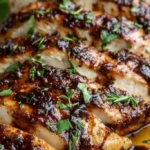
Juicy Balsamic Baked Chicken Breast
- Total Time: 30 minutes
- Yield: 4 servings 1x
- Diet: General
Description
This Balsamic Baked Chicken Breast features tender chicken marinated in a flavorful mix of balsamic vinegar, honey, and herbs, making it a perfect choice for a weeknight dinner or meal prep. Easy to prepare and sure to impress, it’s a delicious dish that pairs well with various sides.
Ingredients
- 4 boneless skinless chicken breasts (6 oz each)
- 1/4 cup olive oil
- 2 tbsp soy sauce
- 1/2 cup balsamic vinegar
- 2 cloves garlic (minced)
- 2 tsp dried oregano
- 1/4 tsp black pepper
- 1/4 tsp salt
Instructions
- Step: If the chicken breast is too thick, you can pound it with a meat mallet until it is 1/2-inch thick.
- Step: Combine olive oil, balsamic vinegar, soy sauce, garlic, oregano and black pepper in a bowl.
- Step: Place chicken in a baking dish. Pour the marinade over it, making sure it is evenly coated. Let is sit for 10 minutes if you have the extra time.
- Step: Preheat oven to 400 F. Bake chicken at 400 F for 25 minutes, or until a thermometer inserted into the thickest part of the meat reads 165 F.
Notes
Let the chicken rest for 5 minutes before slicing to ensure it stays juicy. Pairs well with rice, quinoa, roasted vegetables, oven fries, or a simple green salad. For a thicker glaze, simmer the pan juices separately on the stovetop.
- Prep Time: 5 minutes
- Cook Time: 25 minutes
- Category: Main Dishes
- Method: Baking
- Cuisine: American
Nutrition
- Serving Size: 1 chicken breast
- Calories: 414 kcal
- Sugar: 4 g
- Sodium: 618 mg
- Fat: 19 g
- Saturated Fat: 3 g
- Unsaturated Fat: 16 g
- Trans Fat: 0 g
- Carbohydrates: 6 g
- Fiber: 1 g
- Protein: 49 g
- Cholesterol: 144 mg