
This hearty pasta dish blends savory garlic butter ground beef with a rich, melted cheese sauce. It is an efficient meal solution for busy families that requires minimal cleanup and preparation time.

List of ingredients
- 8 oz penne pasta – cooked al dente for the best texture.
- 1 lb lean ground beef – provides the savory protein base.
- 4 cloves garlic, minced – adds a pungent, aromatic depth.
- 4 tbsp unsalted butter – creates a rich sauce and browns the beef.
- 1 cup shredded cheddar cheese – provides a creamy, sharp melt.
- 1/2 cup grated Parmesan cheese – adds a salty, umami finish.
- Salt and pepper, to taste – essential for balancing all flavors.
- 2 tsp Italian seasoning – a blend of herbs for classic pasta flavor.
- Fresh parsley (optional), for garnish – adds a pop of color and freshness.
step-by-step instructions
- Cook the pasta: Boil the penne in a large pot of salted water until al dente. Drain the pasta thoroughly and set it aside for later.
- Brown the beef: Melt the unsalted butter in a large skillet over medium heat. Add the ground beef and sauté until it is browned and crumbled.
- Season the meat: Stir in the minced garlic, salt, pepper, and Italian seasoning. Cook for 1-2 minutes until the garlic is fragrant but not burnt.
- Combine ingredients: Fold the cooked penne pasta into the skillet with the beef mixture. You may add a small amount of additional melted butter if the pasta seems too dry.
- Melt the cheese: Stir in the shredded cheddar cheese until it is completely melted and gooey. Mix in the grated Parmesan cheese to enhance the flavor.
- Finish and serve: Plate the pasta immediately. Garnish with freshly chopped parsley if desired.
Optimizing Your Cooking Technique
Achieve Perfect Al Dente Pasta
Boil a large pot of water and add a generous amount of salt before adding the penne. Start tasting the pasta two minutes before the package instructions suggest to ensure it retains a slight bite. This prevents the pasta from becoming mushy when it is later tossed with the hot beef and cheese.
Brown the Beef Efficiently
Heat the skillet over medium-high heat before adding the beef to ensure a proper sear. Use a spatula to break the meat into small, uniform crumbles for consistent cooking. Browning the meat thoroughly develops the Maillard reaction, which adds depth to the overall flavor profile.
Prevent Garlic from Burning
Add the minced garlic only after the beef is fully browned and the heat is adjusted to medium. Garlic burns quickly and becomes bitter if exposed to high heat for too long. Sautéing it for just one to two minutes is sufficient to release its aromatic oils.
Master the Cheese Melt
Use low to medium heat when stirring in the cheeses to prevent the fats from separating. If the cheese clumps, add a tablespoon of pasta water or milk to help it emulsify. Stirring constantly ensures a smooth, creamy coating on every piece of penne.
Customizing the Protein and Pasta
Using Ground Turkey
You can substitute lean ground beef with ground turkey for a lighter protein option. Since turkey has less fat, you may need to add an extra tablespoon of butter to keep the dish moist. Season the turkey slightly more aggressively with salt to match the richness of beef.
Trying Plant-Based Meat
For a vegetarian version, use a plant-based ground meat alternative that mimics the texture of beef. Follow the same browning process, but be mindful that some plant-based meats release more water than animal proteins. Sauté until the liquid evaporates before adding the garlic and butter.
Switching Pasta Shapes
While penne is classic, fusilli or rigatoni are excellent alternatives because their ridges hold onto the cheese sauce. Shells are also a great choice for trapping the ground beef inside each piece. Ensure you maintain the same weight of pasta to keep the ratios correct.
Using Whole Grain Penne
Substitute white pasta with whole wheat or chickpea penne for added fiber and nutrition. Whole grain pastas often require slightly more salt in the boiling water to enhance their nuttier flavor. Be careful not to overcook them, as they can become soft faster than traditional pasta.
Adding Nutritious Vegetable Mix-ins
Incorporating Fresh Spinach
Add two cups of fresh baby spinach to the skillet just before adding the cheese. The residual heat from the beef and pasta will wilt the spinach in about one minute. This adds a boost of iron and vitamins without altering the flavor significantly.
Adding Sautéed Bell Peppers
Dice red and green bell peppers and sauté them with the beef during the browning process. Peppers add a subtle sweetness and a vibrant color to the dish. Ensure they are softened before adding the garlic and seasonings.
Mixing in Sliced Mushrooms
Sauté sliced cremini or button mushrooms in the butter before adding the ground beef. Mushrooms provide an earthy flavor and a meaty texture that complements the beef. Cook them until they release their moisture and turn golden brown.
Adding Frozen Peas
Stir in a cup of frozen peas during the final step of combining the pasta and beef. The heat of the mixture will thaw the peas quickly while keeping them bright green. This is an easy way to add a touch of sweetness and color to the meal.
Enhancing the Flavor Profile
Adding a Spicy Kick
Stir in half a teaspoon of red pepper flakes along with the Italian seasoning for a spicy undertone. For a more intense heat, add a dash of cayenne pepper or a tablespoon of sriracha. This cuts through the richness of the butter and cheese.
Using Fresh Herbs
Replace the dried Italian seasoning with a mix of fresh chopped basil, oregano, and thyme. Fresh herbs provide a brighter, more garden-fresh taste compared to dried versions. Add them at the very end of the cooking process to preserve their delicate oils.
Increasing the Umami
Add a teaspoon of Worcestershire sauce or a tablespoon of tomato paste to the beef while browning. These ingredients deepen the savory notes and add a complex richness to the meat. This technique mimics the flavor of a slow-simmered ragu.
Adjusting the Garlic Level
For those who love bold flavors, increase the garlic to six or seven cloves. Roast the garlic beforehand to create a mellow, sweet flavor, or use garlic powder for a more uniform distribution of taste. Always adjust the salt levels when increasing the garlic amount.
Ideal Serving and Pairing Ideas
Complementing with Garlic Bread
Serve the pasta alongside toasted garlic bread or buttery focaccia. The crunch of the bread provides a textural contrast to the soft pasta and melted cheese. Use a baguette sliced lengthwise and brushed with garlic butter for the best results.
Pairing with a Crisp Salad
Balance the richness of the cheese and beef with a side of mixed greens. A simple vinaigrette made with lemon juice and olive oil helps cleanse the palate between bites. Add sliced cucumbers and cherry tomatoes for extra freshness.
Adding Roasted Broccoli
Serve the dish with a side of oven-roasted broccoli florets seasoned with lemon and salt. The bitterness of the charred broccoli complements the creaminess of the cheddar and Parmesan. You can also mix the roasted broccoli directly into the pasta.
Choosing the Right Beverage
Pair this meal with a sparkling water infused with lemon or lime to refresh the palate. A chilled glass of iced tea with a squeeze of lemon also works well to balance the savory flavors. Avoid overly sweet drinks that may clash with the salty cheese.
Proper Storage and Preservation
Refrigeration Guidelines
Store leftover pasta in an airtight glass or plastic container in the refrigerator. The dish will remain fresh for up to three days. Ensure the pasta has cooled slightly before sealing the container to prevent excess condensation.
Freezing Leftovers
This dish can be frozen for up to two months if stored in freezer-safe containers. To freeze, allow the pasta to cool completely and leave a small amount of space at the top of the container for expansion. Thaw the pasta in the refrigerator overnight before reheating.
Selecting Airtight Containers
Use high-quality BPA-free containers with locking lids to prevent the pasta from absorbing other fridge odors. Glass containers are preferred as they do not stain and can be transferred directly to the oven or microwave. This reduces the number of dishes used during the reheating process.
Best Reheating Methods
Using the Stovetop
Place the leftovers in a small saucepan over low heat. Add a splash of milk or beef broth to loosen the cheese and restore the creamy texture. Stir gently until heated through to avoid breaking the pasta noodles.
Using the Microwave
Heat the pasta in a microwave-safe bowl, covering it with a damp paper towel to retain moisture. Microwave in 30-second intervals, stirring in between each session. This ensures the heat is distributed evenly and the cheese doesn’t separate.
Using the Oven
Transfer the pasta to a small baking dish and cover it with aluminum foil to prevent drying. Heat at 350 degrees Fahrenheit (175 degrees Celsius) for about 10-15 minutes. This method is ideal for maintaining the texture of the beef and cheese.
Planning and Make-Ahead Tips
Pre-Cooking the Pasta
Boil the penne a day in advance and toss it with a small amount of olive oil to prevent sticking. Store it in the fridge in a sealed bag. When ready to eat, simply add it to the beef mixture, and it will heat up quickly.
Preparing the Beef Mixture
Brown the beef with the garlic and seasonings ahead of time and store the mixture in the refrigerator. This reduces the active cooking time on the night of serving to just a few minutes. Simply reheat the beef before adding the pasta and cheese.
Organizing Your Mise en Place
Mince the garlic, shred the cheese, and measure the seasonings before you turn on the stove. Having all ingredients ready prevents the garlic from burning while you search for the cheese. This organized approach makes the cooking process stress-free.
Troubleshooting Common Issues
Fixing Dry Pasta
If the finished dish seems too dry, stir in a tablespoon of pasta water or heavy cream. This re-emulsifies the cheese and butter, creating a smoother sauce. Add the liquid gradually to avoid making the dish watery.
Managing Excess Grease
If the lean ground beef releases too much fat, carefully drain the excess grease before adding the garlic. Leave about one tablespoon of fat in the pan to ensure the garlic and seasonings sauté properly. This keeps the final dish from feeling oily.
Correcting Over-salting
If the dish tastes too salty, add a splash of unsweetened cream or a bit more unsalted butter. A small amount of lemon juice can also brighten the flavor and distract from excess salt. Avoid adding more cheese, as Parmesan is naturally salty.
Preventing Cheese Separation
Cheese separates and becomes oily when it is overheated. Keep the temperature on low when stirring in the cheddar and Parmesan. If separation occurs, whisk in a teaspoon of cornstarch dissolved in water or a splash of milk to bind the sauce.
Common Questions
Can I use a different cheese?
Yes, you can replace cheddar with Monterey Jack or Colby for a similar melt. For a sharper taste, try extra-sharp cheddar or a blend of Gruyère and Parmesan.
How do I keep the pasta from sticking?
Rinse the pasta briefly with warm water if you aren’t adding it to the sauce immediately, or toss it with a teaspoon of oil. However, adding it directly to the beef mixture is the best way to ensure the sauce clings to the noodles.
Can this be made in a slow cooker?
This recipe is designed for the stovetop, but you can brown the beef separately and then slow cook it with seasonings. However, pasta should always be added and cooked separately to avoid becoming mushy in a slow cooker.
Is there a low-carb alternative?
You can substitute the penne pasta with zucchini noodles or spaghetti squash. Sauté the vegetable noodles briefly before tossing them with the garlic butter beef and cheese to avoid releasing too much water.
Print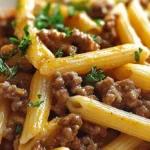
Cheesy Penne with Garlic Butter Ground Beef
- Total Time: 30 minutes
- Yield: 4 servings 1x
- Diet: General
Description
Cheesy Penne with Garlic Butter Ground Beef is a comforting and flavorful dish that brings warmth to any dinner table. Creamy cheese melds beautifully with savory garlic butter ground beef, creating a delightful aroma that will have everyone craving seconds. Perfect for family dinners or unexpected guests, this easy-to-make recipe promises layers of flavor in every bite.
Ingredients
- 8 oz penne pasta
- 1 lb lean ground beef
- 4 cloves garlic, minced
- 4 tbsp unsalted butter
- 1 cup shredded cheddar cheese
- 1/2 cup grated Parmesan cheese
- Salt and pepper, to taste
- 2 tsp Italian seasoning
- Fresh parsley (optional), for garnish
Instructions
- Step 1: Cook the penne pasta in salted boiling water until al dente. Drain and set aside.
- Step 2: In a large skillet over medium heat, melt the butter and sauté the ground beef until browned.
- Step 3: Add minced garlic, salt, pepper, and Italian seasoning; cook until fragrant (1-2 minutes).
- Step 4: Fold the cooked penne into the skillet with the beef mixture. Add additional melted butter if desired.
- Step 5: Stir in cheddar cheese until melted; add Parmesan for extra flavor.
- Step 6: Serve immediately, garnished with chopped parsley if using.
Notes
Store leftovers in an airtight container in the fridge for up to three days. Reheat on low in a saucepan, adding a splash of milk for creaminess. Use high-quality cheese for maximum flavor and avoid overcooking pasta to keep it al dente.
- Prep Time: 10 minutes
- Cook Time: 20 minutes
- Category: Main
- Method: Sautéing
- Cuisine: American
Nutrition
- Serving Size: 1 cup (240g)
- Calories: 530 kcal
- Sugar: 3 g
- Sodium: 680 mg
- Fat: 30 g
- Saturated Fat: 15 g
- Unsaturated Fat: 10 g
- Trans Fat: 0 g
- Carbohydrates: 36 g
- Fiber: 3 g
- Protein: 32 g
- Cholesterol: 85 mg