
This one-pot creamy ground beef pasta is a fast and satisfying meal that comes together in just 30 minutes. It features tender rotini spirals tossed in a rich, velvety cheddar cheese sauce and savory seared beef.

List of ingredients
- 1 lb (450g) ground beef (80/20) – used for creating savory, browned crumbles.
- 8 oz (225g) rotini pasta – dry spirals that effectively hold the heavy sauce.
- 2 tbsp (30g) unsalted butter – essential for building the roux.
- 2 tbsp (15g) all-purpose flour – acts as the primary thickening agent.
- 1 cup (240ml) whole milk – kept at room temperature for a smoother base.
- 1/2 cup (120ml) heavy cream – adds a glossy sheen and richness.
- 2 cups (225g) sharp cheddar cheese – freshly grated from a block to ensure smooth melting.
- 1 tsp (5g) kosher salt – used for seasoning the beef and the pasta water.
- 1 tsp (2g) coarse black pepper – adds a bold flavor and visible specks.
- 1/4 cup (15g) fresh green parsley – finely chopped for a fresh, earthy finish.
step-by-step instructions
- Boil the Pasta: Bring a large pot of salted water to a boil, add the rotini, and cook until exactly al dente. Drain the pasta well and set it aside without rinsing to keep the surface starches intact.
- Sear the Beef: Heat a cast iron skillet over medium-high heat until very hot. Add the ground beef, press it flat to create a deep brown crust, then break it into crumbles and season with half of the salt.
- Drain and Prep: Drain the excess grease from the skillet, leaving approximately one tablespoon of fat for flavor. Lower the heat to medium-low and melt the butter into the pan.
- Create the Roux: Whisk in the flour and cook for about one minute. This removes the raw flour taste and prepares the thickening agent for the liquids.
- Build the Cream Base: Slowly pour in the room-temperature whole milk and heavy cream while whisking vigorously. Simmer for 3-4 minutes until the sauce becomes thick and glossy.
- Integrate the Cheese: Remove the skillet entirely from the heat source to prevent the sauce from splitting. Gradually stir in the freshly grated cheddar cheese until the mixture is completely smooth.
- Final Assembly: Fold the cooked rotini into the cheese sauce until every spiral is heavily coated. Garnish the dish with chopped fresh parsley and additional coarse black pepper before serving.
Advanced Cooking Techniques for the Perfect Sauce
Achieving a Deep Beef Sear
Using a heavy cast iron skillet allows for superior heat retention, which is necessary to trigger the Maillard reaction. Let the beef sit undisturbed for several minutes to develop a dark, caramelized crust before breaking it into crumbles. This step creates a depth of savory flavor that cannot be achieved by stirring the meat constantly.
Mastering the Flour and Butter Roux
The roux is the foundation of the sauce’s stability and thickness. Whisking the flour into melted butter over medium-low heat for one minute ensures that the flour is cooked through without burning. This prevents the final pasta dish from having a grainy or raw-tasting sauce.
Optimizing Dairy Integration
Using room-temperature milk and heavy cream prevents the temperature of the skillet from dropping too sharply. When cold dairy hits a hot roux, it can cause clumping or separation. Slowly whisking the liquids ensures a seamless, velvety emulsion.
Preventing Dairy Separation
Cheese sauces are prone to breaking if they are boiled after the cheese has been added. Removing the pan from the heat source before stirring in the cheddar ensures the fats and proteins stay bonded. This results in a glossy, uniform sauce rather than an oily mess.
Ingredient Substitutions and Alternatives
Choosing Different Pasta Shapes
While rotini is ideal for trapping the sauce in its spirals, other short pastas work well. Penne, fusilli, or cavatappi are excellent substitutes that provide a similar texture. Avoid long noodles like spaghetti, as they do not distribute the beef crumbles as evenly.
Swapping Beef for Other Proteins
Ground turkey or ground chicken can be used as a leaner alternative to beef. Because poultry has less natural fat, you should add an extra tablespoon of butter or olive oil to the pan before searing. This ensures the meat does not stick and the roux has enough fat to form correctly.
Using Alternative Cheese Types
Sharp cheddar provides a classic bold flavor, but you can experiment with other melting cheeses. Gruyere adds a nuttier profile, while Pepper Jack introduces a mild heat to the dish. For a milder taste, a blend of Monterey Jack and mild cheddar works well.
Dairy-Free and Low-Fat Adjustments
To reduce the richness, you can substitute heavy cream with additional whole milk or half-and-half. For a dairy-free version, use a cashew-based cream and a high-quality vegan cheddar. Ensure the plant-based cheese is melted slowly to avoid a grainy texture.
Serving Suggestions and Side Dish Pairings
Adding Fresh Vegetable Components
To make the meal more balanced, stir in steamed broccoli florets or frozen peas during the final assembly step. Fresh baby spinach can also be folded in at the end, as the residual heat will wilt the leaves perfectly. These additions provide color and nutritional value to the rich pasta.
Pairing with Acidic Salads
The richness of a cheddar cream sauce pairs best with sides that offer acidity. A crisp garden salad with a lemon vinaigrette or a tangy cauliflower salad helps cut through the heaviness. This contrast cleanses the palate between bites of the creamy pasta.
Choosing the Best Complementary Breads
Garlic bread or a toasted sourdough slice is an ideal accompaniment for soaking up any remaining sauce. A cheesy garlic baguette adds an extra layer of indulgence to the meal. For a lighter option, serve with warm focaccia seasoned with rosemary.
Flavor-Enhancing Garnishes
Beyond parsley, adding a pinch of red pepper flakes can provide a subtle spicy kick. Freshly grated Parmesan cheese on top adds a salty, sharp contrast to the mellow cheddar. A squeeze of fresh lemon juice just before serving can brighten the entire flavor profile.
Storage and Reheating Guidelines
Safe Refrigeration Practices
Store any leftover pasta in an airtight container and keep it in the refrigerator for up to three days. Dairy-based sauces tend to thicken and tighten significantly as they cool. Ensure the container is sealed tightly to prevent the pasta from drying out.
The Best Stovetop Reheating Method
Reheating on the stove over low heat is the most effective way to restore the sauce’s texture. Add a splash of whole milk or water to the pan to loosen the thickened cheese. Stir gently until the pasta is heated through and the sauce becomes glossy again.
Why to Avoid Microwave Reheating
Microwaves often heat unevenly, which can cause the butterfat in the cheddar to separate from the proteins. This results in a greasy texture and a broken sauce. If a microwave is the only option, heat in short 30-second bursts and stir in between.
Freezing and Thawing Considerations
This recipe is not ideal for freezing because the cream and cheese sauces often break during the freezing and thawing process. If you must freeze it, expect a change in texture and be prepared to add more cream during reheating. It is best enjoyed fresh or from the refrigerator.
Common Troubleshooting and FAQs
Why is my cheese sauce grainy?
Graininess is almost always caused by using pre-shredded cheese from a bag. These products are coated in cellulose or anti-caking agents that prevent the cheese from melting smoothly. Always grate your cheddar from a fresh block for a velvety finish.
How do I fix a sauce that is too thick?
If the sauce becomes too heavy, stir in two tablespoons of the starchy pasta water saved from boiling. The starch in the water helps the sauce emulsify while thinning the consistency. Add the liquid one tablespoon at a time until the desired creaminess is achieved.
Can I use a non-stick pan instead of cast iron?
Yes, a non-stick or stainless steel pan will work for the basic instructions. However, you will lose the intense browning of the beef that cast iron provides. You may need to sear the beef in smaller batches to prevent it from steaming in its own juices.
Why did my sauce separate into oil and solids?
Separation occurs when the sauce is overheated after the cheese has been incorporated. This breaks the emulsion of the dairy. To prevent this, always remove the pan from the burner before stirring in the cheddar cheese.
Print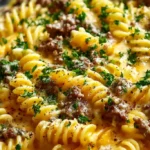
The Ultimate Creamy Ground Beef Pasta Skillet
- Total Time: 30 minutes
- Yield: 4 servings 1x
- Diet: General
Description
This Creamy Ground Beef Pasta features heavily coated rotini spirals, seared beef crumbles, and a glossy yellow-orange cheddar cheese sauce. A perfect, comforting one-pan skillet dinner for easy weeknights.
Ingredients
- 1 lb (450g) ground beef (80/20)
- 8 oz (225g) rotini pasta
- 2 tbsp (30g) unsalted butter
- 2 tbsp (15g) all-purpose flour
- 1 cup (240ml) whole milk
- 1/2 cup (120ml) heavy cream
- 2 cups (225g) sharp cheddar cheese
- 1 tsp (5g) kosher salt
- 1 tsp (2g) coarse black pepper
- 1/4 cup (15g) fresh green parsley
Instructions
- Boil: Bring a large pot of salted water to a boil. Add the rotini pasta spirals and cook until exactly al dente. Drain well and set aside.
- Sear: Heat a matte black cast iron pan over medium-high heat. Add the ground beef, pressing flat to develop a deep brown crust. Break into savory crumbles, season with half the salt, and cook thoroughly. Drain excess grease, leaving 1 tablespoon.
- Roux: Lower heat to medium-low. Melt butter into the beef drippings. Whisk in flour and cook for 1 minute to remove the raw flour taste.
- Simmer: Slowly whisk in the whole milk and heavy cream. Simmer for 3-4 minutes until the liquid becomes thick and glossy.
- Melt: Remove the pan from the heat completely. Gradually stir in the freshly grated yellow-orange cheddar cheese until perfectly smooth.
- Combine: Fold the cooked rotini into the sauce until heavily coated.
- Garnish: Garnish with chopped fresh green parsley and coarse black pepper. Serve immediately.
Notes
Grate your own cheese from a block; pre-shredded cheese will ruin the glossy texture. Never boil the sauce after adding the cheddar, or it will split.
- Prep Time: 10 minutes
- Cook Time: 20 minutes
- Category: Dinner
- Method: Skillet
- Cuisine: American
Nutrition
- Serving Size: 1 serving
- Calories: 680 kcal
- Sugar: 11 g
- Sodium: 1150 mg
- Fat: 45 g
- Saturated Fat: 24 g
- Unsaturated Fat: 21 g
- Trans Fat: 0 g
- Carbohydrates: 56 g
- Fiber: 2 g
- Protein: 32 g
- Cholesterol: 215 mg