
This high-protein meal brings the flavor of a classic cheeseburger into a fresh, low-carb format. It is an efficient dinner solution that works perfectly for healthy meal prep.

List of ingredients
- 1 pound lean ground beef or turkey (90% lean) – the primary protein source.
- 1 teaspoon salt – to enhance natural flavors.
- 1 teaspoon black pepper – for a subtle spicy kick.
- 1 teaspoon garlic powder – adds savory depth.
- 1 teaspoon onion powder – provides a concentrated aromatic base.
- 4 cups chopped lettuce (romaine or iceberg) – creates a crisp, fresh foundation.
- 2 cups cooked quinoa, brown rice, or cauliflower rice – adds texture and hearty grains.
- 1 cup cherry tomatoes, halved – provides juicy acidity.
- 1/2 cup sliced dill pickles – adds a tangy, vinegary crunch.
- 1/2 red onion, thinly sliced – offers sharp, fresh contrast.
- 1 cup shredded cheddar or American cheese – for creamy, melted richness.
- 1 avocado, sliced – contributes healthy fats and smoothness.
- 1/2 cup low-fat Greek yogurt – the creamy, high-protein base for the sauce.
- 1 tablespoon mustard – adds tang and emulsification.
- 1 tablespoon ketchup – provides a hint of sweetness and tomato flavor.
- 1/2 teaspoon paprika – adds a subtle smoky color and taste.
- Salt and pepper to taste – for final seasoning adjustments.
step-by-step instructions
- Brown the meat: Heat a skillet over medium-high heat. Cook the ground beef or turkey with salt, pepper, garlic powder, and onion powder until completely browned and no longer pink.
- Prepare the base: In large bowls, layer the chopped lettuce and your choice of cooked quinoa, brown rice, or cauliflower rice.
- Add fresh toppings: Layer the halved cherry tomatoes, sliced dill pickles, and thinly sliced red onion over the base.
- Combine protein and cheese: Divide the cooked ground beef equally among the bowls and top immediately with shredded cheddar or American cheese.
- Finish with sauce and avocado: Mix the Greek yogurt, mustard, ketchup, paprika, and a pinch of salt and pepper to create the burger sauce. Spoon the sauce over the beef and garnish with avocado slices.
- Serve or store: Eat the bowls immediately while the beef is warm or refrigerate them in airtight containers for meal prep.
Professional Cooking Techniques for Beef
Utilize a Cast Iron Skillet for Maximum Browning
Using a cast iron pan allows for superior heat retention. This helps the ground beef develop a deep brown crust through the Maillard reaction, which significantly increases the savory flavor profile of the meat.
Prevent Overcrowding the Pan
Avoid adding too much meat at once if your pan is small. Overcrowding lowers the surface temperature, causing the meat to steam in its own juices rather than sear, resulting in a gray color and less flavor.
Properly Drain Excess Fat
After browning, tip the skillet toward one side and spoon out excess fat or use a slotted spoon to transfer the meat to a paper towel-lined plate. This ensures the bowls do not become overly greasy.
Break the Meat into Small Crumbles
Use a sturdy spatula or meat masher to break the beef into small, consistent pieces during the cooking process. This ensures every piece is evenly seasoned and creates a better texture for bowl-style meals.
Optimizing the Bowl Base
Choose Cauliflower Rice for Low-Carb Needs
Cauliflower rice is the best option for those following keto or low-carb diets. It mimics the texture of grain while providing extra vitamins and reducing the overall calorie count of the meal.
Use Quinoa for Additional Protein
Quinoa is a complete protein source, making it an ideal base for fitness-focused meals. It adds a slight nuttiness and a firmer chew compared to white rice.
Select Romaine for Maximum Crunch
Romaine lettuce offers a sturdier structure and a cleaner taste than iceberg. It holds up better under the weight of the warm beef and sauce, preventing the bowl from becoming soggy quickly.
Prepare Grains in Advance
Cook your rice or quinoa a day early and store them in the refrigerator. Cold grains often hold their shape better when assembled into bowls and can be quickly reheated if desired.
Vegetable Preparation and Freshness
Mellow the Red Onion Bite
To reduce the harshness of raw red onions, soak the thin slices in a bowl of cold water or a splash of apple cider vinegar for ten minutes. This removes the sulfurous sting while keeping the crunch.
Slice Cherry Tomatoes for Better Distribution
Always halve cherry tomatoes rather than dicing them. This keeps the juices contained within the fruit until you bite into them, preventing the lettuce base from becoming waterlogged.
Keep Avocado Fresh with Citrus
Toss sliced avocado in a small amount of lemon or lime juice immediately after cutting. The citric acid prevents oxidation, keeping the avocado bright green during meal prep storage.
Wash and Dry Greens Thoroughly
Use a salad spinner to ensure all moisture is removed from the lettuce. Any remaining water on the leaves will dilute the burger sauce and cause the ingredients to slip around the bowl.
Customizing the Signature Burger Sauce
Enhance the Smoky Profile
If you prefer a deeper flavor, substitute standard paprika with smoked paprika. This adds a wood-fired quality that mimics the taste of a grilled burger patty.
Adjust the Tanginess with Mustard Types
Use Dijon mustard for a sharper, more sophisticated heat, or yellow mustard for a classic American fast-food taste. The mustard acts as an emulsifier, keeping the sauce smooth.
Reduce Calories with Fat-Free Yogurt
Using non-fat Greek yogurt maintains the creamy consistency while significantly lowering the saturated fat content. This makes the sauce a lean alternative to traditional mayonnaise-based dressings.
Add Heat with Spicy Additions
Stir in a teaspoon of sriracha or a pinch of cayenne pepper to the sauce for a spicy kick. This balances the richness of the cheese and avocado with a sharp heat.
Ingredient Substitutions and Variations
Use Ground Turkey for a Leaner Option
Substitute the beef with 90% lean ground turkey for a lighter meal. Since turkey is leaner, you may need to add a tablespoon of olive oil to the skillet to prevent sticking.
Swap Cheddar for Pepper Jack
Replace the cheddar cheese with shredded pepper jack to introduce a mild spice. This pairs exceptionally well with the creamy avocado and the tangy pickles.
Try Spinach as a Nutrient-Dense Base
Substitute romaine with baby spinach for added iron and vitamins. Spinach is softer than lettuce, so it works best when the beef is slightly cooled to avoid wilting the leaves.
Plant-Based Protein Alternatives
Use cooked lentils or a plant-based ground crumble in place of beef. Season them with the same garlic and onion powders to maintain the cheeseburger flavor profile.
Storage and Meal Prep Strategy
Store Components Separately
To maintain maximum freshness, store the cooked beef, the chopped vegetables, and the sauce in separate containers. This prevents the moisture from the vegetables from affecting the meat.
The Layering Method for Combined Bowls
If storing in one bowl, place the grains at the bottom, followed by the meat and cheese, and the vegetables on top. This keeps the greens away from the heat and moisture of the beef.
Fridge Life and Air-Tight Seals
Keep these bowls in glass airtight containers for up to four days. Glass preserves the flavor of the fresh vegetables better than plastic and is safer for reheating.
Freezing the Protein Component
The seasoned ground beef can be frozen for up to two months. Freeze it in flat freezer bags to save space and allow for faster thawing in the refrigerator.
Reheating and Serving Advice
Stovetop Reheating for Meat
Reheat the beef in a small skillet over medium heat with a tablespoon of water. This restores the moisture and prevents the meat from becoming rubbery, which often happens in the microwave.
Avoid Microwaving Fresh Greens
Never microwave the entire bowl. Remove the lettuce, tomatoes, and avocado first, heat only the beef and grains, and then re-assemble the bowl to keep the vegetables crisp.
Serving in Bento Boxes
For work or school lunches, use a bento-style box with compartments. Keep the sauce in a small separate dipping container to ensure the beef and cheese don’t get soggy.
Complementary Side Dish Pairings
Pair these bowls with a side of cucumber salad or roasted sweet potato wedges. A light, acidic side dish balances the richness of the beef and cheese.
Troubleshooting Common Issues
Preventing Sogginess in the Bowl
If your bowls become watery, check your lettuce drying method. Ensure the beef is fully drained of liquid before adding it to the greens, and add the sauce only at the moment of serving.
Fixing Grainy Sauce Texture
If the Greek yogurt sauce seems too thick or grainy, whisk in one teaspoon of water or lemon juice. This thins the consistency and creates a smoother pour.
Dealing with Overcooked Beef
If the meat becomes too dry, stir in a tablespoon of beef broth or water during the final minute of cooking. This re-hydrates the crumbles and improves the mouthfeel.
Managing Cheese Melt
To get the cheese to melt perfectly, add it to the beef while the meat is still in the hot skillet. Stir for 30 seconds before transferring the mixture to the bowls.
Frequently Asked Questions
Can I use frozen ground beef for this recipe?
Yes, but ensure it is completely thawed in the refrigerator before cooking. Cooking frozen beef directly in the pan can lead to uneven browning and excess water release.
How do I prevent the avocado from browning?
Keep the avocado pit in the container with the slices or coat the slices in lemon juice. The acidity prevents the enzyme polyphenol oxidase from reacting with oxygen.
Is it possible to make this recipe vegan?
Yes, replace the beef with lentils or soy crumbles, use a plant-based cheese substitute, and swap the Greek yogurt for a vegan cashew-based cream or vegan mayo.
What is the best way to measure the meat’s doneness?
Use a meat thermometer to ensure the ground beef reaches an internal temperature of 160°F (71°C). This ensures safety while maintaining juiciness.
Can I replace the pickles with something else?
Yes, pickled jalapeños provide a spicy alternative, or pickled red onions can add a different tangy profile if you prefer not to use dill pickles.
Print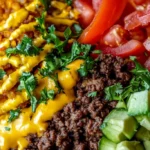
High-Protein Beef Burger Bowls
- Total Time: 35 minutes
- Yield: 4 servings 1x
- Diet: Low-Carb
Description
A low-carb, high-protein twist on classic cheeseburgers! Layer seasoned ground beef, crisp veggies, melted cheese, and zesty sauce over leafy greens or cauliflower rice.
Ingredients
- 1 pound lean ground beef or turkey (90% lean)
- 1 teaspoon salt
- 1 teaspoon black pepper
- 1 teaspoon garlic powder
- 1 teaspoon onion powder
- 4 cups chopped lettuce (romaine or iceberg)
- 2 cups cooked quinoa, brown rice, or cauliflower rice
- 1 cup cherry tomatoes, halved
- 1/2 cup sliced dill pickles
- 1/2 red onion, thinly sliced
- 1 cup shredded cheddar or American cheese (microbial-rennet)
- 1 avocado, sliced
- 1/2 cup low-fat Greek yogurt
- 1 tablespoon mustard
- 1 tablespoon ketchup
- 1/2 teaspoon paprika
- Salt and pepper to taste
Instructions
- Step 1: Heat a skillet over medium-high heat; cook ground beef/turkey with seasonings (salt, pepper, garlic, onion) until browned.
- Step 2: In a large bowl, layer lettuce, quinoa/rice, cherry tomatoes, pickles, and red onion.
- Step 3: Divide cooked beef equally among bowls; top with shredded cheese.
- Step 4: Add avocado slices and spoon homemade burger sauce (mix Greek yogurt, mustard, ketchup, paprika, and seasonings).
- Step 5: Serve fresh or refrigerate for meal prep.
Notes
Skip cheese/avocado for keto. Use turkey for a lighter option. Add fried eggs for extra protein. Meal prep for 4-5 days. Customize with jalapeños or different greens.
- Prep Time: 15 minutes
- Cook Time: 20 minutes
- Category: Dinner
- Method: Stovetop
- Cuisine: American
Nutrition
- Serving Size: 1 bowl
- Calories: 450 kcal
- Sugar: 6 g
- Sodium: 700 mg
- Fat: 20 g
- Saturated Fat: 6 g
- Unsaturated Fat: 14 g
- Trans Fat: 0 g
- Carbohydrates: 15 g
- Fiber: 3 g
- Protein: 30 g
- Cholesterol: 110 mg