
This recipe delivers a traditional Korean-style beef dish featuring tender, thinly sliced meat in a sweet and savory glaze. It is a fast-cooking meal that is perfect for busy weeknights or as a centerpiece for a family gathering.

List of ingredients
- 1 lb thinly sliced beef ribeye or sirloin – use high-quality cuts for the best tenderness.
- 5 cloves garlic, minced – provides a pungent, aromatic base for the marinade.
- 1 medium onion, thinly sliced – adds a natural sweetness and texture.
- 2 green onions, chopped – used for both the marinade and fresh flavor.
- 3 tbsp soy sauce – the primary source of salt and umami.
- 1 tbsp sesame oil – adds a characteristic nutty aroma.
- 1 tbsp sugar – helps with caramelization and sweetness.
- 1 tbsp honey – provides a sticky glaze and depth of flavor.
- 1 tsp ground black pepper – adds a subtle warmth and spice.
- 1 tbsp sesame seeds – used for garnishing and adding a slight crunch.
- 2 tbsp neutral cooking oil (like vegetable oil) – prevents the meat from sticking to the pan.
step-by-step instructions
- Prepare the Beef: Slice the beef into very thin strips. For easier slicing, place the meat in the freezer for about 30 minutes to firm it up before cutting.
- Create the Marinade: In a large mixing bowl, whisk together the soy sauce, sesame oil, sugar, honey, ground black pepper, and minced garlic. Stir consistently until the sugar is completely dissolved.
- Marinate the Beef: Combine the sliced beef, sliced onions, and chopped green onions in the marinade. Toss thoroughly to ensure every piece is coated, then cover and refrigerate for at least 30 minutes, or up to 24 hours for deeper flavor.
- Cook the Bulgogi: Heat a large skillet or grill pan over medium-high heat with the neutral cooking oil. Sear the beef in a single layer, working in batches to avoid overcrowding the pan, for 2-3 minutes per side until edges are caramelized.
- Garnish and Serve: Remove the beef from the heat and sprinkle with sesame seeds. Serve immediately alongside steamed rice or in lettuce wraps.
Pro Techniques for Perfect Beef
Slicing Against the Grain
To ensure the beef is tender, always identify the direction of the muscle fibers, known as the grain. Cut perpendicular to these fibers to shorten them, which prevents the meat from becoming chewy or tough during the searing process.
The Partial Freezing Method
Slicing raw beef thinly can be difficult as the meat tends to slide. By freezing the beef for 30 to 60 minutes, you create a firmer structure that allows for precise, paper-thin slices without the meat losing its shape.
Achieving Optimal Caramelization
Use a heavy-bottomed skillet or cast iron pan to maintain a high, consistent heat. The sugars in the honey and soy sauce will brown quickly; ensure the pan is hot enough that the meat sears immediately upon contact rather than steaming in its own juices.
Ingredient Substitutions
Alternative Beef Cuts
While ribeye is preferred for its fat content, sirloin is a great leaner alternative. You can also use flank steak or top round, though these cuts benefit from a longer marination time to break down tougher fibers.
Honey Swaps for Sweetness
If honey is unavailable, you can use maple syrup or brown sugar. Brown sugar adds a deeper, molasses-like flavor, while maple syrup provides a slightly different floral sweetness, both of which maintain the sticky texture.
Soy Sauce Alternatives
For a gluten-free version, replace soy sauce with tamari. Those seeking a soy-free option can use coconut aminos, though you may need to add a pinch of salt as coconut aminos are typically less salty than traditional soy sauce.
Using Different Proteins
This marinade works well with other proteins like thinly sliced chicken breast or lamb. When using chicken, reduce the marination time to 1-2 hours to prevent the acid and salt from altering the texture of the meat too much.
Flavor Variations
Adding Spicy Gochujang
For those who prefer a spicy kick, stir one tablespoon of gochujang (Korean red pepper paste) into the marinade. This adds a fermented heat and a thicker consistency to the sauce that clings well to the beef.
Incorporating Fresh Ginger
Adding a teaspoon of freshly grated ginger to the marinade introduces a bright, zesty note. Ginger helps cut through the richness of the ribeye and complements the garlic and sesame flavors.
Adding Sliced Carrots
For added color and nutrition, include julienned carrots in the marinating process. The carrots soften during cooking and absorb the sweet and salty flavors of the sauce, providing a nice crunch.
Serving and Pairing Suggestions
Traditional Lettuce Wraps
Serve the beef with large leaves of red leaf lettuce or romaine. Place a portion of beef in the center of a leaf and add a slice of fresh garlic or a dab of ssamjang (seasoned soybean paste) for an authentic experience.
Serving with Steamed Rice
White short-grain rice is the classic accompaniment, as it absorbs the excess marinade from the meat. You can also use brown rice or quinoa for a heartier, nuttier base that complements the savory beef.
Recommended Korean Side Dishes
Pair the bulgogi with kimchi, pickled radishes, or a seasoned cucumber salad. The acidity and fermentation of these side dishes balance the richness and sweetness of the marinated beef.
Preservation and Storage Guide
Refrigerator Storage
Place leftover cooked bulgogi in an airtight glass or plastic container. It will remain fresh and safe to eat in the refrigerator for up to 3 days.
Freezing Instructions
Cooked bulgogi can be frozen for up to 2 months. Ensure the meat is completely cooled before freezing to prevent ice crystals from forming, which can degrade the texture upon thawing.
Maintaining Meat Texture
When storing, avoid adding extra sauce to the meat in the container. This prevents the beef from becoming overly saturated, which can lead to a mushy consistency when reheated.
Reheating Methods
Stovetop Reheating
The best way to reheat bulgogi is in a skillet over low to medium heat. Add a teaspoon of water or oil to the pan to create steam, which keeps the beef moist and prevents it from drying out.
Microwave Reheating
Place the beef in a microwave-safe dish and cover it with a damp paper towel. Heat in 30-second intervals, stirring in between, to ensure even heating without overcooking the edges.
Air Fryer Options
For a slightly crispier finish, reheat the beef in an air fryer at 350 degrees Fahrenheit for 2-3 minutes. This method quickly caramelizes the sugars again, mimicking the original sear.
Make-Ahead Planning
Marinating Overnight
Marinating the beef for 12 to 24 hours allows the flavors to penetrate deeper into the muscle fibers. This result is a more intense taste and a slightly more tender texture due to the action of the salt and sugars.
Batch Prepping
You can prepare multiple batches of marinated beef and freeze them in vacuum-sealed bags. This allows you to simply thaw a portion overnight in the fridge and cook it quickly for a fast dinner.
Pre-slicing the Meat
Slice the beef a day in advance and store it in the freezer in portions. This removes the most time-consuming part of the recipe from your actual cooking day.
Troubleshooting Common Issues
Preventing the Meat from Boiling
If the beef releases too much liquid and begins to boil rather than sear, your pan is likely overcrowded. Cook the meat in smaller batches to ensure the surface temperature stays high enough for browning.
Managing Too Much Liquid
If the marinade is too thin, you can simmer the beef for an extra minute after it is cooked. This allows the liquid to reduce into a thick, sticky glaze that coats the meat.
Correcting Over-sweetness
If the final dish tastes too sweet, balance the flavor by adding a squeeze of fresh lime juice or a splash of rice vinegar. The acidity cuts through the sugar and restores the savory balance.
Common Bulgogi Queries
Can I use another cut of beef?
Yes, sirloin, tenderloin, or even brisket work well as long as they are sliced very thinly. Brisket is tougher, so it requires a longer marinating period to reach the desired tenderness.
Is it necessary to marinate overnight?
While 30 minutes is sufficient for basic flavor, marinating overnight produces a significantly deeper and more complex taste profile. It also further tenderizes the beef.
Can I cook beef bulgogi on a grill?
Absolutely. Using an outdoor grill provides a smoky char that is traditional for bulgogi. Use a grill basket or skewers to ensure the thin slices do not fall through the grates.
Print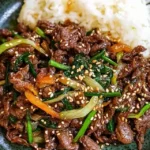
Quick and Savory Korean Beef Bulgogi
- Total Time: 25 minutes
- Yield: 4 servings 1x
- Diet: Dairy-Free
Description
A tender and savory-sweet Korean beef dish featuring thinly sliced ribeye or sirloin marinated in soy, garlic, and sesame, then seared to perfection.
Ingredients
- 1 lb thinly sliced beef ribeye or sirloin
- 5 cloves garlic, minced
- 1 medium onion, thinly sliced
- 2 green onions, chopped
- 3 tbsp soy sauce
- 1 tbsp sesame oil
- 1 tbsp sugar
- 1 tbsp honey
- 1 tsp ground black pepper
- 1 tbsp sesame seeds
- 2 tbsp neutral cooking oil
Instructions
- Step 1: Prepare the beef by cutting it into very thin slices; partially freeze for 30 minutes first to make slicing easier.
- Step 2: Combine soy sauce, sesame oil, sugar, honey, ground black pepper, and minced garlic in a bowl and stir until the sugar dissolves.
- Step 3: Add the sliced beef, sliced onions, and chopped green onions to the marinade, toss to coat, and refrigerate for 30 minutes to overnight.
- Step 4: Heat cooking oil in a large skillet or grill pan over medium-high heat and sear the beef in a single layer for 2-3 minutes per side.
- Step 5: Sprinkle sesame seeds on top and serve hot with steamed rice or lettuce wraps.
Notes
For a slightly spicy kick, add a spoonful of gochujang (Korean red pepper paste) to the marinade. You can substitute the beef with thinly sliced chicken or lamb.
- Prep Time: 15 minutes
- Cook Time: 10 minutes
- Category: Main Dish
- Method: Sautéing
- Cuisine: Korean
Nutrition
- Serving Size: 1 serving
- Calories: 320 kcal
- Sugar: 8 g
- Sodium: 750 mg
- Fat: 18 g
- Saturated Fat: 6 g
- Unsaturated Fat: 12 g
- Trans Fat: 0 g
- Carbohydrates: 15 g
- Fiber: 1 g
- Protein: 23 g
- Cholesterol: 70 mg