
This savory noodle dish combines seasoned ground beef with a rich, sweet, and salty sauce. It is a fast weeknight meal that comes together in just 15 minutes using common pantry ingredients.

List of ingredients
- 1 lb. lean ground beef – provides the protein base.
- 4 tsp minced ginger – adds a fresh, zesty heat.
- 6 cloves garlic, minced – provides a pungent aromatic flavor.
- 1/2 cup low sodium soy sauce – the primary salty element.
- 1/2 cup of beef broth – adds depth and helps the sauce emulsify.
- 1/4 cup brown sugar – balances the salt with sweetness.
- 6 tbsp hoisin sauce – adds thickness and a complex plum-like flavor.
- 1/2 tsp red pepper flakes – introduces a mild spicy kick.
- 1/2 tsp black pepper – provides basic seasoning.
- 1 12 ounce box of Linguine Noodles – the main starch to carry the sauce.
- 4 green onions, diced for garnish – adds a fresh, sharp contrast.
- Toasted Sesame Seeds for garnish – adds nuttiness and visual appeal.
step-by-step instructions
- Brown the meat: In a medium skillet with high sides on the stovetop, brown the ground beef along with the ginger and garlic until beef is cooked through. Use the back of a wooden spoon to make sure meat is broken up well. Drain any fat and return the pan to the stovetop.
- Boil the pasta: While the ground beef is cooking, get a pot of water started for your pasta noodles. Be sure to salt the water well so that your noodles soak up that flavor.
- Mix the sauce: Combine the remaining ingredients — the soy sauce, beef broth brown sugar, red pepper flakes, pepper, and hoisin sauce in a small dish and pour into ground beef mixture.
- Simmer the flavors: Let them saute in the pan for about 3 minutes to allow the ground beef to absorb the flavors.
- Combine and thicken: Once your pasta is done cooking, transfer the noodles to the ground beef mixture. Mix thoroughly and allow to cook for a couple of more minutes to allow the sauce to thicken.
- Garnish and serve: Top with green onions and toasted sesame seeds for the perfect noodle dish!
Optimizing Protein Selection
Using Lean Ground Beef
Selecting a lean cut of beef, such as 90% or 93% lean, reduces the amount of rendered fat in the pan. This prevents the final sauce from becoming greasy and ensures the flavors of the hoisin and soy sauce remain prominent.
Ground Turkey Substitution
Ground turkey is a lighter alternative that works well with these flavors. Since turkey is leaner than beef, you may need to add a tablespoon of vegetable oil to the skillet to prevent the meat from sticking during the browning process.
Ground Chicken Options
Ground chicken provides a neutral base that allows the ginger and garlic to shine. Ensure you cook the chicken until it is fully opaque and slightly browned to develop better flavor through the Maillard reaction.
Noodle Alternatives and Selection
Substituting with Spaghetti
If linguine is unavailable, standard spaghetti is an excellent substitute due to its similar shape and thickness. The sauce clings well to the round surface, providing a consistent flavor in every bite.
Using Rice Noodles for Gluten-Free Needs
Rice noodles are a great option for those avoiding wheat. Be cautious with cooking times, as rice noodles can become mushy quickly; cook them until they are just barely tender before adding them to the beef mixture.
Soba Noodle Variations
Soba noodles made from buckwheat offer an earthier taste and a denser texture. These noodles pair exceptionally well with the soy and ginger components of the Mongolian sauce profile.
Customizing the Sauce Profile
Reducing Sodium Content
To lower the salt levels, replace the low-sodium soy sauce with coconut aminos. This substitution maintains the dark color and savory depth while significantly reducing the overall sodium intake of the dish.
Adjusting the Heat Level
For those who prefer a spicier meal, increase the red pepper flakes to one full teaspoon or add a dollop of Sriracha. Conversely, remove the flakes entirely for a child-friendly version that focuses on the sweetness of the brown sugar.
Alternative Sweeteners
If you do not have brown sugar, honey or maple syrup can be used as a replacement. These liquids provide a similar sweetness but may change the viscosity of the sauce slightly, potentially requiring an extra minute of simmering.
Integrating Fresh Vegetables
Adding Sliced Bell Peppers
Bell peppers add color and a crisp texture to the dish. Sauté them with the ground beef and aromatics for 3 to 4 minutes until they are tender-crisp before adding the liquid sauce ingredients.
Incorporating Sliced Carrots
Thinly sliced or julienned carrots provide a natural sweetness and a healthy crunch. Add them early in the browning process so they have enough time to soften while the beef cooks.
Stirring in Fresh Spinach
Fresh baby spinach can be stirred in during the final two minutes of cooking. The residual heat from the noodles and sauce will wilt the leaves quickly without overcooking them.
Adding Broccoli Florets
Small broccoli florets can be steamed separately or sautéed in the pan with the beef. They absorb the Mongolian sauce well and add significant nutritional value to the meal.
Technical Cooking Tips
Achieving the Perfect Sauce Consistency
The starch from the linguine noodles acts as a natural thickening agent. By simmering the noodles in the sauce for a few minutes, the starches release and bind the liquid to the beef and pasta.
Preventing Overcooked Pasta
Cook your noodles one minute less than the package directions suggest. This ‘al dente’ state ensures the noodles maintain their structure during the final cooking stage in the skillet.
Effective Meat Browning
Avoid crowding the pan too much to ensure the beef browns rather than steams. High heat and a wide skillet allow moisture to evaporate quickly, creating a better sear on the ground beef.
Storage and Preservation
Refrigeration Guidelines
Store leftovers in an airtight container in the refrigerator for up to four days. Ensure the dish is cooled slightly before sealing to prevent excess condensation from making the noodles soggy.
Freezing and Thawing
While the beef and sauce freeze well, noodles often lose their texture and become mushy upon thawing. It is recommended to freeze only the beef and sauce mixture, then cook fresh noodles when reheating.
Best Reheating Methods
Reheat the dish in a skillet over medium heat with a splash of beef broth or water. This restores the moisture to the sauce and prevents the noodles from drying out in the microwave.
Serving and Plating Ideas
Pairing with Fresh Salads
Serve this rich dish alongside a crisp garden salad with a light ginger-soy vinaigrette. The acidity of the salad cuts through the sweetness of the hoisin sauce, balancing the palate.
Adding Extra Garnishes
Beyond green onions and sesame seeds, consider adding sliced fresh chilies for heat or a squeeze of lime juice for brightness. Fresh cilantro also adds a herbal note that complements the ginger.
Side Dish Recommendations
Steamed bok choy or sautéed snap peas make excellent sides. These greens provide a fresh, crisp contrast to the savory, dense nature of the beef noodles.
Troubleshooting Common Issues
What to do if the sauce is too thin
If the sauce has not thickened after adding the noodles, continue simmering on medium-high heat for another 2 to 3 minutes. Stir constantly to prevent the bottom from burning while the liquid reduces.
Managing Excess Greasiness
If the beef releases more fat than expected, use a paper towel to blot the excess oil from the pan after browning. This ensures the sauce adheres to the meat instead of sliding off.
Fixing Sticky Noodles
If the noodles clump together, add a tablespoon of beef broth or water during the mixing phase. This provides enough lubrication to separate the strands without diluting the flavor too much.
Frequently Asked Questions
Can I use a different type of beef?
Yes, you can use any ground beef; however, lean beef is preferred to avoid an oily sauce. If using a higher fat percentage, be sure to drain the fat thoroughly after browning.
How do I make this dish spicier?
Increase the amount of red pepper flakes or add diced fresh jalapeños during the browning stage. You can also drizzle sriracha or chili oil over the plated dish.
Can I make this in a wok?
A wok is ideal for this recipe as its shape allows for efficient stirring and heat distribution. Use the same sequence of steps, taking advantage of the wok’s high heat for the browning process.
Is this suitable for meal prep?
Yes, this dish holds up well for several days. To keep the noodles from absorbing all the sauce, you can store the beef mixture and noodles in separate containers and combine them when reheating.
What if I don’t have hoisin sauce?
You can create a quick substitute by mixing equal parts soy sauce, honey, and a pinch of peanut butter or plum jam. This mimics the sweet and savory profile of hoisin.
Print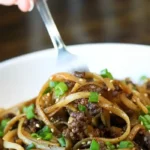
Easy Mongolian Ground Beef Noodles
- Total Time: 15 minutes
- Yield: 8 servings 1x
- Diet: General
Description
This Easy Mongolian Ground Beef Noodles recipe comes together in 15 minutes and is one of the most delicious meals you will make this year.
Ingredients
- 1 lb. lean ground beef
- 4 tsp minced ginger
- 6 cloves garlic, minced
- 1/2 cup low sodium soy sauce
- 1/2 cup beef broth
- 1/4 cup brown sugar
- 6 tbsp hoisin sauce
- 1/2 tsp red pepper flakes
- 1/2 tsp black pepper
- 1 12 ounce box of Linguine Noodles
- 4 green onions, diced for garnish
- Toasted Sesame Seeds for garnish
Instructions
- Step 1: In a medium skillet with high sides on the stovetop, brown the ground beef along with the ginger and garlic until beef is cooked through. Use the back of a wooden spoon to make sure meat is broken up well. Drain any fat and return the pan to the stovetop.
- Step 2: While the ground beef is cooking, get a pot of water started for your pasta noodles. Be sure to salt the water well so that your noodles soak up that flavor.
- Step 3: Combine the remaining ingredients — the soy sauce, beef broth brown sugar, red pepper flakes, pepper, and hoisin sauce in a small dish and pour into ground beef mixture.
- Step 4: Let them saute in the pan for about 3 minutes to allow the ground beef to absorb the flavors.
- Step 5: Once your pasta is done cooking, transfer the noodles to the ground beef mixture. Mix thoroughly and allow to cook for a couple of more minutes to allow the sauce to thicken.
- Step 6: Top with green onions and toasted sesame seeds for the perfect noodle dish!
Notes
The starch from the pasta helps thicken the sauce, eliminating the need for cornstarch.
- Prep Time: 5 minutes
- Cook Time: 10 minutes
- Category: Main Dishes
- Method: Stovetop
- Cuisine: Chinese
Nutrition
- Serving Size: 1 serving
- Calories: 297 kcal
- Sugar: 15 g
- Sodium: 1396 mg
- Fat: 9 g
- Saturated Fat: 3 g
- Unsaturated Fat: 5 g
- Trans Fat: 0 g
- Carbohydrates: 31 g
- Fiber: 2 g
- Protein: 22 g
- Cholesterol: 51 mg