
This ground beef bulgogi is a fast and flavorful meal perfect for busy weeknights. It combines savory, sweet, and spicy Korean-inspired flavors in a single pan for an efficient dinner. Serve it in bowls or lettuce wraps for a versatile and healthy meal.

List of ingredients
- 2 English cucumbers, thinly sliced – used for the quick pickled side.
- 3/4 cup rice vinegar or white vinegar – provides the acidic base for pickling.
- 1 tablespoon honey or sugar – balances the vinegar in the cucumbers.
- Kosher salt and cracked black pepper – essential for seasoning across all components.
- 1 tablespoon olive oil – used for sautéing the shredded carrots.
- 2 (10-ounce) bags shredded carrots – adds color and a sweet, earthy crunch.
- 2 teaspoons olive oil – used for cooking the beef and aromatics.
- 1 cup grated onion – creates a thick, flavorful base for the meat.
- 1 heaping tablespoon minced fresh garlic – adds pungent, aromatic depth.
- 1 heaping tablespoon grated fresh ginger – provides a zesty, warm spice.
- 2 pounds 90% lean ground beef – the main protein, lean to avoid excess grease.
- 3-4 tablespoons honey – adds the signature bulgogi sweetness.
- 3-4 tablespoons low-sodium soy sauce – delivers the salty, umami essence.
- 3 tablespoons gochujang – a Korean chili paste for heat and depth.
- 2 tablespoons non-alcoholic mirin – adds a subtle sweetness and acidity.
- White sesame seeds – for garnishing and a nutty finish.
- Bibb lettuce – used as a fresh wrap or bed for the beef.
- Cooked rice – the filling base for the bowls.
- Sambal oelek – an optional chili garlic sauce for extra spice.
- Kimchi – adds a fermented, tangy contrast to the dish.
step-by-step instructions
- Prepare the pickled cucumbers: In a bowl, whisk together 3/4 cup rice vinegar, 1/2 cup water, 1 tablespoon honey, and 3/4 teaspoon salt until the salt is completely dissolved. Stir in the sliced cucumbers and set them aside to marinate while you prepare the rest of the meal.
- Sauté the carrots: Heat 1 tablespoon of olive oil in a large sauté pan over medium-high heat. Add the shredded carrots and 1/2 teaspoon of salt, stirring occasionally for 10-15 minutes until they are softened and begin to brown or char. Transfer the cooked carrots to a bowl and set aside.
- Cook the aromatics: In a second sauté pan, heat 2 teaspoons of olive oil over medium heat. Add the grated onion, minced garlic, grated ginger, and 1/2 teaspoon of black pepper, cooking for about 3 minutes until the mixture starts to brown.
- Brown the ground beef: Add the 2 pounds of ground beef to the pan with the aromatics. Use a wooden spoon to break the meat into small pieces and cook until it is no longer pink. Drain the excess fat from the pan and then return the beef to the heat.
- Simmer the bulgogi sauce: Stir in 3 tablespoons of honey, 3 tablespoons of soy sauce, 3 tablespoons of gochujang, and 2 tablespoons of non-alcoholic mirin. Cook the mixture for about 3 minutes, stirring constantly until the sauce thickens and glazes the beef.
- Final seasoning and assembly: Taste the beef and add more soy sauce, honey, or gochujang if needed. Serve the bulgogi beef in lettuce cups or over cooked rice, accompanied by the pickled cucumbers and charred carrots. Garnish with sesame seeds and top with sambal oelek or kimchi.
Optimizing Your Cooking Technique
Use a Sauté Pan to Prevent Splattering
A sauté pan is preferable to a standard skillet because it has straight vertical sides. When cooking two pounds of ground beef, these higher walls keep the meat and sauce from splashing over the edges. This ensures a cleaner workspace and allows the sauce to reduce more efficiently.
Achieve a Deep Char on Shredded Carrots
To get the best flavor, let the carrots sit undisturbed for a minute or two between stirs. This allows the natural sugars to caramelize against the hot pan, creating charred edges. Using a high-quality stainless steel pan is ideal for this process as it handles high heat and promotes browning.
Grate Onions for a Thicker Sauce Texture
Using a box grater for the onion instead of dicing it creates a fine pulp. This pulp integrates seamlessly into the ground beef and acts as a natural thickener for the bulgogi sauce. It ensures that every bite of meat is coated in flavor without having large chunks of onion.
Properly Drain Beef to Avoid Greasiness
Even when using 90% lean beef, some fat will render during the browning process. Draining the pan before adding the sauce prevents the honey and soy sauce from separating in the grease. This results in a glossy, clinging glaze rather than an oily sauce.
Ingredient Substitutions and Dietary Needs
Adjusting for Gluten-Free Diets
To make this recipe gluten-free, replace the low-sodium soy sauce with tamari. Since tamari has a deeper, saltier profile, start with two tablespoons and adjust to taste. Ensure you use a certified gluten-free gochujang paste, as some brands contain wheat flour.
Managing Salt and Sugar Levels
The range of 3-4 tablespoons for honey and soy sauce allows you to customize the profile. For a bolder, more traditional taste, use the higher amount. If you prefer a lower-sodium or lower-sugar meal, stick to 3 tablespoons of each and balance with extra ginger or garlic.
Non-Alcoholic Mirin Alternatives
If non-alcoholic mirin is unavailable, you can create a simple substitute. Mix one tablespoon of rice vinegar with one teaspoon of sugar and a splash of water. This mimics the sweet and acidic quality of mirin without using alcohol.
Using Alternative Protein Sources
While ground beef is traditional for this version, ground turkey or chicken can be used. Because these meats are leaner, you may need to add an extra teaspoon of olive oil to prevent sticking. You may also want to add a touch more honey to compensate for the milder flavor of poultry.
Serving and Plating Suggestions
Building a Balanced Rice Bowl
Start with a base of steamed short-grain white rice in a deep bowl. Place the bulgogi beef in the center and arrange the charred carrots and pickled cucumbers in separate sections around the meat. This keeps the flavors distinct while providing a colorful, appetizing presentation.
Using Bibb Lettuce for Fresh Wraps
Bibb or butter lettuce is ideal for wraps due to its soft, cup-like shape. Wash the leaves thoroughly and pat them dry with a paper towel to ensure they stay crisp. Fill each leaf with a scoop of beef and top with a slice of pickled cucumber for a low-carb option.
Incorporating Probiotic Elements
Adding a side of kimchi provides a fermented tang that cuts through the richness of the beef. The acidity of the kimchi complements the sweetness of the honey glaze. For those who enjoy more heat, a drizzle of sambal oelek adds a raw garlic and chili punch.
Adding Nutty Textures with Sesame
Toasting the white sesame seeds in a dry pan for one minute before garnishing enhances their nutty aroma. Sprinkle them generously over the beef and carrots just before serving. This adds a professional finish and a slight crunch to the soft textures of the bowl.
Storage and Reheating Guidelines
Refrigerating Leftovers Safely
Store the ground beef bulgogi in an airtight container in the refrigerator for up to one week. Keep the pickled cucumbers and charred carrots in separate containers to prevent the beef sauce from soaking into the vegetables. This preserves the contrast in textures.
Freezing for Long-Term Storage
The beef mixture freezes well for up to three months. Place it in a freezer-safe bag or container, pressing the meat flat to ensure even freezing and faster thawing. Avoid freezing the cucumbers or lettuce, as they will lose their structure and crispness.
Safe Thawing Procedures
Thaw frozen bulgogi beef in the refrigerator overnight before you plan to eat it. Avoid thawing at room temperature to prevent bacterial growth. Once thawed, the meat can be reheated using the same methods as fresh beef.
Reheating for Optimal Texture
For the best results, reheat the beef in a skillet over medium-low heat with a tablespoon of water to loosen the sauce. Alternatively, use a microwave in 30-second increments, stirring in between. This prevents the honey in the sauce from burning or becoming too sticky.
Common Cooking Questions
What if I cannot find gochujang?
If gochujang is unavailable, you can substitute it with a mixture of sriracha and a pinch of brown sugar. While it lacks the fermented depth of the Korean paste, it provides a similar balance of heat and sweetness. Two to three teaspoons of chili garlic sauce also work well.
How much rice should I cook for six people?
For six servings, cook approximately 1.5 cups of dry white rice, which will yield about 4.5 cups of cooked rice. This provides a sufficient base for the beef and vegetables without overwhelming the main protein.
Can I use a different type of vinegar for the cucumbers?
White distilled vinegar can be used if rice vinegar is not available. However, white vinegar is more pungent and acidic. You may want to add an extra teaspoon of honey or sugar to mellow out the sharpness of the pickling liquid.
Why is my beef not browning?
If the beef is steaming rather than browning, the pan may be too crowded or the heat too low. Ensure you are using a medium-high heat setting and give the meat room to sear. Draining the fat periodically also helps the meat brown more effectively in the remaining oil.
Print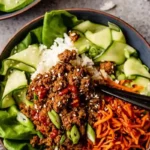
Savory Ground Beef Bulgogi Rice Bowls
- Total Time: 40 minutes
- Yield: 6 servings 1x
- Diet: General
Description
Savory, spicy and slightly sweet, these ground beef bulgogi rice bowls are the perfect weeknight meal. Adaptable, versatile, quick and easy—everything a great weeknight dinner should be!
Ingredients
- 2 english cucumbers, thinly sliced
- ¾ cup rice vinegar or white vinegar
- 1 tablespoon honey, or sugar
- kosher salt and cracked black pepper
- 1 tablespoon olive oil
- 2 (10-ounce) bags shredded carrots
- 2 teaspoons olive oil
- 1 cup grated onion
- 1 heaping tablespoon minced fresh garlic
- 1 heaping tablespoon grated fresh ginger
- 2 pounds 90% lean ground beef
- 3–4 tablespoons honey
- 3–4 tablespoons low-sodium soy sauce
- 3 tablespoons gochujang
- 2 tablespoons alcohol-free mirin
- white sesame seeds
- bibb lettuce
- cooked rice
- sambal oelek (chili garlic sauce)
- kimchi
Instructions
- Pickled Cucumbers: Whisk together ¾ cup rice vinegar, ½ cup water, 1 tablespoon honey and ¾ teaspoon salt until salt has dissolved; add 2 sliced cucumbers and set aside.
- Carrots: Heat 1 tablespoon oil in a large sauté pan over medium-high; add 2 (10-ounce) bags carrots and ½ teaspoon salt; cook, stirring occasionally, until softened and starting to brown, about 10–15 minutes.
- Aromatics: Heat remaining 2 teaspoons oil in a second sauté pan over medium; add 1 cup grated onion, heaping tablespoon garlic, heaping tablespoon ginger and ½ teaspoon black pepper; cook until starting to brown, 3 minutes.
- Brown Beef: Add 2 pounds ground beef and cook, breaking up into small pieces with a wooden spoon, until no longer pink; drain beef.
- Simmer Sauce: Return beef to sauté pan and stir in 3 tablespoons honey, 3 tablespoons soy sauce, 3 tablespoons gochujang, and 2 tablespoons alcohol-free mirin; cook until thickened, about 3 minutes.
- Serve: Season to taste with additional soy sauce and honey; serve bulgogi in lettuce cups with pickled cucumbers, carrots, and rice; top with sambal oelek if desired.
Notes
For a gluten-free version, use tamari instead of soy sauce and gluten-free gochujang. For 6 people, cook 1½ cups white rice.
- Prep Time: 10 minutes
- Cook Time: 30 minutes
- Category: Main Dish
- Method: Sautéing
- Cuisine: Korean
Nutrition
- Serving Size: 1 serving
- Calories: 333 kcal
- Sugar: 14 g
- Sodium: 1075 mg
- Fat: 13 g
- Saturated Fat: 5 g
- Unsaturated Fat: 8 g
- Trans Fat: 0 g
- Carbohydrates: 24 g
- Fiber: 4 g
- Protein: 35 g
- Cholesterol: 93 mg