
This quick dinner combines tender chicken and al dente pasta in a rich basil pesto cream sauce. It is a practical 30-minute meal that uses simple pantry staples to create a restaurant-quality result.

List of ingredients
- 1 pound boneless, skinless chicken breast, cut into bite sized pieces – ensures even cooking.
- Salt and ground black pepper to taste – for basic seasoning.
- 1/2 teaspoon Italian seasoning – adds a blend of traditional herbs.
- 1 tablespoon all-purpose flour – helps brown the chicken and thicken the sauce.
- 1 tablespoon olive oil – used for searing the protein.
- 1 tablespoon butter – adds richness to the sautéed aromatics.
- 1 small onion, chopped – provides a savory base.
- 4 garlic cloves, minced – enhances the depth of flavor.
- 1 cup chicken broth – used to deglaze the pan.
- 12 ounces basil pesto – the primary flavor component.
- 1/2 cup half and half – creates the creamy consistency.
- 1/2 teaspoon garlic powder – adds an extra layer of garlic flavor.
- 1/2 cup Parmesan cheese – adds a salty, umami finish.
- 8 ounces pasta – use a shape that holds sauce well.
- Chopped basil for garnish (optional) – adds a fresh look and scent.
step-by-step instructions
- Boil Pasta: Bring a large pot of salted water to a boil. Add the pasta and cook according to package directions. Reserve 1/2 cup cooking water, then drain.
- Prepare Chicken: While the pasta is cooking, season the chicken with salt, pepper and Italian seasoning. Add the flour and toss to coat the pieces thoroughly.
- Sear Protein: Heat the oil in a large skillet over medium-high heat. Add the chicken and cook, stirring occasionally, for about 5-7 minutes or until browned. Remove from the skillet and reserve.
- Sauté Aromatics: To the same skillet, add the butter and saute the onions for about 3-4 minutes or until they become translucent. Add the garlic and cook for one minute.
- Build the Sauce: Deglaze the skillet by adding the chicken broth. Scrape the bottom of the pan to remove the brown bits. Bring to a boil, then stir in the pesto and lower the heat. Add the half and half and garlic powder, simmering for 2-3 minutes.
- Combine Ingredients: Return the chicken and any collected juices to the skillet and toss to coat. Simmer for 3-4 minutes. Stir in the Parmesan cheese and mix well.
- Final Toss: Add the cooked pasta and toss gently. Add some of the reserved cooking water only if a creamier consistency is desired. Serve warm garnished with chopped basil if desired.
Protein Alternatives and Swaps
Using Boneless Chicken Thighs
Substituting thighs for breasts provides a juicier result and more flavor. Thighs are more forgiving during the searing process and less likely to dry out. Adjust the cooking time slightly as thighs may take an extra minute to brown.
Using Turkey Breast
Lean turkey breast is an excellent substitute that mirrors the texture of chicken. Cut the turkey into small, uniform cubes to ensure they cook quickly. Season generously with the Italian seasoning to maintain the flavor profile.
Substituting with Chicken Sausage
Pre-cooked chicken sausage can be sliced into rounds and browned in the skillet. Skip the flour coating since the sausage is already processed. This adds a smokier, more robust flavor to the final dish.
Plant-Based Protein Options
Extra-firm tofu or plant-based chicken strips work well for a meatless version. Press the tofu to remove excess water before seasoning and searing. Use a vegetable-based broth instead of chicken broth for the sauce.
Selecting the Best Pasta Shape
Penne Rigate for Sauce Grip
Penne with ridges (rigate) is ideal because the grooves trap the creamy pesto sauce. The hollow center also allows the sauce to coat the inside of the noodle. This ensures every bite is saturated with flavor.
Cavatappi and Rigatoni Options
Spiral-shaped cavatappi or wide rigatoni provide more surface area for the sauce to cling to. These shapes are sturdy and hold up well when tossed with heavy proteins. They are great choices for heartier dinner versions.
Fettuccine for a Classic Feel
Fettuccine creates a more traditional Italian presentation. Long, flat noodles are perfect for cream-based sauces that coat the strands evenly. Ensure you toss the pasta thoroughly to avoid clumps of sauce.
Gluten-Free Pasta Alternatives
Brown rice or chickpea pasta are suitable gluten-free substitutes. Cook these slightly under the package directions as they tend to soften more quickly in the sauce. Be mindful that some gluten-free pastas release more starch into the water.
Enhancing the Dish with Vegetables
Adding Fresh Baby Spinach
Stir in two cups of fresh baby spinach during the last minute of simmering the sauce. The heat from the pasta will wilt the spinach perfectly. This adds a boost of nutrients and a pop of green color.
Incorporating Sautéed Mushrooms
Brown sliced cremini or button mushrooms in the skillet before adding the onions. Mushrooms add an earthy depth and a meaty texture to the meal. Cook them until the moisture has evaporated and they are golden brown.
Mixing in Cherry Tomatoes
Halve a handful of cherry tomatoes and stir them in at the very end. The slight acidity of the tomatoes cuts through the richness of the cream and pesto. They add a bright, fresh contrast to the savory sauce.
Adding Frozen Peas
Stir in frozen peas along with the cooked chicken and Parmesan. Peas only need a minute or two of heat to warm through. They provide a sweetness that complements the salty Parmesan cheese.
Mastering the Sauce Texture
Utilizing Reserved Pasta Water
The starchy water from the pasta pot acts as a natural binder. If the sauce appears too thick or separates, stir in a tablespoon of this water at a time. This creates a glossy, cohesive emulsion that clings to the noodles.
Adjusting the Creaminess
For a lighter sauce, replace the half and half with whole milk. If you prefer an ultra-rich experience, use heavy cream. Be aware that heavy cream will make the dish significantly more filling.
Preventing Sauce Separation
Keep the sauce at a gentle simmer rather than a rolling boil. High heat can cause the dairy and the oils in the pesto to separate. Lowering the heat once the liquids are combined ensures a smooth texture.
Managing Salt Levels
Both the pesto and Parmesan cheese contain significant amounts of salt. Taste the sauce before adding extra salt to the chicken or the final dish. Use black pepper to add depth without increasing sodium.
Professional Cooking Techniques
The Importance of Deglazing
Adding chicken broth to the hot pan removes the caramelized bits, known as fond. These brown bits contain concentrated flavor from the seared chicken. Scraping them into the sauce adds a professional level of savory depth.
Properly Searing the Chicken
Avoid overcrowding the skillet when browning the chicken. If the pan is too full, the meat will steam rather than sear. Cook in batches if necessary to ensure a golden-brown crust on all sides.
Tossing vs. Stirring
Use a gentle tossing motion when combining the pasta and sauce. Over-stirring can break the pasta noodles or overwork the sauce. Tossing ensures an even coat without damaging the ingredients.
Timing the Garlic Addition
Add the minced garlic only after the onions are translucent. Garlic burns much faster than onions and can become bitter. Cooking it for just one minute is enough to release its aromatic oils.
Storage and Freshness Guide
Refrigerator Storage
Store leftovers in an airtight container in the refrigerator for up to three days. Keep the pasta and sauce together to prevent the noodles from drying out. Ensure the food is cooled slightly before sealing the lid.
Best Reheating Method
Reheat the pasta in a skillet over low heat on the stove. Add a splash of milk or chicken broth to loosen the sauce back to its original consistency. Avoid high heat, which can make the sauce grainy.
Microwave Reheating Tips
Heat in short 30-second intervals, stirring in between. Add a teaspoon of water or milk before heating to maintain moisture. Stirring prevents hot spots and helps the sauce emulsify again.
Freezing Considerations
Freezing is not recommended for this specific recipe. Dairy-based sauces often separate or become grainy upon thawing. For the best quality, consume the dish within the recommended refrigerated window.
Choosing the Right Pesto
Store-Bought vs Homemade
High-quality store-bought pesto is convenient and consistent for weeknight meals. Homemade pesto offers a fresher, more vibrant basil flavor. Either option works well, provided the pesto is well-emulsified.
Enhancing Commercial Pesto
If using a budget-friendly store pesto, stir in a teaspoon of lemon juice. This brightens the flavor and mimics the acidity of fresh basil. A pinch of extra garlic powder can also boost the savoriness.
Pesto Nut Alternatives
If you are avoiding pine nuts, look for pesto made with walnuts or almonds. These provide a similar creamy texture and earthy taste. Ensure the pesto is finely blended to avoid large chunks in the sauce.
Frequently Asked Questions
Can I use rotisserie chicken?
Yes, you can use shredded rotisserie chicken. Simply skip the searing step and stir the cooked chicken into the sauce during the final simmering stage.
What if the sauce is too thick?
Stir in a small amount of the reserved pasta water or a tablespoon of milk. Continue adding liquid until you reach your preferred consistency.
How can I make this dish lighter?
Use whole milk instead of half and half and increase the ratio of vegetables. You can also use whole grain pasta for added fiber and nutrients.
What side dishes pair well with this?
Garlic bread or a crisp green salad with a lemon vinaigrette are excellent pairings. Roasted broccoli or sautéed green beans also complement the creamy sauce.
Can I use a different cheese?
Pecorino Romano is a great alternative to Parmesan for a saltier, sharper taste. Freshly grated mozzarella can be stirred in at the end for a cheesier, gooey texture.
Print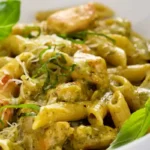
Savory Chicken Pesto Pasta with Creamy Basil Sauce
- Total Time: 30 minutes
- Yield: 6 servings 1x
- Diet: General
Description
This creamy Chicken Pesto Pasta recipe is made with tasty chicken and tender pasta smothered in a luscious cream and basil pesto sauce. This easy chicken pesto pasta recipe is made with pantry staples and comes together in 30 minutes.
Ingredients
- 1 pound boneless, skinless chicken breast, cut into bite sized pieces
- Salt and ground black pepper to taste
- 1/2 teaspoon Italian seasoning
- 1 tablespoon all-purpose flour
- 1 tablespoon olive oil
- 1 tablespoon butter
- 1 small onion, chopped
- 4 garlic cloves, minced
- 1 cup chicken broth
- 12 ounces basil pesto
- 1/2 cup half and half
- 1/2 teaspoon garlic powder
- 1/2 cup Parmesan cheese
- 8 ounces pasta
- Chopped basil for garnish (optional)
Instructions
- Step 1: Bring a large pot of salted water to a boil. Add the pasta and cook according to package directions. Reserve 1/2 cup cooking water, then drain.
- Step 2: While the pasta is cooking, season the chicken with salt, pepper and Italian seasoning. Add the flour and toss to coat.
- Step 3: Heat the oil in a large skillet over medium-high heat. Add the chicken and cook, stirring occasionally, for about 5-7 minutes or until browned. Remove from the skillet and reserve.
- Step 4: To the same skillet, add the butter and saute the onions for about 3 – 4 minutes or until they become translucent. Add the garlic and cook for a minute.
- Step 5: Deglaze the skillet by adding the chicken broth. Scrape the bottom of the pan to remove the brown bits. Bring to a boil. Stir in the pesto and lower the heat. Add the half and half and garlic powder. Simmer for about 2-3 minutes.
- Step 6: Return the chicken and any collected juices to the skillet and toss to coat. Simmer for 3-4 minutes. Stir in the Parmesan cheese and mix well.
- Step 7: Add the cooked pasta and toss gently. Add some of the cooking water only if a creamier consistency is desired. Serve warm garnished with chopped basil (optional).
Notes
When cooking this creamy pasta recipe, make sure the sauce doesn’t boil as it can separate. Pasta dishes are best served immediately after tossing the pasta with the sauce. If your pasta gets too dry, add additional pasta cooking water to make the pasta creamier again.
- Prep Time: 10 minutes
- Cook Time: 20 minutes
- Category: Dinner
- Method: Stove-top
- Cuisine: Italian
Nutrition
- Serving Size: 1 serving
- Calories: 557 kcal
- Sugar: 3 g
- Sodium: 922 mg
- Fat: 32 g
- Saturated Fat: 8 g
- Unsaturated Fat: 24 g
- Trans Fat: 0 g
- Carbohydrates: 37 g
- Fiber: 2 g
- Protein: 27 g
- Cholesterol: 71 mg