
This quick Chinese-style stir fry combines lean ground beef and crisp cabbage for a nutrient-dense meal. It is designed for efficiency, taking only 25 minutes from preparation to plating.

List of ingredients
- 1 lb Ground Beef – provides richness; lean ground turkey is a great substitute.
- 4 cups Cabbage – adds crunch and volume; you can also use kale or bok choy.
- 8 oz Shiitake Mushrooms – offers an earthy flavor; button mushrooms work in a pinch.
- 4 scallions Green Onions – provides a mild onion flavor; regular onions can be used.
- 3 tbsp Soy Sauce – delivers umami and saltiness; tamari is a gluten-free alternative.
- 2 tbsp Sesame Oil – imparts nutty depth; vegetable oil can be used for allergies.
- 3 cloves Garlic – infuses aromatic flavor; use fresh garlic for the best taste.
- 1 tbsp Ginger – adds warmth and spice; ground ginger can substitute fresh.
step-by-step instructions
- Chop Vegetables: Begin by finely chopping the cabbage, green onions, shiitake mushrooms, garlic, and ginger to ensure a quick cooking process.
- Heat Oil: In a large pan or wok, heat the sesame oil over medium-high heat until it shimmers to create a nutty base.
- Cook Beef: Add the ground beef to the pan and cook until browned and fully cooked through, which takes about 5-7 minutes. Use a spatula to break the meat into small pieces.
- Add Aromatics: Stir in the minced garlic and ginger, cooking for 1-2 minutes until fragrant but not burnt.
- Sauté Vegetables: Toss in the shiitake mushrooms and chopped cabbage, sautéing for 3-5 minutes until the cabbage is tender-crisp.
- Mix Sauce: Pour in the soy sauce and stir everything together until the ingredients are well combined.
- Final Touch: Serve immediately over rice or enjoy solo, garnishing with additional green onions for a fresh pop of flavor.
Cooking Techniques for Optimal Results
Use a High-Heat Wok for Better Searing
A wok is ideal for this recipe because its steep sides allow for rapid evaporation of moisture. This ensures the beef sears quickly rather than steaming in its own juices. If using a skillet, ensure it is heavy-bottomed to maintain a consistent temperature.
Preventing Beef from Stewing
Adding too much meat to a cold pan can cause the temperature to drop sharply, leading the beef to release water and stew. Heat your oil until it is shimmering before adding the meat. If you are doubling the recipe, cook the beef in two batches to maintain high heat.
Maintaining Cabbage Texture
The goal for the cabbage is a tender-crisp texture, meaning it is cooked through but still retains a snap. Avoid overcooking the vegetables, as this breaks down the cellular structure and makes the dish soggy. Remove the pan from heat the moment the cabbage turns translucent.
Precise Garlic Timing
Garlic has a lower burn point than beef and mushrooms, which can lead to a bitter taste if charred. Always add the garlic and ginger after the beef is browned. Stir them constantly for 60 to 120 seconds to release their oils without burning them.
Protein and Vegetable Substitutions
Switching to Ground Turkey
Lean ground turkey is a healthy alternative that pairs well with the savory soy sauce. Since turkey is leaner than beef, you may need to add one extra tablespoon of oil to the pan. This prevents the meat from sticking and maintains a moist texture.
Using Tofu for a Plant-Based Version
For a vegetarian option, use extra-firm tofu that has been pressed to remove excess water. Crumble the tofu with your hands to mimic the texture of ground beef. Sauté the tofu until the edges are golden brown before proceeding with the aromatics.
Replacing Cabbage with Kale
Kale provides a nutritional boost and a heartier texture than cabbage. Because kale is more fibrous, it requires an additional 2-3 minutes of sautéing to soften. Ensure you remove the tough center stems before chopping the leaves.
Using Bok Choy as an Alternative
Bok choy offers a slightly sweeter flavor and a satisfying crunch. Separate the thick white stems from the green leaves. Sauté the stems first for several minutes, then add the leaves at the very end since they wilt almost instantly.
Button Mushroom Swaps
If shiitake mushrooms are unavailable, button or cremini mushrooms are excellent substitutes. Button mushrooms have a higher water content, so sauté them on higher heat. This helps evaporate the liquid quickly and prevents the stir fry from becoming watery.
Enhancing the Flavor Profile
Adjusting Saltiness with Tamari
For those following a gluten-free diet, tamari is a direct replacement for soy sauce. It provides a similar umami profile but is brewed without wheat. Use the same quantity as the original soy sauce called for in the recipe.
Adding Heat with Sriracha
To introduce a spicy kick, stir in a tablespoon of sriracha or red pepper flakes during the final mixing stage. Adding heat at the end preserves the bright, vinegary tang of the sauce. For a milder heat, use a dash of white pepper during the beef browning phase.
Incorporating Five-Spice Powder
A pinch of Chinese five-spice powder adds warmth and a complex aromatic layer. Because it contains strong notes of cinnamon and cloves, use it sparingly to avoid overpowering the soy sauce. Stir it in with the garlic and ginger for the best infusion.
Adding Sesame Seeds for Texture
Toasted sesame seeds add a delicate crunch and enhance the nuttiness of the sesame oil. Toast them in a dry pan over medium heat for 60 seconds until golden. Sprinkle them over the dish just before serving as a garnish.
Using Oyster Sauce for Depth
Oyster sauce adds a thicker, glossy glaze and a deep, savory sweetness. Replace one tablespoon of the soy sauce with one tablespoon of oyster sauce. This creates a richer sauce that clings more effectively to the beef and vegetables.
Recommended Serving Pairings
Steamed Jasmine Rice
Fluffy jasmine rice is the traditional accompaniment, as its floral aroma balances the savory notes of the stir fry. Use a 1:1.5 rice-to-water ratio for a light, non-sticky result. The rice absorbs the excess soy sauce, ensuring no flavor goes to waste.
Low-Carb Cauliflower Rice
For a low-carb or keto-friendly meal, serve the stir fry over sautéed cauliflower rice. Sauté the cauliflower grains in a separate pan with a touch of oil to remove the raw cabbage scent. This provides a neutral base that lets the beef flavors shine.
Refreshing Cucumber Salad
A side of sliced cucumbers tossed in rice vinegar and a pinch of sugar creates a bright contrast. The acidity of the salad cuts through the richness of the beef and sesame oil. This balance makes the meal feel lighter and more refreshing.
Savory Miso Soup
A bowl of warm miso soup complements the Asian flavors and provides hydration. Use white miso for a milder taste or red miso for a saltier, more intense pairing. Adding small cubes of tofu to the soup increases the protein content of the meal.
Storage and Meal Prep Advice
Refrigeration Guidelines
Store leftovers in a glass airtight container to maintain freshness for up to four days. Glass is preferred over plastic because the soy sauce can stain plastic containers. Allow the stir fry to cool completely before sealing to prevent condensation from making the vegetables soggy.
Freezer-Safe Storage
This stir fry can be frozen for up to two months in airtight containers or freezer bags. Leave a small amount of headspace in the container to allow for expansion during freezing. Portion the meal into individual servings for easier thawing and reheating.
Proper Reheating Methods
Reheat the stir fry in a skillet over medium heat instead of using a microwave. Add a tablespoon of water or vegetable broth to the pan to restore moisture. Stir frequently until the beef is heated through and the sauce has emulsified.
Pre-Chopping Vegetables
Save time on busy nights by chopping the cabbage, mushrooms, and scallions in advance. Store the chopped vegetables in an airtight container with a damp paper towel. This technique keeps the cabbage crisp for up to three days in the refrigerator.
Troubleshooting Common Issues
Fixing Soggy Vegetables
Sogginess usually occurs when the pan is overcrowded or the heat is too low. To fix this, cook the vegetables in smaller batches to ensure they sear rather than steam. Always use high heat and keep the ingredients moving with a spatula.
Managing Excess Grease
Depending on the fat content of the beef, you may find excess grease in the pan. Carefully tilt the pan and spoon out the excess fat before adding the garlic and ginger. This ensures the aromatics fry in a thin layer of oil rather than boiling in beef fat.
Correcting Over-Salted Dishes
If the soy sauce makes the dish too salty, balance it with a teaspoon of brown sugar or a splash of rice vinegar. The sweetness or acidity neutralizes the saltiness of the soy. Adding extra steamed cabbage can also dilute the salt concentration.
Frequently Asked Questions
How do I choose ripe cabbage?
Select a head of cabbage that feels heavy for its size and has firm, tightly packed leaves. Avoid heads with dark spots, wilting edges, or soft patches, as these indicate the cabbage is past its prime and may have a bitter taste.
Can I make this dish in advance?
You can prep all the ingredients and the sauce ahead of time, but the cooking should be done fresh. Stir frying relies on high heat and short cooking times to maintain texture. If you cook it in advance, follow the refrigeration and reheating tips provided above.
Can I freeze this stir fry?
Yes, the stir fry freezes well for up to two months. Cool it completely before portioning into airtight containers. When reheating, use a skillet with a splash of water to bring back the original texture and flavor of the sauce.
Print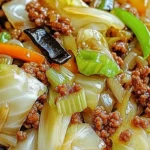
Savory Chinese Ground Beef and Cabbage Stir Fry
- Total Time: 25 minutes
- Yield: 4 servings 1x
- Diet: Low-Carb
Description
A quick and easy Chinese Ground Beef and Cabbage Stir Fry, ready in just 25 minutes, perfect for busy evenings.
Ingredients
- 1 lb Ground Beef
- 4 cups Cabbage
- 8 oz Shiitake Mushrooms
- 4 scallions Green Onions
- 3 tbsp Soy Sauce
- 2 tbsp Sesame Oil
- 3 cloves Garlic
- 1 tbsp Ginger
Instructions
- Chop Vegetables: Begin by finely chopping the cabbage, green onions, shiitake mushrooms, garlic, and ginger.
- Heat Oil: In a large pan or wok, heat sesame oil over medium-high heat until it shimmers.
- Cook Beef: Add the ground beef to the pan. Cook until browned and fully cooked through, about 5-7 minutes.
- Add Aromatics: Stir in the minced garlic and ginger. Cook for 1-2 minutes until fragrant.
- Sauté Vegetables: Toss in the shiitake mushrooms and chopped cabbage. Sauté for about 3-5 minutes.
- Mix Sauce: Pour in the soy sauce and stir everything together until well combined.
Notes
Optional: Garnish with additional green onions for a fresh pop of flavor. Store leftovers in an airtight container for up to 4 days.
- Prep Time: 10 minutes
- Cook Time: 15 minutes
- Category: Dinner
- Method: Stir Fry
- Cuisine: Chinese
Nutrition
- Serving Size: 1 serving
- Calories: 350 kcal
- Sugar: 2 g
- Sodium: 600 mg
- Fat: 20 g
- Saturated Fat: 5 g
- Unsaturated Fat: 12 g
- Trans Fat: 0 g
- Carbohydrates: 10 g
- Fiber: 3 g
- Protein: 30 g
- Cholesterol: 80 mg