
This high-protein meal is a fast, one-pan dinner that comes together in just 15 minutes. It combines lean ground beef and frozen broccoli with a savory Asian-inspired sauce and ramen noodles.

List of ingredients
- 1 teaspoon sesame oil – used for sautéing and adding a nutty aroma.
- 1 pound lean ground beef – the primary protein source for the dish.
- 3 cloves garlic, finely minced or pressed – adds pungent aromatic flavor.
- 4 tablespoons low sodium soy sauce – provides the salty, umami base of the sauce.
- 1 tablespoon minced ginger – adds a zesty, fresh contrast to the beef.
- 3 tablespoons brown sugar – balances the saltiness of the soy sauce.
- Sriracha (optional) – adds heat according to your preference.
- 2 cups frozen broccoli florets – provides a quick-cooking vegetable component.
- 6 ounces ramen noodles (discard the seasoning packets) – the main carbohydrate source.
- 1 2/3 cup beef stock – used to hydrate the noodles and create a cohesive sauce.
- Chopped green onions, toasted sesame seeds, and red pepper flakes (optional) – used for final garnish and texture.
step-by-step instructions
- Heat the pan: Place a large non-stick skillet over medium-high heat and pour in the sesame oil. Ensure the oil is shimmering before adding the meat to prevent sticking.
- Brown the beef: Add the ground beef to the hot skillet. Cook for 6-10 minutes, breaking the meat apart with a spoon, until it is browned and almost cooked through.
- Create the sauce: Stir in the minced garlic, low sodium soy sauce, minced ginger, brown sugar, and optional sriracha. Mix well until the ingredients combine and a small amount of thick sauce forms.
- Combine ingredients: Add the frozen broccoli florets, the dry ramen noodles, and the beef stock to the pan. Immediately cover the skillet with a tight-fitting lid.
- Steam and cook: Cook for 3-5 minutes over medium heat. This process steams the broccoli and re-hydrates the noodles. Once the broccoli is soft and noodles are tender, remove the lid and toss everything together until the sauce coats the noodles.
- Serve: Portion the meal into bowls. Top with optional chopped green onions, toasted sesame seeds, and red pepper flakes for additional flavor.
Optimal Cooking Guidelines
Selecting the Right Ramen Noodles
Use standard instant ramen blocks and always discard the included flavor packets. These noodles are pre-fried and designed to rehydrate rapidly, which is essential for the one-pan steaming method. Fresh ramen or thick udon noodles require longer cooking times and will not absorb the sauce at the same rate.
Using Frozen Instead of Fresh Broccoli
Frozen broccoli florets are recommended because they soften quickly under steam and release a small amount of moisture. This moisture helps the ramen noodles cook evenly and prevents the sauce from becoming too thick. If using fresh broccoli, cut it into very small pieces to ensure it cooks through in the 5-minute window.
The Benefit of Low-Sodium Soy Sauce
Instant ramen noodles often contain salt within the dough itself. Using a low-sodium version of soy sauce prevents the final dish from becoming overly salty as the liquid reduces. You can always add a pinch of salt at the end if the flavor needs more depth.
Incorporating Sesame Oil for Aroma
Sesame oil has a distinct toasted flavor and a low smoke point, making it ideal for the initial sauté. Even a small amount provides the characteristic scent associated with Asian takeout. It helps emulsify the sauce and gives the beef a glossy finish.
Breaking the Ramen Blocks
Snapping the noodle blocks in half before adding them to the pan ensures they fit better and cook more evenly. This prevents dry clumps from forming in the center of the block. It also makes the final dish easier to stir and serve, especially for children.
Maintaining the Steam with a Lid
Keeping the pan covered during the final cooking stage is critical. The trapped steam is what cooks the broccoli and softens the noodles simultaneously without needing a separate pot of boiling water. Removing the lid too early will lead to dry noodles and undercooked vegetables.
Ingredient Alternatives and Variations
Swapping Ground Beef for Other Proteins
Ground turkey or ground chicken are suitable lean alternatives to beef. Since these meats have less fat, add an extra tablespoon of oil to the pan to prevent sticking. The cooking time remains the same, though turkey may require slightly more seasoning.
Adjusting the Heat Levels
For those who prefer a spicier dish, increase the amount of sriracha or add a teaspoon of chili garlic sauce during the sauce step. You can also drizzle chili oil over the final bowls. For a mild version, omit the sriracha and red pepper flakes entirely.
Reducing the Sugar Content
If you prefer a more savory profile, reduce the brown sugar to one or two tablespoons. You can substitute the brown sugar with honey or maple syrup for a different type of sweetness. Always taste the sauce before adding the noodles to ensure the balance is correct.
Adding More Vegetable Varieties
You can incorporate shredded carrots, sliced snap peas, or finely diced bell peppers alongside the broccoli. These vegetables should be cut small to ensure they cook within the same timeframe as the ramen. Avoid using hard root vegetables that require boiling.
Trying Different Noodle Types
Thin egg noodles or quick-cooking wheat noodles can work if ramen is unavailable. Be aware that these may require a slight adjustment in the amount of beef stock used. Always monitor the liquid level to ensure the noodles are fully submerged during the steaming process.
Making the Dish Gluten-Free
Replace the standard soy sauce with tamari or coconut aminos to remove gluten. You must also use certified gluten-free ramen noodles or rice noodles. If using rice noodles, reduce the steaming time to avoid overcooking them into a mushy texture.
Preservation and Warming Directions
Refrigeration Guidelines
Store any leftovers in an airtight container in the refrigerator for up to three days. The noodles will continue to absorb the sauce as they sit, which is a natural process. Ensure the container is sealed tightly to prevent the noodles from drying out.
Effective Reheating Techniques
When reheating, add a splash of water or additional beef stock to the noodles. This loosens the starch and restores the saucy consistency. Warm the dish gently on a stovetop over medium heat or in the microwave, stirring halfway through.
Freezing the Beef Base
Freezing the fully assembled dish is not recommended as the noodles become mushy upon thawing. Instead, you can cook the beef and sauce mixture and freeze that portion. When ready to eat, thaw the beef, reheat it in a pan, and then add the stock, noodles, and broccoli as directed.
Managing Noodle Texture During Storage
Because ramen noodles are highly absorbent, they will thicken the sauce significantly overnight. To prevent the dish from becoming a solid mass, undercook the noodles slightly if you know you will be saving leftovers. This provides a buffer for the absorption that happens in the fridge.
Common Cooking Challenges
Preventing Mushy Noodles
Mushy noodles usually occur when the dish is cooked for too long after the stock is added. Start checking the noodle texture at the three-minute mark. Once they are tender but still have a slight bite, remove them from the heat immediately.
Fixing a Sauce That Is Too Dry
If the sauce evaporates too quickly or the noodles absorb all the liquid, stir in a tablespoon of beef stock or water. Do this over low heat to avoid overcooking the vegetables. The goal is a glossy coating rather than a soup.
Balancing Excessive Saltiness
If the dish tastes too salty, add a squeeze of fresh lime juice or a small amount of unsweetened applesauce. The acidity or sweetness helps neutralize the sodium. Adding more frozen broccoli can also help dilute the salt concentration.
Ensuring Beef is Properly Browned
Avoid overcrowding the pan when browning the beef, as this causes the meat to steam in its own juices rather than sear. Use a large skillet and maintain medium-high heat. Proper browning creates a deeper flavor profile through the Maillard reaction.
Frequently Asked Questions
Can I make this recipe ahead of time?
The dish is best served fresh, but it can be prepared and stored in the fridge for up to three days. Always add a small amount of liquid when reheating to restore the sauce’s texture.
Can I use the ramen seasoning packets?
No, the seasoning packets are not used in this recipe. The homemade sauce consisting of soy sauce, ginger, garlic, and brown sugar provides a more complex and controlled flavor profile.
Can I double this recipe?
Yes, you can double the ingredients, but you must use a very large pot or a deep wok. Using a standard skillet for a double batch will lead to overcrowding, which prevents the beef from browning and the noodles from cooking evenly.
Is this recipe kid-friendly?
This meal is very kid-friendly if you omit the sriracha and red pepper flakes. The sweetness from the brown sugar typically appeals to children, and the noodles are a familiar texture.
Can I make this with leftover cooked beef?
Yes, if using pre-cooked beef, skip the browning step. Start by heating the oil, adding the garlic and sauce ingredients, then stirring in the cooked beef before adding the noodles and broccoli.
Print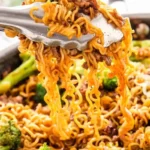
One Pan Beef and Broccoli Ramen
- Total Time: 15 minutes
- Yield: 4 servings 1x
- Diet: General
Description
This Beef and Broccoli Ramen is an easy one pan dinner that’s ready in 15 minutes! Juicy beef with a simple Asian-style sauce, and no chopping required!
Ingredients
- 1 teaspoon sesame oil
- 1 pound lean ground beef
- 3 cloves garlic (finely minced or pressed)
- 4 tablespoons low sodium soy sauce
- 1 tablespoon minced ginger
- 3 tablespoons brown sugar
- sriracha (optional)
- 2 cups frozen broccoli florets
- 6 ounces ramen noodles (discard the seasoning packets)
- 1 2/3 cup beef stock
- chopped green onions, toasted sesame seeds, red pepper flakes (optional) for serving
Instructions
- Heat: Heat a large non-stick skillet over medium-high heat and add the sesame oil.
- Brown: Add the ground beef to the hot skillet and brown until almost cooked through (about 6-10 minutes).
- Sauce: Add the garlic, soy sauce, ginger, brown sugar, and sriracha to the skillet and stir well until a small amount of sauce forms.
- Combine: Add the broccoli, the ramen noodles, and the beef stock and cover the pan.
- Cook: Cook for 3-5 minutes over medium heat, just until the broccoli has softened and the noodles have re-hydrated. Toss well until the sauce coats the noodles.
- Serve: Serve in bowls with chopped green onions, toasted sesame seeds, and a small sprinkling of red pepper flakes (garnishes optional).
Notes
Store leftovers in an airtight container in the fridge for up to 3 days. To reheat, add a splash of water or beef stock and warm gently on the stovetop or in the microwave, stirring halfway through to loosen the noodles.
- Prep Time: 5 minutes
- Cook Time: 10 minutes
- Category: Dinner
- Method: Stovetop
- Cuisine: Asian-American
Nutrition
- Serving Size: 1 serving
- Calories: 426 kcal
- Sugar: 11 g
- Sodium: 2162 mg
- Fat: 14 g
- Saturated Fat: 6 g
- Unsaturated Fat: 7 g
- Trans Fat: 0.4 g
- Carbohydrates: 42 g
- Fiber: 2 g
- Protein: 34 g
- Cholesterol: 70 mg