
This Thai Basil Chicken stir fry is a fast and nutritious meal that comes together in just 25 minutes. It features tender chicken strips tossed in a savory sauce with fresh aromatic basil.

List of ingredients
- 1 tablespoon fish sauce – adds a salty, umami depth.
- 2 tablespoons soy sauce (or oyster sauce) – provides savory saltiness.
- 1 teaspoon sugar – balances the salty flavors.
- 1 teaspoon sesame oil – adds a toasted nutty aroma.
- 1-2 tablespoons water – thins the sauce for better coating.
- 2 tablespoons olive oil – used for high-heat searing.
- 1 lb. chicken thighs or breasts, boneless and skinless, cut into 1-inch strips – the main protein.
- 1 small red onion, thinly sliced – adds mild sweetness and texture.
- 1 tablespoon garlic, minced – provides a pungent aromatic base.
- 1 small Thai chili, finely chopped (optional) – adds significant heat.
- 1 teaspoon salt – enhances all flavors.
- 1/2 teaspoon ground black pepper (or to taste) – adds a mild spicy bite.
- 1 medium red bell pepper, sliced – adds color and a crisp texture.
- 1 cup Thai basil leaves – essential for the authentic anise-like flavor.
- 2 green onions, cut into 2-inch pieces – used for garnish and freshness.
- 1 lime, wedged – provides a bright acid finish.
step-by-step instructions
- Prepare the sauce: In a small mixing bowl, whisk together fish sauce, soy sauce (or oyster sauce), sugar, sesame oil, and water until smooth. If you choose oyster sauce over soy sauce, omit the sugar to maintain the correct balance. Set the mixture aside.
- Sear the chicken: Heat olive oil in a large wok or skillet over medium-high heat for 2 minutes until the oil sizzles. Add the chicken strips and stir fry for 4-5 minutes until they are browned on all sides.
- Sauté aromatics: Stir in the sliced red onion, minced garlic, and chopped Thai chili if using. Cook for about 1 minute until the vegetables are tender and fragrant. Season the mixture with salt and black pepper.
- Thicken the sauce: Pour in the prepared sauce and toss well to coat every piece of chicken. Continue stirring for approximately 2 minutes until the sauce thickens and glazes the ingredients.
- Add final vegetables: Stir in the sliced red bell pepper and Thai basil leaves. Cover the pan with a lid and cook for 1-2 minutes until the basil has wilted and the bell pepper is tender but still holds its shape.
- Final touch: Serve the chicken immediately over steamed rice and drizzle with fresh lime juice if desired.
Protein Selection and Preparation
Choosing Between Chicken Thighs and Breasts
Chicken thighs are generally preferred for stir fries because they have a higher fat content. This makes them more forgiving under high heat and keeps the meat juicy. Chicken breasts are a leaner alternative but can dry out quickly if overcooked.
Achieving Uniform Slices
Cutting the chicken into consistent 1-inch strips ensures that every piece cooks at the same rate. Use a sharp chef’s knife to slice across the grain of the meat. This breaks up the muscle fibers and results in a more tender bite.
Managing Meat Temperature
Let the chicken sit at room temperature for about 10-15 minutes before cooking. This prevents the pan temperature from dropping too sharply when the meat is added. Cold meat can cause the chicken to steam rather than sear, reducing the browned exterior.
Optimizing the Stir Fry Sauce
Balancing Soy and Oyster Sauce
Soy sauce provides a thinner, saltier profile that highlights the basil. Oyster sauce is thicker and naturally sweeter, which adds a richer glaze to the chicken. Always omit the added sugar when using oyster sauce to avoid an overly sweet dish.
The Role of Fish Sauce
Fish sauce is a cornerstone of Thai cuisine, providing a fermented saltiness that soy sauce cannot replicate. It adds a complex umami layer that enhances the savoriness of the chicken. If you prefer a milder taste, you can slightly reduce the amount of fish sauce.
Adjusting Sauce Consistency
The amount of water used in the sauce controls the final thickness. Use one tablespoon for a thick, clingy glaze or two tablespoons if you want more sauce to soak into your rice. Stir constantly during the thickening phase to prevent the sugar from burning.
Vegetable and Herb Guidelines
Handling Thai Chilies for Heat
Thai chilies are significantly hotter than jalapeños or serranos. To control the heat, remove the seeds and white membranes before chopping. Start with a small amount and add more only after tasting the final sauce.
Sourcing Authentic Thai Basil
Thai basil is distinct from sweet Italian basil due to its purple stems and licorice-like flavor. It is sturdier and maintains its flavor better when exposed to heat. Avoid substituting it with Italian basil, as the taste profile will change completely.
Maintaining Bell Pepper Texture
Add the red bell pepper at the very end of the cooking process. Covering the pan allows the steam to soften the pepper quickly without losing its vibrant color. Overcooking the pepper results in a mushy texture that detracts from the dish.
Equipment and Cooking Techniques
Utilizing a Wok for High Heat
A carbon steel wok is ideal because it distributes heat unevenly, allowing for searing at the bottom and gentler cooking at the sides. The high walls make it easy to toss the ingredients rapidly. If you do not have a wok, a wide stainless steel skillet is the best alternative.
The Importance of the Sizzle
Waiting for the oil to sizzle before adding the chicken is critical for the Maillard reaction. This browning process creates a deeper flavor and prevents the meat from sticking to the pan. If the oil is not hot enough, the chicken will release its juices and boil instead of fry.
Managing Pan Crowding
Avoid adding too much chicken at once if your pan is small. Crowding the pan lowers the temperature and leads to steaming. Cook the chicken in two batches if necessary to ensure a proper brown sear on every piece.
Serving and Pairing Ideas
Selecting the Right Rice
Fragrant jasmine rice is the traditional pairing for this dish due to its slightly floral aroma and fluffy texture. For a heartier option, brown rice or wild rice provides a nuttier contrast to the sweet and salty sauce. Steamed cauliflower rice is a suitable low-carb alternative.
Complementary Side Dishes
Pair Thai Basil Chicken with a side of stir-fried bok choy or steamed broccoli to add more greens to the meal. A cold cucumber salad with rice vinegar and sesame oil provides a refreshing contrast to the heat of the chilies. Roasted carrots can also add a natural sweetness.
Applying the Lime Finish
The fresh lime juice added at the end cuts through the richness of the sesame oil and fish sauce. The acidity brightens the entire flavor profile and enhances the aroma of the Thai basil. Always squeeze the lime just before serving to keep the flavor fresh.
Storage and Preservation
Refrigerator Storage Limits
Store leftovers in an airtight container in the refrigerator for 3 to 5 days. The chicken remains safe to eat, but the basil will darken and lose its bright flavor over time. Ensure the container is completely sealed to prevent the chicken from absorbing other fridge odors.
Best Reheating Methods
Reheat the chicken in a skillet over medium heat with a splash of water or broth to loosen the sauce. Avoid the microwave if possible, as it can make the chicken rubbery and the vegetables overly soft. Heat only until warmed through to avoid overcooking the meat.
Preventing Basil Oxidation
When storing, keep the chicken and basil together in the sauce to help preserve some of the herb’s oils. However, be aware that basil naturally oxidizes and turns brown when cooked and then cooled. This is a visual change and does not affect the safety of the food.
Make-Ahead Advice
Prepping the Aromatics
You can mince the garlic, slice the red onion, and chop the chilies several hours in advance. Store them in separate small containers or a divided prep tray. This reduces the actual cooking time to under 15 minutes.
Preparing the Sauce in Advance
The sauce can be whisked together up to 24 hours before cooking and stored in a jar in the refrigerator. Gently shake the jar before adding it to the pan to reintegrate the sugar and sesame oil. This allows you to focus entirely on the stir-fry process.
Slicing the Protein
Cut the chicken into strips and store them in a sealed container with a pinch of salt. This light seasoning helps the meat retain moisture during the high-heat cooking process. Ensure the chicken remains refrigerated until the moment it hits the pan.
Troubleshooting Common Issues
Preventing Chicken from Sticking
If the chicken sticks to the pan, it usually means the pan wasn’t hot enough or you didn’t use enough oil. Use a silicone spatula or a wooden spoon to gently lift the meat after it has seared. Once the meat browns, it will naturally release from the surface.
Fixing a Watery Sauce
If the sauce is too thin, continue to simmer it uncovered for another 1-2 minutes before adding the basil. The water will evaporate, leaving behind a thicker glaze. Avoid adding flour or cornstarch, as this can change the authentic texture of the dish.
Avoiding Over-Wilted Basil
Add the basil leaves in the last 60 seconds of cooking. Overcooking basil makes it lose its distinct anise flavor and turns it a dark, unappealing brown. The goal is for the leaves to just barely collapse under the heat.
Frequently Asked Questions
Can I use frozen chicken for this recipe?
Yes, but you must thaw the chicken completely in the refrigerator before slicing. Cooking frozen strips will release too much water, preventing the meat from browning and making the sauce watery.
How do I make this recipe less spicy?
Omit the Thai chili entirely or replace it with a small amount of red pepper flakes for a milder heat. You can also increase the amount of sugar slightly to neutralize the spice of the fish sauce.
What if I can’t find Thai basil at my local store?
If Thai basil is unavailable, you can use regular sweet basil, but the flavor will be more peppery and less licorice-like. In a pinch, a mix of sweet basil and a tiny pinch of ground anise can mimic the flavor profile.
Can I substitute olive oil with another oil?
Yes, any neutral oil with a high smoke point works well, such as vegetable, canola, or peanut oil. Coconut oil is also an excellent choice and adds a subtle sweetness that complements Thai flavors.
Is it possible to make this dish in a slow cooker?
No, this is a stir-fry dish that relies on high heat and rapid cooking. A slow cooker would overcook the chicken and turn the vegetables into mush, destroying the intended texture and flavor.
Print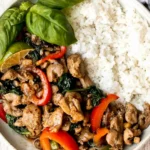
Thai Basil Chicken
- Total Time: 25 minutes
- Yield: 4 servings 1x
- Diet: Gluten Free
Description
Better than takeout, Thai basil chicken with a delicious homemade sauce is a quick and easy, light and fresh chicken stir fry that is ready in 25 minutes.
Ingredients
- 1 tablespoon fish sauce
- 2 tablespoons soy sauce (or oyster sauce)
- 1 teaspoon sugar
- 1 teaspoon sesame oil
- 1–2 tablespoons water
- 2 tablespoons olive oil
- 1 lb. chicken thighs or breasts, boneless and skinless, cut into 1-inch strips
- 1 small red onion, thinly sliced
- 1 tablespoon garlic, minced
- 1 small Thai chili, finely chopped (optional)
- 1 teaspoon salt
- 1/2 teaspoon ground black pepper (or to taste)
- 1 medium red bell pepper, sliced
- 1 cup Thai basil leaves
- 2 green onions, cut into 2-inch pieces
- 1 lime, wedged
Instructions
- Step: In a small mixing bowl, whisk together all the sauce ingredients until smooth. If using oyster sauce instead of soy sauce, you can omit the sugar. Set aside.
- Step: Heat oil in a large wok or skillet over medium-high heat for 2 minutes until the hot oil sizzles. Add chicken and stir fry for 4-5 minutes until browned on all sides.
- Step: Stir in onion, garlic, and Thai chili (optional) and cook until tender and fragrant, about 1 minute. Season the chicken mixture with salt and pepper.
- Step: Stir in the sauce and toss well to coat. Keep stirring until the sauce thickens to a desired consistency, about 2 minutes.
- Step: Add bell pepper and basil. Cover the lid and cook for 1-2 minutes until the basil is wilted and the bell pepper is tender.
- Step: Serve immediately with steamed rice and a drizzle with lime juice if desired.
Notes
Thai basil chicken taste best fresh, but if you can’t eat it all, it will keep in the refrigerator for up to 3-5 days in an airtight container. Serve with steamed rice.
- Prep Time: 10 minutes
- Cook Time: 15 minutes
- Category: Chicken
- Method: Stir Fry
- Cuisine: Thai
Nutrition
- Serving Size: 1 serving
- Calories: 310 kcal
- Sugar: 4 g
- Sodium: 880 mg
- Fat: 18 g
- Saturated Fat: 4 g
- Unsaturated Fat: 14 g
- Trans Fat: 0 g
- Carbohydrates: 12 g
- Fiber: 2 g
- Protein: 26 g
- Cholesterol: 85 mg